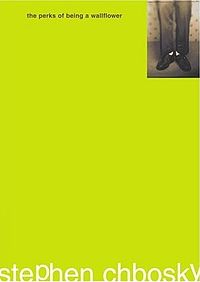
The perks of being a wallflower? Probably very few, at least until college

Perksofbeingwallflower1

I first read The Perks of Being a Wallflower about a thousand years ago, by which I mean in high school. So when I saw that a movie version was being made—more than a decade after the book’s 1999 release—it seemed like a logical time to go in for the reread.

Perks is a weird little book. It’s written as a series of letters from lead character Charlie, a quirky and potentially clinically depressed freshman who shortly into the school year befriends a group of decidedly cooler seniors, including brother-sister duo Patrick and Sam, the former openly gay (which, in a My So-Called Life sort of way, appears to be simultaneously brave and routine at their high school) and the latter the immediate object of Charlie’s bumbling affections. Over the course of the school year, Charlie experiences a series of teenage rites of passage: His first party, his first hookup, his first pot brownie, etc. In some situations, Charlie’s mildly autistic inability to read social cues comes across as endearing, while at other moments—such as when, during a game of truth or dare, he’s dared to kiss the prettiest girl in the room and goes for Sam instead of his girlfriend—Charlie fails miserably at being what every 15-year-old really wants to be in high school: at least normal enough to fit in with a group of friends. 

Continue reading “The perks of being a wallflower? Probably very few, at least until college”
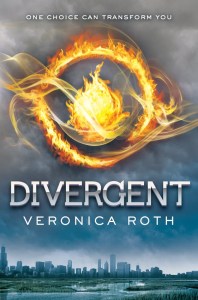
Are teenagers obsessed with post-apocalyptic politics now or what am I missing?

Divergent hc c(2)

After promising my sister that I would spend this past weekend hitting 20% on ye old Les Miserables, I did absolutely no such thing. Instead I got really caught up in this New York Times article about “new adult” books, then proceeded to read five books for teenagers instead. I know: I have the literary tastes of a 14-year-old me.

Of course, having now availed myself of the relevant resources (i.e. teen sex books) I have some things to say about this “new adult” trend, but that’s a post for another day. Instead, my first review of 2013 goes to Veronica Roth’s Divergent, Book #1 in a young adult series that will ring quite a few bells for anyone familiar with young adult series.

(It probably says something about today’s teens that all their literary blockbusters include dystopian future societies where political ideology results in the institutionalized oppression of the masses. Must be that Justin Bieber, influencing them on the causes that count.)

Continue reading “Are teenagers obsessed with post-apocalyptic politics now or what am I missing?”

My [personal] top 10 books of 2012

bookhug
This is me hugging a book.

Well guys, 2012 is drawing swiftly to a close and I have nothing to show for myself except a sweet new job and the collective knowledge of ~53 finished books (52.3 if I’m being honest about Les Mis, 58.3 if I count the Gone series and all three FSOG books). A productive year indeed.

Last week I posted the mathematically irrefutable Best Books of 2012, a labor on which I spent an undisclosed number of hours (like five) but after a little rest, relaxation, and weirdly mortifying perusal of my own ramblings from the last 12 months, I’d now like to share a more important list: the books I read this year that made the biggest impact on my little reality-TV-filled brain. Few of these titles were released in 2012, a byproduct of my resigned refusal to spend $27 on hardcovers, but sometimes it’s nice to read a book a few years after its release, when you can absorb it in the vacuum of irrelevance.

So here are the books that touched my shriveled-up heart this year, in dramatic countdown order. Happy reading!

Continue reading “My [personal] top 10 books of 2012”

The best books of 2012, as determined by rocket science and Excel and 17 other best of 2012 lists

photo (1)
Lasted less than an hour.

It’s that time of year again, when you try to buy a cute little Christmas tree-like plant for your apartment—to be festive-like—and the cat knocks it over within like 0.3 seconds, so you spend the evening vacuuming up dirt and the bits of Christmas-tree-like-plant tendrils instead of basking in the feeling of accomplishment slash self-pity that comes with buying Christmas decorations probably only you yourself will see, but so you go out and buy a new mini Christmas tree plant anyway, decorate it, and Instagram it to feel better.

Also known as the holidays.

Cat lady moments notwithstanding, the end of the year brings with it a flurry of “Best of 2012” lists, designed to inform you of all the great writing produced over the last 12 months, and guilt trip you for not having read enough of it. How I’ve gotten through a book every week, and yet somehow managed to avoid reading even one of the NYT’s’ 100 Notable Books, is beyond me. In a related query, how could they have snubbed Sookie Stackhouse No. 12??

images (1)

But really, who has time to read all of those lists, what with our busy holiday schedule of eating and napping and contemplating eating again. This is why you guys have me. By combining 17 different BO2012 lists — from, here we go, Publisher’s Weekly, NPR, NPR again, The New York Times, Michiko Kakutani, Janet Maslin, Dwight Garner, Slate, Goodreads, Goodreads again, The Washington Post, Barnes & Noble, Huffington Post, Amazon, The New Yorker, Buzzfeed and Oprah’s Book Club — I have created the ÜBERLIST, the definitive, mathematically and scientifically verified Best Books of 2012.

Continue reading “The best books of 2012, as determined by rocket science and Excel and 17 other best of 2012 lists”

I made a really detailed graphic explaining all the characters in The Broom of the System, which, incidentally, is a pretty good book

BroomOftheSystem
Exhibit A

In the latest example of my hands having far too much time on them (first example), please take some time to look over Exhibit A: a complex PowerPoint diagram I put together to document the intricate character relationships in The Broom of the System, David Foster Wallace’s now 25-year-old first novel. (Here’s a link to a legible version.)

BOTS, in an extremely simplified sense, is about Lenore Beadsman, a 20-something underemployed receptionist at the publishing house of Frequent and Vigorous, a job made all the less demanding by Lenore’s relationship status with F&V Chief Executive Richard “Dick” Vigorous (as the kids say, “it’s complicated.”) One day in 1990, Lenore gets a call from a Mr. Bloemker, manager at the Shaker Heights Home, where her great-grandmother (also named Lenore Beadsman) has apparently gone missing, along with another two-dozen patients and staff members. In the company of Dick Vigorous, Lenore goes in search of her missing great-grandmother—both physically and I suppose intellectually—along the way discovering or re-discovering various people in her life and in many cases stumbling across histories or idiosyncrasies they had heretofore failed to disclose.

Continue reading “I made a really detailed graphic explaining all the characters in The Broom of the System, which, incidentally, is a pretty good book”