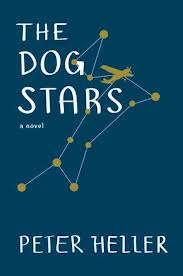
The Dog Stars is one of the best books you’ll read…ever?

dogstars

The Dog Stars is one of those books that seems ubiquitous. I spent the better part of last year passing it on bookstore tables, seeing it pop up on recommendation lists and idly imagining its contents. What could this slim novel possibly be about. Astronomy? Air travel? Flying puppies?

Well last week I got my answer. After a series of emphatic text messages from a friendโ€””dog stars is really good. really really good”โ€”I decided to take a breather from my delightfully compelling (but extremely dense) NSA-related nonfiction and dive into TDS. As it turns out, the novel is aboutโ€”natchโ€”the apocalypse.

TDS is set in the not-so-distant future, about a decade after a plague has wiped out the majority of the population. Concerns about surviving the epidemic have for the most part passed, although a lingering blood disease โ€”called, creepily, The Bloodโ€”still affects certain groups of people. (Think of it as surviving a plague, only to contract AIDS.)

Our narrator/protagonist is Hig, a resourceful pilot who lives in an abandoned airplane hanger with his “friend”/fellow survivor Bangley. Their symbiotic relationship involves Hig handling the farming, fishing and hunting, and Bangley handling the firearms. Lots and lots of firearms.

Because you see, in this version of the post-apocalyptic future, people haveโ€”morally speakingโ€”taken a turn for the worse. The standing protocol is to kill or be killed, and Hig’s reluctant acquiescence to necessary self-defense is countered by Bangley’s almost enthusiastic embrace of it. Bangley is the muscle; Hig is the heart.

Continue reading “The Dog Stars is one of the best books you’ll read…ever?”
Joyland: A Stephen King amuse-bouche

Joyland

KING INTERLUDE!

If you’ve read this blog in the past, you’ll find that I enjoy me some Stephen King. He’s like a palette-cleanser, an old faithful I turn to between other booksโ€”more challenging books or less challenging books or books that are intellectually fulfilling but don’t quite suck me in. King for me is like a favorite record. You don’t listen to it every day, but when you do it’s like rediscovering music.

In the grand scheme of the King ouvre, Joyland is a throwaway. It’s more a novella than a novel, almost a campfire story. It occupies a limited universe, for the most part a single point in time, and lacks even one Maine resident, or rip in the space-time continuum (though there is a psychic kid). The book is short and sweet, and its supernatural elements are understated, almost to a fault. Joyland is the kind of novel I imagine King dreams up at a red light, or on a long elevator ride. “So…what if there was a carny legend about a haunted funhouse…” and then the signal goes green and he drives off. Bam. Novel.

And essentially, that’s what the book is about. Told in flashback by narrator/protagonist Devin Jonesโ€”now in his 60sโ€”Joyland is the story of a summer and fall Dev spent working at Joyland, a seaside amusement park in North Carolina. While there, Dev makes friends, mourns a breakup and learns what it means to “wear the fur” on a 100-degree day in August. But throughout his time at Joyland, Dev is also haunted by the story of a girl who was murdered in the Horror House by her boyfriend. Carny lore is that her ghost still appears there to this day.

Continue reading “Joyland: A Stephen King amuse-bouche”

Reports from the front lines of the mommy wars

9780316234795_p0_v1_s260x420

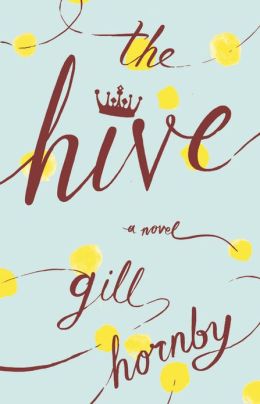
The first time I read the words “Mean Girls for moms”โ€”a blurb adorning the back cover of forthcoming Gill Hornby novel The Hiveโ€”I threw up a little bit in my mouth.

Don’t get me wrong: I love Mean Girls. I watch the shit out of Mean Girls. But describe a book to me as “a tart vivisection of mother culture” and I’m already dozing off. Or running in the other direction.

The Hiveโ€”a debut novel for Hornby, whose brother is, yes, the fantabulous Nick Hornbyโ€”is pretty highly anticipated, as books go. (Released in the UK in May, it goes on sale here in September). The novel inspired a seven-way bidding war among publishers, and Focus Features has already bought the movie rights. At this very moment, some studio executive may be out in search of quirky middle-aged women to play each of The Hive’s caricatural leading ladies.

And who are these ladies? Well. There’s Rachel, our protagonist of sorts, whose husband recently left her for an intern. There’s Georgie, hilarious and uncouth mother of six, whose notion of “joining in” is muttering sarcastic quips from the sidelines. We have Heather, over-eager and desperately insecure mother of one, and of course Beatriceโ€”Beaโ€”the queen of the moms, the Regina George, the HBIC.

Continue reading “Reports from the front lines of the mommy wars”

The raindead Megaphone. Not Fox News, the other one

BraindeadMegaphone

The only thing worse than never having read anything by George Saunders is probably popping my Saunders cherry with the author’s inaugural book of essays, instead of any of his much-lauded compendiums of short stories. But my indiscretion couldn’t be helpedโ€”during a GABST trip to Elliott Bay Book Co in Seattle, The Braindead Megaphone simply spoke to me from the shelves.

TBM was actually the very first book I bought on the Great American Bookstore Tour, and so in that sense holds a very special place in my heart. A compilation of essays Saunders wrote in the early 2000sโ€”many published elsewhere, though all new to meโ€”it mostly pokes fun at what’s become of America in the last decade or so: our sensationalist media, snap judgments on other cultures and disconcerting militarism. Interspersed throughout are softer essays on literary subjects like the Adventures of Huckleberry Finn, and what makes for a good short story. There’s also an essay/letter written from a dog to his owner, and a series of faux advice columns from someone called The Optimist.

Continue reading “The raindead Megaphone. Not Fox News, the other one”

The girl (being held prisoner and tortured) next door

Ketchum_bookcover

Many moons ago (high school) I wrote a paper about Nazi Germany, with which I was (and still, to some degree, am) mildly obsessed. My paper was on the very topic that so fascinated me about the Nazis, and myriad other large-scale abdications of morality. Who, in short, were the Nazis? Monsters, capable of gleefully (or at least not un-gleefully) executing one of the most intense genocides in history? Or ordinary dudes, caught up in a whirlwind of power and authority and perhaps some misguided notion that theirs was a laudable mission?

The answer, of course, lies somewhere in between. Because the question is really the point. Are people bad and if so why? Or are people good and if so to what degree?

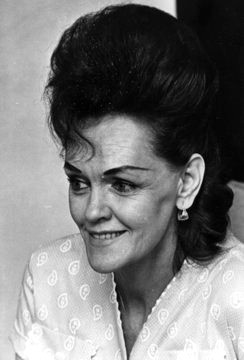
Jack Ketchum’s The Girl Next Door is one of a series of adaptations of the 1965 case of Sylvia Lekins, an Indiana teen who was held captive in the basement of her de facto foster mother, the bouffant-ed Gertrude Baniszewski. Along with her two daughters, son, and a group of neighborhood children, Baniszewski tortured Sylvia, and at times her younger sister Jenny, in ways that I almost feel uncomfortable writing here. Sylvia was burned with scalding water, forced to eat her own feces and sexually abused with a Coke bottle. She ultimately died in the house, and Baniszewski was later convicted of first-degree murder.

Continue reading “The girl (being held prisoner and tortured) next door”