A Lesson From Steve Jobs

Amid all the fun of this past weekend—seeing Breaking Dawn in an empty suburban theater, going bar-hopping with my newishly legal younger sister, consuming what probably amounted to an entire pie—I managed to make my way through the final pages of Walter Isaacson’s Steve Jobs, about which I remained so fervently excited that my family has now heard more than their fair share of Steve Jobs fun facts. (I’ve become pretty adept at inserting such facts into otherwise unrelated conversations.)

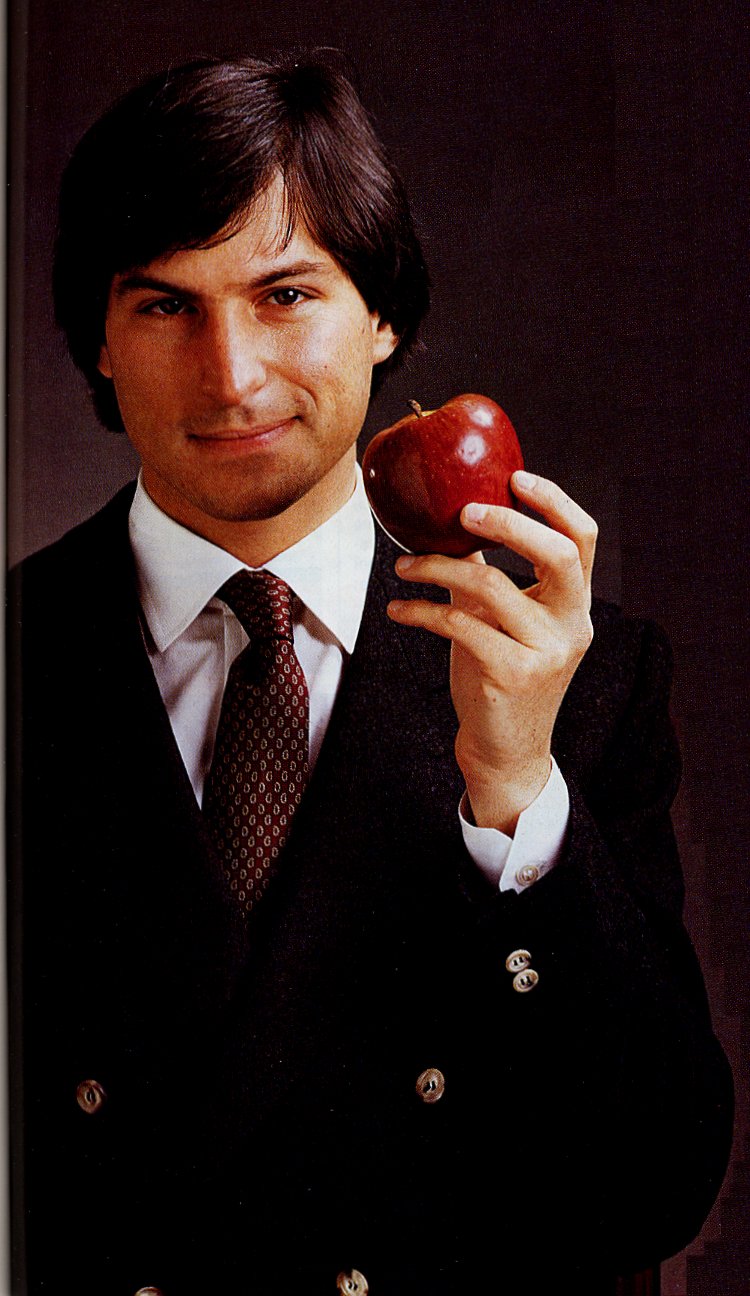
I’ve already spent enough time on the various degrees of love that I have for this book, my inaugural biography and probably one of the best I’ll ever read. So in the interest of sparing everyone another 1,000 words of adulation, I just wanted to close out my two weeks with Steve Jobs by sharing one last not-quite-as-fun-fact, one that ultimately shaped my perception of Jobs more than his family life, business dealings or tempestuous personality: Jobs always suspected he would die young. Continue reading “A Lesson From Steve Jobs”

Kids Need Kindles Too

Remember this guy?

Those well-versed in history are familiar with the great debates of our time—Roe v. Wade, boxers v. briefs, Mary Kate v. Ashley. Now, after a series of articles in venerable publications like The New York Times and The Wall Street Journal, we can add to that list of life’s most pressing questions this: Should kids learn to read with e-books?

The Times last week found parents who insist their children read and be read to with old-fashioned paper books, citing things like “the experience of turning a page” and the “intimacy” of reading together without the potential distraction of Angry Birds. That, coupled with the fact that all baby showers involve the bestowing of multiple children’s books upon soon-to-be mothers, means kids’ titles are actually a bright spot in the world of old-fashioned publishing. E-books for children under 8 represent less than 5% of total annual sales of children’s books, compared with more than 25% for some adult categories.

The Journal, for its part, assessed the kid-friendliness of various e-readers, but comes to basically the same conclusion: Most of the time (excluding admirable Skype sessions on the part of the corporate traveler parent), print books are preferable, in no small part because kids are fairly fickle when it comes to the pace of a page-turn (something no existing e-reader lets a user dictate.) Even a growing cadre of children’s books with multimedia can’t overcome the benefits of print (I would add to this list of benefits the fact that toddlers have zero qualms about throwing books on the floor, something that’s much easier to accept when said book isn’t an iPad.)

Now I don’t have kids, so I can lend nothing to this debate from the perspective of a mother. I also don’t remember being read to as a child (though I know it happened frequently and is in large part responsible for my lifelong love of books.) But even as a 20-something whose immediate takeaway from these articles was “UGH, now bookstores will just have more kid shit in them,” I have to appreciate the irony. The same adults who unceremoniously made the personal switch to e-readers are citing the feel of turning of a page, the smell of a book and the silence of print when it comes to their kids. In other words, every reason I’ve avoided making the switch myself, just applied to Hop on Pop.  Continue reading “Kids Need Kindles Too”

The future will be plagiarized

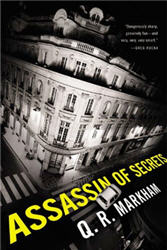
There are two primary types of book scandal—either you write something that isn’t true and say it is (James Frey, Margaret B. Jones, that “Holocaust survivor” who said she lived with wolves) or you say you wrote something that you definitely didn’t (Kaavya Viswanathan). A fairly epic example of the latter came out this week, when it was discovered that Q.R. Markham’s mystery book, Assassin of Secrets, was actually lifted from something like a dozen other books, forcing publisher Little, Brown to pull it from the shelves and Markham to conspicuously fall off the face of the planet.

The Assassin of Secrets story is extra interesting because, unlike some of his plagiarizing predecessors, Markham (the pen name for poet Quentin Rowan, who also happens to be a part-owner of Williamsburg bookstore Spoonbill & Sugartown) made what seems like zero effort to hide his ripping. Here are two sample paragraphs (a comprehensive list is available here).

From Assassin of Secrets: “The boxy, sprawling Munitions Building which sat near the Washington Monument and quietly served as I-Division’s base of operations was a study in monotony. Endless corridors connecting to endless corridors. Walls a shade of green common to bad cheese and fruit. Forests of oak desks separated down the middle by rows of tall columns, like concrete redwoods, each with a number designating a particular work space.”

From Body of Secrets: Anatomy of the Ultra-Secret National Security Agency: “In June 1930, the boxy, sprawling Munitions Building, near the Washington Monument, was a study in monotony. Endless corridors connecting to endless corridors. Walls a shade of green common to bad cheese and fruit. Forests of oak desks separated down the middle by rows of tall columns, like concrete redwoods, each with a number designating a particular workspace.”

In the age of Google, I find it downright amazing that people still think they can get away with this kind of stuff. Which isn’t to say that I expect publishers to spend all their time googling various paragraphs from manuscripts they receive, but rather that authors, whose entire goal is to get their work distributed to as many people as possible, don’t realize (or choose to ignore) that someone somewhere is going to pick up on similarities as blatant as these.

Continue reading “The future will be plagiarized”

To Kindle or not to Kindle

So it’s a big week for e-readers (which I’m told are like books except on little miniature computers) as Amazon unveiled Kindle FIRE *sizzle* (sound effects mine), the company’s long-awaited tablet device (i.e. iPad assassin). The $199 doodad is pretty much a Blackberry PlayBook—it has a 7-inch color touch screen, plays movies and music, lets you browse the interwebs and oh, gives you access to like a bazillion e-books. Hooray for technology!

In addition to Fire, Amazon also unveiled new pricing tiers for a variety of other Kindle models: A Kindle Touch runs $99 for a WiFi-enabled version, or $149 for 3G, and a plain old readin’-stuff Kindle is now a mere $79, less than the price of four hardcovers. (You can also still get versions with keyboards, if you’re like geriatric or whatever.)

Now, friends of this blog know I have typically been …whatever the opposite of an enthusiast is when it comes to the Kindle. I’m one of those old-school, paper-loving weirdos that likes to stand on her soapbox and talk about the smell of books, the feel of cracking a spine, the satisfaction of turning a final page. Without physical books, approximately a third of my 330-square-foot apartment would be empty, at least two of my friends would have nothing to borrow, and at this particular moment my purse would be about a thousand pounds lighter (thank you, Under The Dome.)

In a way I can’t remember feeling about the switch from cassettes to CDs or CDs to iPods, I’ve stubbornly held on to my preference for the tangible book, (a preference evidenced by the number of used Barnes & Noble bags I have stored under my kitchen sink.) But although I am a veritable Maxine when it comes to e-reading, I have always said that I would make the switch when it became unavoidable. Yesterday’s announcement raises the question (not only for me, but for everyone in the publishing industry): is it that time? 

Continue reading “To Kindle or not to Kindle”

Boycott This Book

Listen, I despise Sarah Palin as much as the next self-respecting sane person. I fear a world where that woman becomes president, and I think she’s giving brunettes with glasses a bad name. But I will not buy this fucking book.

I know I’ve in the past defended those who might generally be considered stupid authors, including Snooki. And I stand by that defense; there’s plenty of room in this world for memoirs by celebrities, novels from reality-show stars and illustrated drivel from freakishly beloved tweens. But I take offense to The Rogue, the much-hyped “nonfiction” book written by Joe McGinniss, of “I moved in next to Sarah Palin just to stalk her whole life on the boardwalk” fame.

The New York Times did as good a job as I could of summing up The Rogue’s content (better, in fact, since I will never so much as crack the cover) and I won’t waste digital breath repeating all of it here. All you need to know is that McGinniss spent a significant amount of time hunting down salacious information on the Palins, following up on unsubstantiated rumors and peddling lowbrow gossip, all in the name of “getting to the bottom” of who Sarah Palin really is. Among his more scandalous claims are assertions (from anonymous sources) that Palin in her younger years did cocaine, slept with an NBA player, and had an affair while married to the infamous Todd (because…wouldn’t you?)  Continue reading “Boycott This Book”