Not on my bucket list

I’ve been trying to think of the best way to explain the effect this week’s book had on me, and I think it’s this: Over the weekend, I came very close to watching Blue Crush 2.

In the end I didn’t (True Blood prevailed) but the point is the thought was there. And ultimately, isn’t the biggest testament to a nonfiction book whether or not, in the end, it leaves you wanting to know more?

Actually, in the days after I finished Susan Casey’s The Wave, I found myself doing all sorts of additional research: looking up YouTube videos of surfer Laird Hamiltonβ€”who Casey interviews at length throughout the bookβ€”reading articles on wave research, and ironically, preparing my apartment for an imminent hurricane. It seems once I started learning about the world of extreme weather, the topic became all but unavoidable.

I guess I should give you a little context. The Wave is a nonfiction book, true, but it’s the kind of nonfiction book that immersed its author; for every interview with a world-renowned scientist, there’s a long afternoon spent a mile offshore, watching tow surfers take on 40-foot waves from the back of a lurching fishing boat. Susan Casey even moved to Hawaii for the duration of her research, and the book includes a photo of her gamely hanging on to a Jet Ski just a few minutes before Hamilton took her down the face of Jaws, one of the most impressive (and terrifying) waves in the world. It’s this immersion, in addition to Casey’s impressive research, that makes The Wave not only accessible, but riveting. In the vein of Mary Roach (my aforementioned favorite nonfiction author), Casey finds a way to bestow upon her readers the enthusiasm she seems to share with the subjects (scientists, surfers, etc.) of her story.

The Wave covers a broad spectrum (wave pun!) of oceanography, focusing primarily on the surfers who pursue the world’s most dangerous waves, and the scientists studying them (the waves, not the surfers). Threaded throughout the book are both camps’ understanding of rogue, or freak waves, the kind that level towns, destroy ocean liners and exist despite the fact that they’re mathematically inexplicable. Casey’s transitions from the adventures of the world’s greatest surfers to the findings of the world’s greatest oceanographers are never confusing; rather, it seems to take both perspectives to impart upon readers the enormity of the subject. A surfer who’s had a near-death experience with a fifty-footer and a scientist who’s seen the hull of a boat ripped clean off by one have different outlooks on the ocean, save one unifying reaction: deep  respect.

Continue reading “Not on my bucket list”
Courage, redemption, and pee

Last Tuesday seems so long ago.

I did it! I departed New York City for an entire week to tan myself and eat fried Oreos at the Jersey shore, during which time I did not so much as pick up a newspaper, open a laptop or respond to any of the approximately zero tweets I received during my absence. Consequently, I have no idea what’s going on in the world right now, unless said goings-on include international debate over the rules of Flip Cup, and/or how deceptive it is to name fries covered in Old Bay “crab fries” and then market them to unsuspecting beach-goers.

In any case, while I did not necessarily keep abreast of current events, I did make good on my promise to spend at least 0.07% of vacation time reading. (In beach trips of yore, this percentage was much closer to, say, 75, but it’s surprisingly difficult to shun your friends (and/or a cold beer) in favor of a poolside lounge chair and a paperback. Mostly because they yell at you.)

So I’ve finished three books since I last wrote, which is a bit of a cheat since I decided last weekend that it made far more sense to to obsessively plan my beach-side dessert roster (Day 1: ice cream, Day 2: funnel cake, and so on) than write up a final book review before leaving. Whatever, now I just look super accomplished.

Continue reading “Courage, redemption, and pee”

Arsenic and old lace

Well it’s the final week before I go on my first legit vacation of the year (as in the kind where you leave your city of residence) and God, when not busy crashing the economy and unleashing natural disasters, is seriously testing my patience.  Work-wise, everything that could go wrong has, and technologically the Internet is hellbent on making itself only functional enough for me to stare longingly at various “page loading” screens and error messages while tallying up the hours I’m losing.

Well whatever God, go back to combing your beard and hanging out with Rick Perry, because I refuse to be thwarted. I will go to the beach next week, during which time I will not so much as open a laptop, because I’ll be too busy exposing my sensitive skin to its first rays of summer sunlight, and/or eating french fries and funnel cakes.

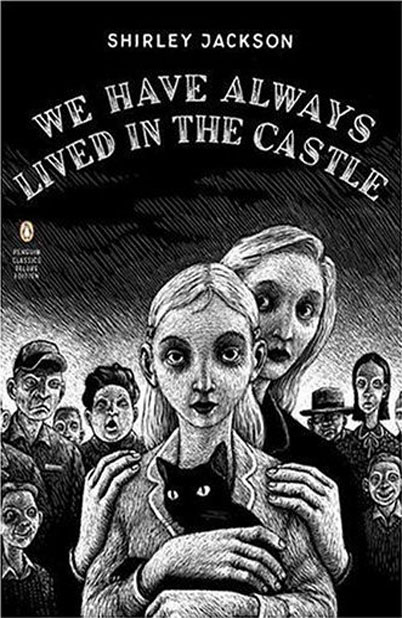
Fortunately, I’ve managed to limit my Code Red freakouts to office hours; at home, I’m soothed by the boisterous return of Jersey Shore and Bad Girls Club and on the train I’ve been gratefully lost in the world of We Have Always Lived in the Castle.

Now, you may not think it right off, but chances are high you’re familiar with Shirley Jackson. Despite having written numerous books, she’s easily most famous for oneβ€”The Haunting of Hill House, which has creeped the shit out of people for many years. Jackson is also known for The Lottery, one of the most celebrated short stories of all time (and also the basis for a kind of hilarious 1996 movie starring Keri Russell), which takes place in a town where (spoiler alert) an annual drawing of names leads to a climactic ritual stoning. 

Continue reading “Arsenic and old lace”

Better late than never

Well I think it’s safe to say I’m running behind this week. For good reason! I’m in the middle of a huge project at work, my bathroom was being redone (which I realize has no tangible effect on my ability to read or write in a timely fashion) and, perhaps most importantly, the season finale of The Bachelorette was on (that’s a one-hour reunion, a two-hour finale and a one-hour “After the Final Rose” special; big obligation guys). But here I am, better late than never.

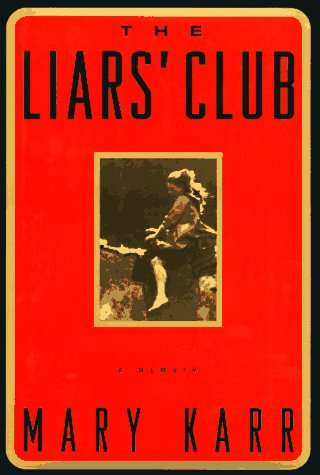
I picked up Mary Karr’s The Liar’s Club because of what I like to call a glitch-in-the-matrix moment: It came up, either online or in casual conversation, at least three times in the course of two weeks, so I figured the reading gods were all but asking me to pick it up. More importantly, it seemed to come up as one of those books everyone has read but I somehow missed the memo on (in fairness, The Liar’s Club came out in 1995; I had not so much availed myself of the memoir genre at that time, as I was 10.)

In any case, the book is praised for its combination of Mary Karr’s storyβ€”she’s a Texas-born problem child with a penchant for fights and a soft spot for her two alcoholic parents (including a deeply troubled mother)β€”and her writing; Karr is a poet as well as professional documentor of life’s calamities. Whatever the combo, it seems to strike a chord: The Liar’s Club was selected as one of the best books of 1995 by People, Time, The New Yorker and Entertainment Weekly (the latter perhaps not the best barometer of fine literature, but I’ll let it slide.) 

Continue reading “Better late than never”

A Visit from the Goon Squad: an Excerpt

It’s all still there: the pool with its blue and yellow tiles from Portugal, water laughing softly down a black stone wall. The house is the same, except quiet.  The quiet makes no sense.  Nerve gas? Overdoses? Mass arrests? I wonder as we follow a maid through a curve of carpeted rooms, the pool blinking at us past every window. What else could have stopped the unstoppable parties?

But it’s nothing like that. Twenty years have passed.

He’s in the bedroom, in a hospital bed, tubes up his nose.  The second stroke really knocked him outβ€”the first one wasn’t so bad, just one of his legs was a little shaky.  That’s what Bennie told me on the phone.  Bennie from high school, our old friend. Lou’s protΓ©gΓ© . He tracked me down at my mother’s, even though she left San Francisco years ago and followed me to LA.  Bennie the organizer, rounding up people from the old days to say good-bye to Lou.  It seems you can find almost anyone on a computer.  He found Rhea all the way in Seattle, with a different last name.

Of our old gang, only Scotty has disappeared.  No computer can find him.

Rhea and I stand by Lou’s bed, unsure what to do.  We know him from a time when there was no such thing as normal people dying.

There were clues, hints about some bad alternative to being alive (we remembered them together over coffee, Rhea and I, before coming to see himβ€”staring at each other’s new faces across the plastic table, our familiar features rinsed in weird adulthood.) There was Scotty’s mom, of course, who died from pills when we were still in high school, but she wasn’t normal.  My father, from AIDS, but I hardly saw him by then.  Anyway, those were catastrophes.  Not like this: prescriptions by the bed, a leaden smell of medicine and vacuumed carpet.  It reminds me of being in the hospital. Not the smell, exactly (the hospital doesn’t have carpets), but the dead air, the feeling of being far away from everything.

We stand there, quiet.  My questions all seem wrong: How did you get so old?  Was it all at once, in a day, or did you peter out bit by bit?  When did you stop having parties? Did everyone else get old too, or was it just you? Are other people still here, hiding in the palm trees or holding their breath underwater? When did you last swim your laps? Do your bones hurt? Did you know this was coming and hide that you knew, or did it ambush you from behind?

Instead I say, “Hi Lou,” and at the very same time, Rhea says, “Wow, everything is just the same!” and we both laugh.

Lou smiles, and the shape of that smile, even with the yellow shocked teeth inside it, is familiar, a warm finger poking at my gut. His smile, coming open in this strange place.

“You girls.  Still look gorgeous,” he gasps.