Tropic of Cancer: SFW quotes

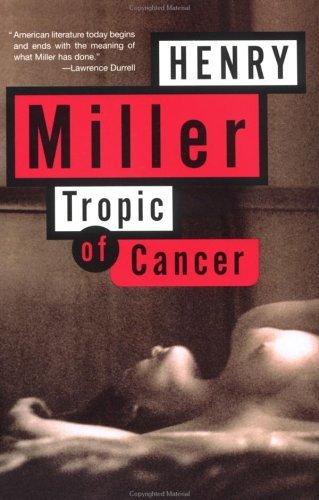
Despite what my review suggested, it’s actually pretty easy to find quotes in Tropic of Cancer that wouldn’t draw the attention of the Parents Television Council (or whatever the book version of them is.)

“When into the womb of time everything is again withdrawn, chaos will be restored and chaos is the score upon which reality is written.”

“For a hundred years or more the world, our world, has been dying. And not one man, in these last hundred years or so, has been crazy enough to put a bomb up the asshole of creation and set it off.”

“New York makes even a rich man feel his unimportance. New York is cold, glittering, malign.  The buildings dominate.  There is a sort of atomic frenzy to the activity going on; the more furious the pace, the more diminished the spirit.  A constant ferment, but it might just as well be going on in a test tube.  Nobody knows what it’s all about.  Nobody directs the energy.  Stupendous. Bizarre.  Baffling.  A tremendous reactive urge, but absolutely uncoordinated.”
Continue reading “Tropic of Cancer: SFW quotes”

Tropic of Cancer is totally NSFW

Henry Miller would have loved the Internet.

I don’t mean like role-playing games or white text on black MS DOS screens, for which he was, technically speaking, still alive. I mean like today’s Internet, all self-absorbed and indulgent like it is. All “this is what I ate for breakfast, and this is who I hung out with, and this is the boring shit we did.” That Internet Henry Miller would have been all about.

It’s actually a fun activity to read books written before 1950 and mine them for unintentionally prescient quotes. Tropic of Cancer, the seminal—trust me, semen-sounding words will not be the raunchiest elements of this post—autobiographical novel from Miller, is full of these kinds of snippets, lines like “so fast and furiously am I compelled to live now that there is scarcely time to record even these fragmentary notes.” Seriously, the man would have loved Twitter.

I had few expectations going into Tropic of Cancer, about which I knew essentially two things: (1) It is perhaps the most banned book of all time, whose 1934 publishing predated its actual release in the U.S. by nearly 30 years, and (2) there’s a boob on the cover. And honestly, I think some part of me figured that 1934 smut couldn’t possibly be 2011 smut; like maybe Miller would talk about how he had “lain” with some ladies, or kicked it with a few prostitutes, but that’s it. Hilariously, however, my illusions about this book’s PG-13 rating were dispelled somewhere around page 5 (fahreals NSFW):

Continue reading “Tropic of Cancer is totally NSFW”

The greatest show on Earth

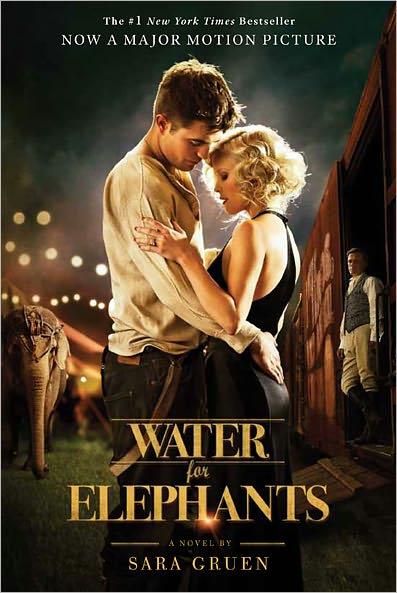
Oddly enough, the most persuasive recommendation I received for Water for Elephants—the circus-themed love story whose movie adaptation stars Reese Witherspoon and sparkly manpire Robert Pattinson himself—came from a marine. During a visit to NYC in May, a high school friend of mine, only recently back from a year in Afghanistan, was scouring my bookshelves when he stopped on H2OFE and exclaimed his appreciation for it. Granted, one’s standards for entertainment are probably different after a few months of living in a tent surrounded by sand, but I thought it only patriotic to abide by the glowing endorsements of the armed forces. (After just a few minutes of mockery.)

I am, it’s worth noting, probably the last person on the planet to read Water for Elephants. For one, I’ve never been a big fan of historical fiction. But the paperback’s super melodramatic cover also discouraged me from carrying it around on the L train, amid all the New Yorker subscribers and casual readers of ancient philosophy. And mustaches.

Not one to shy from my mistakes, I’ll be the first to admit that Water for Elephants is about as good as my marine friend—and the novel’s bestseller status—suggest. Set in the 1930s, it follows protagonist Jacob Jankowski who runs away from home to (inadvertently) join the circus. While there, he meets Marlena, the beautiful ..horse lady performer (?), who is married to August, the seemingly schizophrenic animal trainer. Jacob obviously falls in love with Marlena, August obviously figures it out, and a fairly predictable narrative ensues, amid a thoroughly researched portrait of circus life in the heyday of Ringling Brothers, when circuses still came to people by train and no one had ever heard of a $14.99 plastic souvenir cup.

Also, there’s an elephant.

Continue reading “The greatest show on Earth”

A dome of one’s own

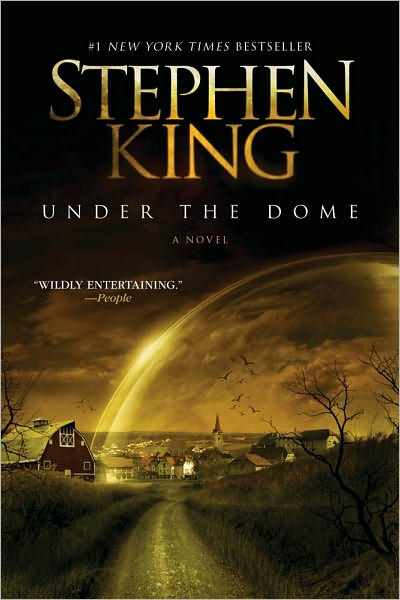
I’m not even slightly embarrassed to admit that, after finishing Under the Dome on Saturday afternoon, I set it down on my nightstand, took off my glasses and had myself a little cry. No, not because I’m on some experimental medication, pregnant or going through the changes. This is an emotional book! It’s a scary one, sure, but also gripping, tragic and overwhelmingly bleak.

So, context: Although I’ve known of Under the Dome for years (and of the somewhat hilarious similarities between its plot and that of The Simpsons Movie), I neglected to actually buy the thing until last week. Currently4/7ths of the way through Stephen King’s seven-volume (soon to be eight) Dark Tower series, I’ve basically been King-ed out. It was only after dinner with a friend—I’m a huge sucker for glowing recommendations—that I decided to bite the bullet.

It’s worth noting that, Dark Tower commitment issues aside, I’ve always loved Stephen King. Along with Dean Koontz, one might say he transitioned me from the 200-page Christopher Pike novels of my childhood into sprawling stories with dozens of characters and themes that sailed right over my 10-year-old head. And while King’s writing is often concerned with the supernatural, it’s just as often—if not more frequently—concerned with human nature, with what people do and who they become when pitted against something terrifying, or life-threatening, or world-ending. Some of King’s books—The Green Mile, Carrie, Gerald’s Game—wear this theme on their sleeve, while others couch it in vampires or monsters or ancient spiritual forces. Either way, the man’s got a worldview: As a species, it doesn’t (or wouldn’t) take us long to hit rock bottom.

Continue reading “A dome of one’s own”

To Kindle or not to Kindle

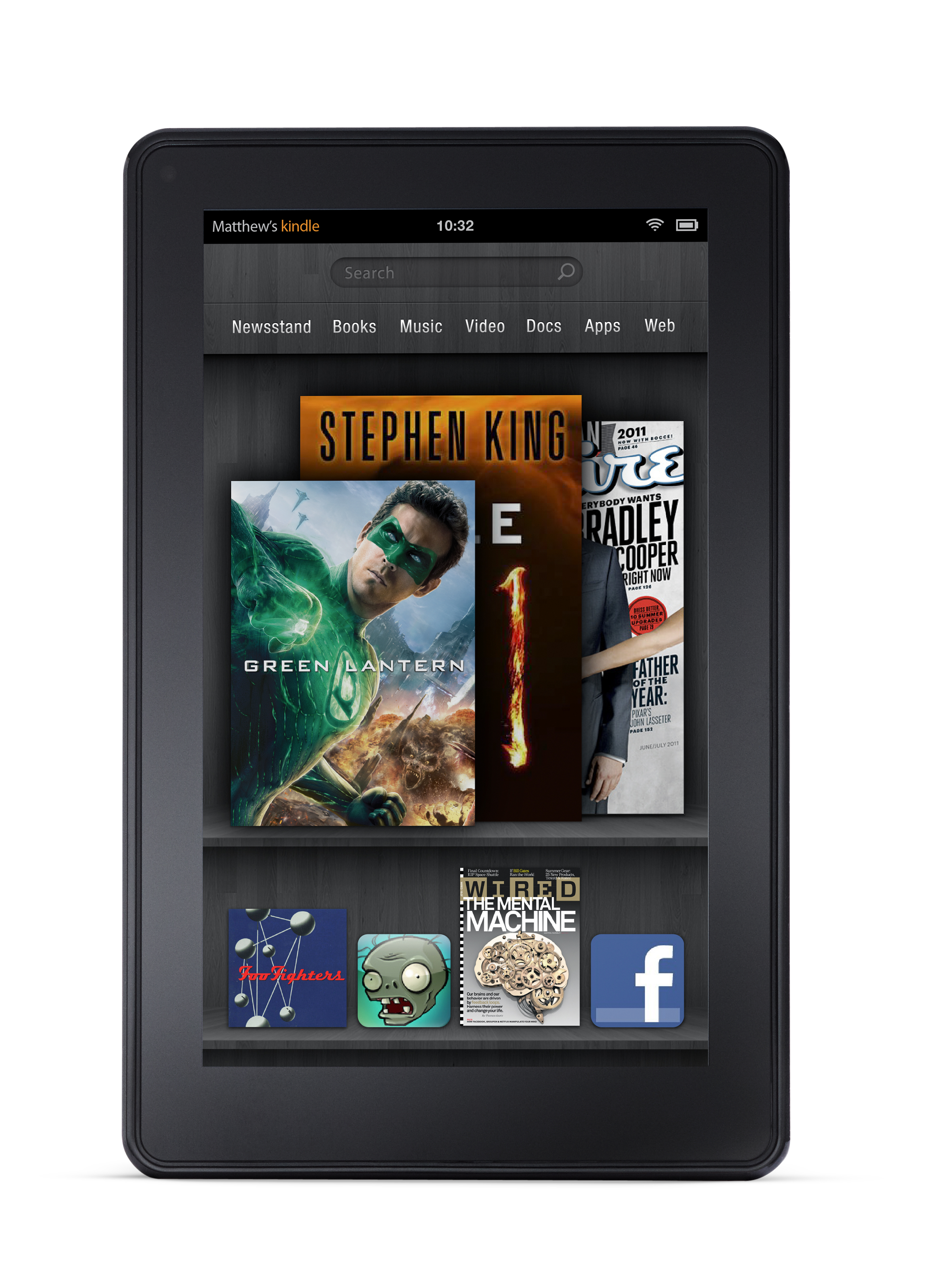
So it’s a big week for e-readers (which I’m told are like books except on little miniature computers) as Amazon unveiled Kindle FIRE *sizzle* (sound effects mine), the company’s long-awaited tablet device (i.e. iPad assassin). The $199 doodad is pretty much a Blackberry PlayBook—it has a 7-inch color touch screen, plays movies and music, lets you browse the interwebs and oh, gives you access to like a bazillion e-books. Hooray for technology!

In addition to Fire, Amazon also unveiled new pricing tiers for a variety of other Kindle models: A Kindle Touch runs $99 for a WiFi-enabled version, or $149 for 3G, and a plain old readin’-stuff Kindle is now a mere $79, less than the price of four hardcovers. (You can also still get versions with keyboards, if you’re like geriatric or whatever.)

Now, friends of this blog know I have typically been …whatever the opposite of an enthusiast is when it comes to the Kindle. I’m one of those old-school, paper-loving weirdos that likes to stand on her soapbox and talk about the smell of books, the feel of cracking a spine, the satisfaction of turning a final page. Without physical books, approximately a third of my 330-square-foot apartment would be empty, at least two of my friends would have nothing to borrow, and at this particular moment my purse would be about a thousand pounds lighter (thank you, Under The Dome.)

In a way I can’t remember feeling about the switch from cassettes to CDs or CDs to iPods, I’ve stubbornly held on to my preference for the tangible book, (a preference evidenced by the number of used Barnes & Noble bags I have stored under my kitchen sink.) But although I am a veritable Maxine when it comes to e-reading, I have always said that I would make the switch when it became unavoidable. Yesterday’s announcement raises the question (not only for me, but for everyone in the publishing industry): is it that time? 

Continue reading “To Kindle or not to Kindle”