In the garden of beasts

In the grand scheme of things, it’s unsurprising that I’ve been interested to read In the Garden of Beasts. For one, it’s about Nazis (indirectly; it’s about the U.S. ambassador to Germany and his family, living in Berlin during Hitler’s ascent to power) and for two, it’s by Erik Larson, whose ability to turn nonfiction into compelling narrative I praised in my review of Devil in the White City. For three, the book was moved to the top of my list after my mom demanded I return it to her over Christmas (I borrowed it from her husband.) Because nothing puts my mom in the holiday spirit like Hitler.

Continue reading “In the garden of beasts”

Some serious people-watching

I’ve often thought that my first novel—I plan to write it in my early 30s and will swiftly rise to meteoric fame and become impossibly rich—will be about reality television. Not because I consider the topic particularly fascinating (to others), but because it is something about which I know a great deal and a subject on which, one might say (I do), I am an unlicensed expert.

Now, if there were anyone in the world to whom I would entrust such a task, in the event that I die a tragic early death at the hands of a rare incurable disease or late-night hobo mugging, it would be Matt McDonough. But if he weren’t around (or happened to die with me at the hands of said hobo), I’d settle for Chuck Klosterman.

Generally speaking, I find that people who’ve read Klosterman tend to fall in one of three camps: (1) Love (2) Hate, or (3) “Sex, Drugs and Cocoa Puffs was pretty good.” Klosterman, like David Foster Wallace, has the sort of unique nonfiction style that earns him both critics and fans, a style to which he is forever associated and from which he struggles to separate himself. As with DFW, some Klosterman adherents are less keen on his fiction, which began in earnest with his 2009 novel Downtown Owl. Before that, Klosterman was known primarily for the aforementioned Sex, Drugs and Cocoa Puffs, as well as Fargo Rock City, Killing Yourself to Live and columns in magazines like Spin and Esquire.

Me, I fall definitively in (1) Love. I agree that his nonfiction is both more accessible and more entertaining, and I agree that he can come across as needlessly self-important. But the topics he loves most—sports, television, music, media’s influence on society—are so generally unimportant (in the grand scheme of world issues) that I find it hard to get worked up about some perceived Klosterman pretension. I can’t begrudge the man his rather strong and overworked opinions on pop culture; I only wish someone would pay me to document my own. 

Continue reading “Some serious people-watching”
A Lesson From Steve Jobs

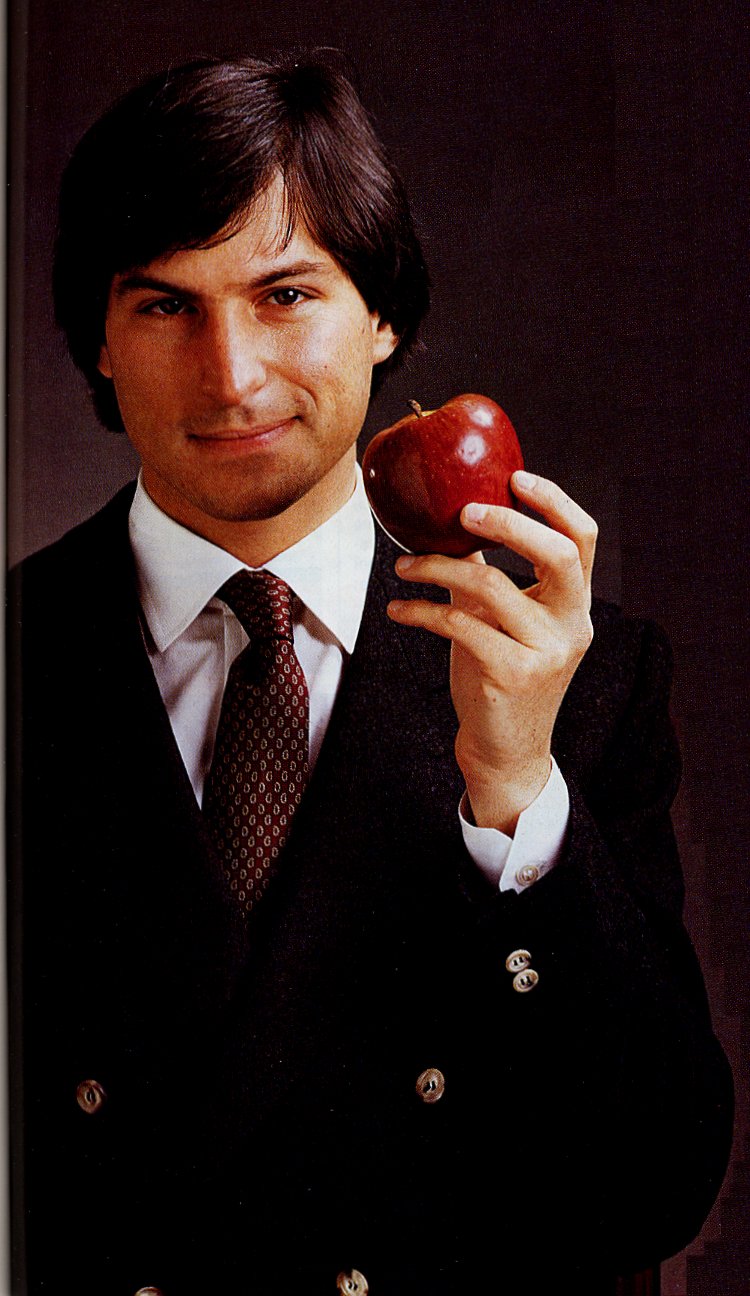
Amid all the fun of this past weekend—seeing Breaking Dawn in an empty suburban theater, going bar-hopping with my newishly legal younger sister, consuming what probably amounted to an entire pie—I managed to make my way through the final pages of Walter Isaacson’s Steve Jobs, about which I remained so fervently excited that my family has now heard more than their fair share of Steve Jobs fun facts. (I’ve become pretty adept at inserting such facts into otherwise unrelated conversations.)

I’ve already spent enough time on the various degrees of love that I have for this book, my inaugural biography and probably one of the best I’ll ever read. So in the interest of sparing everyone another 1,000 words of adulation, I just wanted to close out my two weeks with Steve Jobs by sharing one last not-quite-as-fun-fact, one that ultimately shaped my perception of Jobs more than his family life, business dealings or tempestuous personality: Jobs always suspected he would die young. Continue reading “A Lesson From Steve Jobs”

Kids Need Kindles Too

Remember this guy?

Those well-versed in history are familiar with the great debates of our time—Roe v. Wade, boxers v. briefs, Mary Kate v. Ashley. Now, after a series of articles in venerable publications like The New York Times and The Wall Street Journal, we can add to that list of life’s most pressing questions this: Should kids learn to read with e-books?

The Times last week found parents who insist their children read and be read to with old-fashioned paper books, citing things like “the experience of turning a page” and the “intimacy” of reading together without the potential distraction of Angry Birds. That, coupled with the fact that all baby showers involve the bestowing of multiple children’s books upon soon-to-be mothers, means kids’ titles are actually a bright spot in the world of old-fashioned publishing. E-books for children under 8 represent less than 5% of total annual sales of children’s books, compared with more than 25% for some adult categories.

The Journal, for its part, assessed the kid-friendliness of various e-readers, but comes to basically the same conclusion: Most of the time (excluding admirable Skype sessions on the part of the corporate traveler parent), print books are preferable, in no small part because kids are fairly fickle when it comes to the pace of a page-turn (something no existing e-reader lets a user dictate.) Even a growing cadre of children’s books with multimedia can’t overcome the benefits of print (I would add to this list of benefits the fact that toddlers have zero qualms about throwing books on the floor, something that’s much easier to accept when said book isn’t an iPad.)

Now I don’t have kids, so I can lend nothing to this debate from the perspective of a mother. I also don’t remember being read to as a child (though I know it happened frequently and is in large part responsible for my lifelong love of books.) But even as a 20-something whose immediate takeaway from these articles was “UGH, now bookstores will just have more kid shit in them,” I have to appreciate the irony. The same adults who unceremoniously made the personal switch to e-readers are citing the feel of turning of a page, the smell of a book and the silence of print when it comes to their kids. In other words, every reason I’ve avoided making the switch myself, just applied to Hop on Pop.  Continue reading “Kids Need Kindles Too”

From the Desk of Bill Clinton

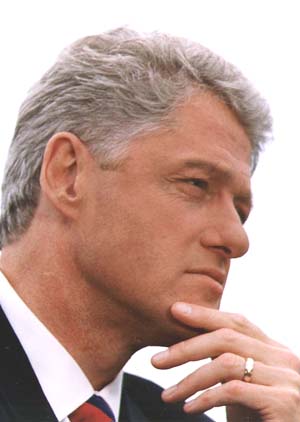
Back to Work is a hard book to excerpt, in the same way an informational but stylistically unexciting textbook might be. But there were a few passages that caught my eye. And since this is the season of giving, here they are! (with my de-politicianizing translations.)

“Our constitution was designed by people who were idealistic but not ideological.  There’s a big difference.  You can have a philosophy that tends to be liberal or conservative but still be open to evidence, experience, and argument.  That enables people with honest differences to find practical, principled compromise. On the other hand, fervent insistence on ideology makes evidence, experience, and argument irrelevant: If you possess the absolute truth, those who disagree are by definition wrong, and evidence of success or failure is irrelevant.  There is nothing to learn from the experience of other countries. Respectful arguments are a waste of time. Compromise is weakness. And if your policies fail, you don’t abandon them; instead you double down, asserting that they would have worked if only they had been carried to their logical extreme.”

Translation: Remember what it was like when Republicans knew words other than ‘no’? Hahahah me neither. Continue reading “From the Desk of Bill Clinton”