Sad Face

Big book news this week. Encyclopaedia Britannica Inc. said Tuesday that it will stop publishing print editions of its encyclopedia for the first time since the sets were originally published more than 200 years ago. They swear it’s because the digital version of EB is doing so damn well that there’s no real need to keep printing them (rather than, say, the company as a whole being felled by competitors like Wikipedia and um…Google) and I’ll give them the benefit of the doubt. OK Britannica, your digital encyclopedias are selling like hotcakes, so there’s no real reason to keep producing the massive book version. Sure. Whatever you say.

In any case, if you’ve been daydreaming about that 32-volume set since you were a kid (and they are ‘spensive, something north of $1,300) now’s your chance. After the current supply runs out, that’s it. (Me, I always thought it’d be fun to build a fort out encyclopedia volumes. A FORT OF KNOWLEDGE.)

And if you couldn’t care less because you haven’t paid money for an encyclopedia since the days of Encarta, then take this opportunity to instead read my review of A.J. Jacobs’ The Know-it-All. He may become the last living person to have the read the EB, in print, in its entirety. Here’s to small victories.

Spacious Studio, Doorman Building

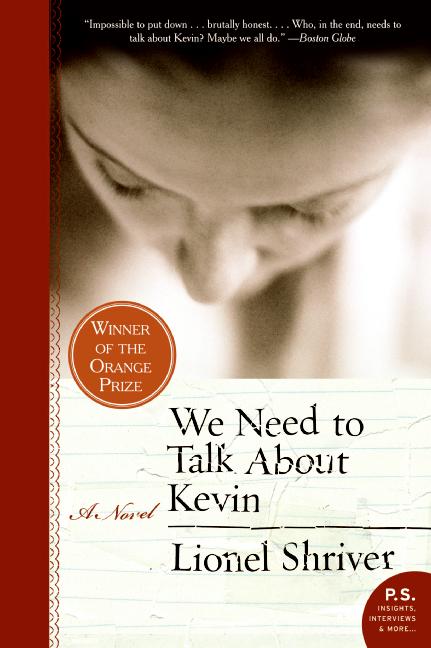
I’ve been reading some fucked up books about kids lately. First there was Kevin, a mass murderer trapped in a teenager’s body, whose dubious childhood raised the question (or rather, made the assertion) that some people are just born off.

And now I’ve spent a week with Jack, the five-year-old protagonist of Emma Donoghue’s Room, whose entire universe consists of an eleven-by-eleven-foot soundproofed shed. Which brings up an entirely different question: If Kevin, raised with everything, can grow up to be a shit, can Jack, raised with nearly nothing, grow up to be normal?

I should clarify: Jack and his mother don’t live in a shed by choice. Rather, said mother (who remains nameless throughout the novel) was kidnapped some seven years before Room takes place, by a man who has over the years raped her repeatedly, resulting in one stillborn child and another—Jack. The novel is told from Jack’s perspective, as a disarmingly content child who sees nothing necessarily strange about his living situation, or his mother’s assertion that what’s inside the room is real, whereas everything on television—which she only lets him watch in short bursts—is fantasy. Jack is accustomed to routine, attached to rules and feels only occasionally stifled by his limited environment. In fact, until Jack’s mother latches onto the idea of staging an escape, the duo exist in something sickly akin to normalcy inside their furnished prison cell.  Continue reading “Spacious Studio, Doorman Building”

The Great White Hype

Based on the success of Malcolm Gladwell’s books—approximately 8 zillion sold and counting—I went into Outliers with moderately high expectations. For a nonfiction author to attain Gladwell’s level of notoriety, even with a platform like the New Yorker, I assumed one of two things must be true: Either he’s a phenomenal writer, or every book includes a $50 Red Lobster gift certificate in the back flap. Sadly, neither is the case.

Now, in fairness, Outliers is not a bad book. The idea is compelling—Gladwell seeks to identify the stories behind some of the world’s most successful people, without settling for “Oh Bill Gates is just like, super awesome with computers” logic. His overall point—explained through multiple interesting examples—is that factors like upbringing, cultural background and circumstance play a very large role in success. And once you start reading, it’s kind of a “duh” realization. In fact, any kid who’s ever been the youngest in his elementary school class (sorry late birthdays!) realizes that even something as uncontrollable as your birth month can have every effect on your ability to stand out in a crowd.  Continue reading “The Great White Hype”

My favorite quotes from We Need to Talk About Kevin

It’s difficult to pick out favorite quotes from We Need to Talk About Kevin, both because every sentence is truly beautiful and because repetition seems to somehow imply endorsement, a hard pill to swallow when the topic is mass murder (or even just rampant cynicism). But here are some tidbits I enjoyed.

“I always prefer socializing at night—it is implicitly more wanton.”

“Only a country that feels invulernable can afford political turmoil as entertainment.”

“Hitherto, I had always regarded the United States as a place to leave. After you brazenly asked me out—an executive with whom you had a business relationship—you goaded me to admit that had I been born elsewhere, the U.S. of A. was perhaps the first country I would make a beeline to visit: whatever else I might think of it, the place that called the shots and pulled the strings, that made the movies and sold the Coca-Cola and shipped Star Trek all the way to Java; the center of the action, a country that you needed a relationship with even if that relationship was hostile; a country that demanded if not acceptance at least rejection—anything but neglect. The country in every other country’s face, that would visit you whether you liked it or not almost anywhere on the planet.”

Continue reading “My favorite quotes from We Need to Talk About Kevin”

Talking about Kevin

I have never been much of a kid person. What was at one point a general disgust has tempered over the years into more of a dull annoyance, but for the most part, I wouldn’t consider myself a huge fan. Being around other people’s children is like watching an episode of Planet Earth: I can enjoy a lion for 45 minutes without wanting one as a pet.

I have, like all 20-something women who openly espouse the anti-kid viewpoint, been tutted at by my slightly older peers (and mother), who assure me that I will at some point in life—a point most likely decided upon by my uterus—execute an about-face and forget the part of myself that shudders when a boisterous youngster boards my subway car. And in the interest of realism, I suppose that may very well be true. Despite having never been the type to coo over newborns or feel any particular affinity toward onesies, I can still understand that—objectively speaking—my indifference when it comes to the young is nothing to be self-righteous about, and could very well be impermanent.

But even if I allow that my now 26-year-old emotional geography will change over the next decade, I still wonder why it is that I’m averse to the idea of creating another person. Some of the reasons are obvious: By measures of current-me happiness—financial comfort, peace and quiet, lack of obligation to touch human feces—having a child is clearly bullshit. But these are things that people get past, by which I don’t simply mean that new parents are willing to make such sacrifices for their progeny, but rather that the very state of being a parent somehow dulls those needs. Touching poop isn’t something you can resent when the poop comes out of the wholly helpless human being that you made exist.

Continue reading “Talking about Kevin”