Lions, Tigers and Bears

What a strange few days it’s been. A lengthy, though surprisingly pleasant, drive to Pittsburgh over the weekend has me fully comprehending the intensity of my road trip next spring, and I’m $300 in the hole after the belated discovery that I’d misplaced my keys somewhere in central Pennsylvania. (On the upside, the locksmith said the front door to my apartment had the most poorly cut deadbolt hole he’d ever seen. So there you go—another victory of inconvenience for Bushwick. )

I was of course also saddened to hear about Nora Ephron’s death (I had somewhat presciently called her last book a goodbye book) and even though I don’t subscribe to the the whole afterlife thing, I hope she’s at some airy café in the sky, drinking black coffee and annoying waiters alongside an equally grumpy Ray Bradbury. I hope they have a nice long chat about having gotten the hell out of Dodge before someone forced them to join Twitter.

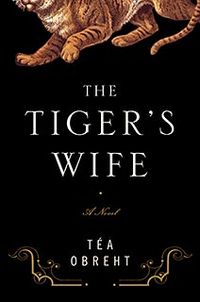
Still, amid all the goings-on this week, I did manage to finish Téa Obreht’s The Tiger’s Wife, which I’ve been meaning to read since it was named to the New York Times’ Best Books of 2011 list last year (leaving Swamplandia! and Ten Thousand Saints as the two fiction titles on the list that I have yet to read.) Set in an intentionally unidentifiable Balkan country, the novel follows Natalia, a “young doctor who tries to unravel the mysterious circumstances surrounding her beloved grandfather’s recent death. Searching for clues, she turns to his worn copy of The Jungle Book and the stories he told her of his encounters over the years with ‘the deathless man.’ But most extraordinary of all is the story her grandfather never told her—the legend of the tiger’s wife.” (I was too lazy to summarize the plot any more efficiently than it was outlined on the back of the book.)  Continue reading “Lions, Tigers and Bears”
This isn’t how

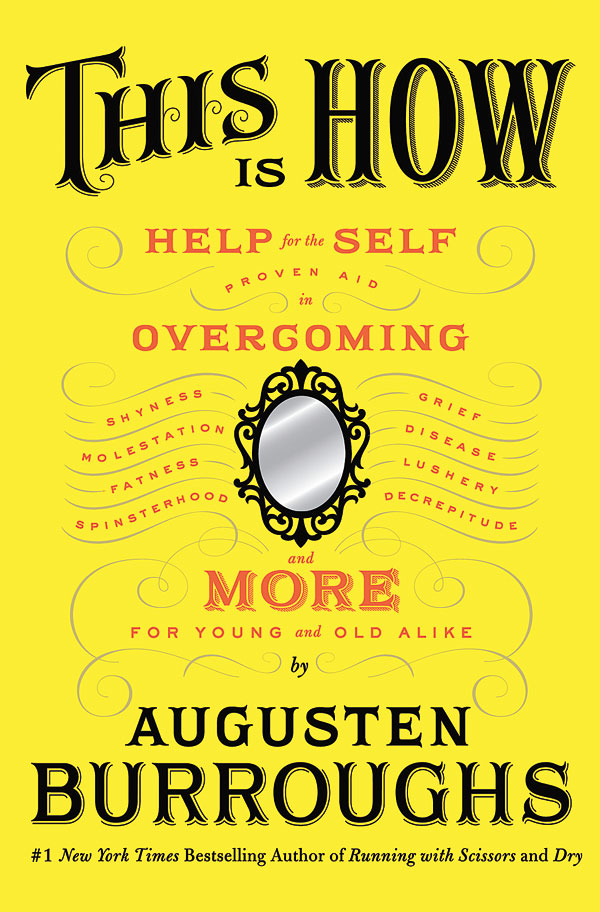
Let me start off today’s (very belated, I know) review of Augusten Burroughs’ This is How with a passage from one essay in the book, “How to Be Fat”:

“Almost every serial dieter I know speaks of his or her ‘relationship with food’ and how ‘complex’ it is.

As with any shitty relationship, the solution is not to spend years in couples therapy and scheduling sex every Wednesday.  If it’s really a shitty relationship, you have to leave it.

If you go on a diet and you lose weight and keep the weight off, that means you wanted it, you got what you wanted, then you actually liked having it, so you’ve kept it.

But if you diet and fail and diet and fail, you clearly have to stop with the dieting because you don’t like diets of any kind enough to follow them.

So. You let yourself eat anything you want and food becomes a commodity. It’s less interesting to stand before the glittering, freshly stocked All You Can Eat buffet when you have been standing there every night for the past six months, eating all you want, which is less and less each time. When no food is off-limits, all food becomes equal and calories evaporate, even if they pile on. But these calories, no matter how actually fattening, contain no meaning. Your war with your weight must end because wars require more than one active party.”

There you have it, guys. Augusten Burroughs, just ten short years after releasing his debut novel, Running with Scissors, has managed to cure obesity. Tired of being fat? Eat whatever you want! Don’t worry, eventually your body will figure it out. I mean, eventually might be five years from now, when you weigh 500 pounds and end up starring in one of those TLC specials about people who can’t leave their houses without removing an entire wall. But don’t worry: You’ll be content in the knowledge that at least you didn’t waste time fighting with yourself over the fact that carrots suck more than cookies.

Out of all of the essays in This is How, the one on weight loss annoyed me the most—big surprise from the girl whose own “eat whatever I want” regimen has resulted in a weight gain over the last five years equivalent to about three medium-sized toddlers. Let me just tell everyone from the trenches of this particular healthy living methodology: If you really like food, it’s not going to work. Sure, maybe after a week at the beach—subsisting on beer and funnel cake—some part of my sugar-addled brain thinks “Huh, it’d be nice to eat some vegetables right now,” but the thought is fleeting, and lasts about as long as it takes me to find the caramel popcorn. My yearning for high-fat, high-sugar amazingness has very little to do with whether I consider that food novel and much more to do with how much I like having that food in my mouth. 

Continue reading “This isn’t how”

It’s happening!!!

Today is a momentous day! After months of planning—actually about three weeks of planning, then six months of forgetting—I have officially begun scheduling my Great American Bookstore Tour for the spring of 2013 (which gives me plenty of time to save money and scout out FedEx locations so I can ship all the books I buy back to New York.)

For the unfamiliar, the Great American Bookstore Tour (GABST) is my plan to visit some of the biggest and most legendary bookstores America has to offer, before they all go belly-up because of the stupid Kindle. Of course, it works to my advantage that all of these stores are in cities I have yet to visit (with the exception of NYC and Washington DC), so my otherwise culturally motivated endeavor will also be an excuse to conduct a mini cross-country tour of the U.S. and eat all manner of roadside foods. Yay fried cheese!

Here is the itinerary:

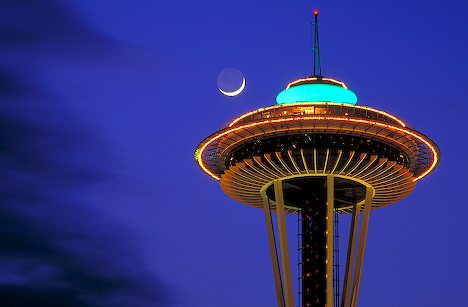
1. NYC –> Seattle. Visit the Elliot Bay Book Co. as well as that needle that goes into space.

2. Seattle –> Portland. Visit Powell’s Books, take discreet photos of hipsters, eat locally grown food and generally get in touch with my bohemian side.

3. Portland –> San Francisco. Visit City Lights, the Mrs. Doubtfire house, the Full House house, ride on a trolley, check out that bridge, complain about steep hills.

4. San Francisco –> Denver. Visit The Tattered Cover, look at mountains.

5. Denver –> Washington DC. Visit Politics and Prose, regale my high school friends with my adventures.

6. Washington DC –> NYC. Visit The Strand (for the millionth time), unpack, feed my incredibly lonely and neglected cat.*

*I will not actually leave my cat alone for two weeks.

Step 1—a flight from NYC to Seattle—has just been booked, which makes this whole idea just that much more real. Now I only have a rental car, multiple hotels, another flight, $5 million in gas money and $6 million in book-buying money left to save up. Totes possible. Totes.

The old ball game

As I doubt many of you are aware, except those privileged few who knew me in my formative teen years (I had really awesome hair), I was for a time the player manager of my high school’s baseball team. I’d like to say that this was because of some great love of the game, but it was really motivated by a) my desire to leave class early b) my desire to flirt with baseball players and c) my desperate need to convince the coach—who was also my physics teacher—that despite all grade-related evidence to the contrary, I actually did have a vague understanding of things like “force” and “gravity.” (Or, is gravity a type of force? I seriously almost failed physics, guys.)

Anyway, in spite of my ulterior motives, over the course of my managership I acquired two things: 1) the Richard Montgomery High School Baseball sweatshirt that I now honor daily by wearing it to watch TV, and 2) a solid appreciation for the sport (which is fortunate, since I ultimately moved to a city with a borderline maniacal love of it.)

To the unaccustomed eye, baseball is, let’s be honest, slow, and full of the kind of nuance that sports like hockey and basketball eschew. It’s a game that seems equally focused on the team and the individual—how do concepts like sacrifice and error exist in the same game?—and, perhaps most importantly, it involves men wearing hilarious pants. But there’s something elegant in baseball that you don’t really get out of watching 300-pound dudes run directly into each other. Baseball’s got mad panache.

I also love professional baseball because it’s splendidly American, and not just in the pastime sort of way. The salaries are exorbitant, the beers are overpriced, and literally everything in the game—from the first home run to the seventh-inning stretch—is sponsored to within an inch of its life. It’s kind of amazing to sit in the stands of a modern ballpark: The same old teams wearing the same old uniforms playing the same old game, only now surrounded by noise-o-meters, jumbotrons and $10 hot dogs. It’s like baseball is simultaneously American and ‘Merican.

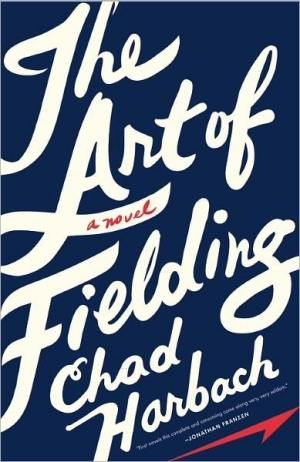
Anyway, given all of the above, it should come as little surprise to you all that I truly enjoyed The Art of Fielding, Chad Harbach’s debut novel about, duh, baseball. Kind of. The Art of Fielding is about baseball like Lord of the Flies is about islands, or Animal Farm is about animals. Which isn’t to say that the sport is an allegory—though it may very well be; I’m as good with allegories as I am with physics—just that baseball is the backdrop to an ensemble cast of characters with a wealth of non-baseball-related problems.

The novel hinges on Henry Skrimshander, an unassuming shortstop who gets recruited to Westish College by the captain of the university’s baseball team, Mike Schwartz. Henry is one of the best players the school has ever seen, until one false throw shakes his confidence and throws multiple other characters into turmoil.

Continue reading “The old ball game”

Stuff your eyes with wonder

To commemorate Ray Bradbury’s death, here are some of my favorite quotes from Fahrenheit 451, my hands-down favorite book of all time.

“We need not to be let alone. We need to be really bothered once in a while. How long is it since you were really bothered? About something important, about something real?”

“With school turning out more runners, jumpers, racers, tinkerers, grabbers, snatchers, fliers, and swimmers instead of examiners, critics, knowers, and imaginative creators, the word ‘intellectual,’ of course, became the swear word it deserved to be. You always dread the unfamiliar.”

“A book is a loaded gun in the house next door. Burn it. Take the shot from the weapon. Breach man’s mind. Who knows who might be the target of the well-read man?”

“If you don’t want a man unhappy politically, don’t give him two sides to a question to worry him; give him one. Better yet, give him none. Let him forget there is such a thing as war. …Give the people contests they win by remembering the words to more popular songs or the names of state capitals or how much corn Iowa grew last year. Cram them full of non-combustible data, chock them so damned full of ‘facts’ they feel stuffed, but absolutely ‘brilliant’ with information. Then they’ll feel they’re thinking, they’ll get a sense of motion without moving. And they’ll be happy, because facts of that sort don’t change. Don’t give them any slippery stuff like philosophy or sociology to tie things up with. That way lies melancholy.”

“Books were only one type of receptacle where we stored a lot of things we were afraid we might forget. There is nothing magical in them at all. The magic is only in what books say, how they stitched the patches of the universe together into one garment for us.”

“The good writers touch life often. The mediocre ones run a quick hand over her. The bad ones rape her and leave her for the flies.”

“The books are to remind us what asses and fools we are.”

“You’re afraid of making mistakes. Don’t be. Mistakes can be profited by. Man, when I was young I shoved my ignorance in people’s faces. They beat me with sticks. By the time I was forty my blunt instrument had been honed to a fine cutting point for me. If you hide your ignorance, no one will hit you and you’ll never learn.”

“It didn’t come from the Government down. There was no dictum, no declaration, no censorship, to start with, no! Technology, mass exploitation, and minority pressure carried the trick, thank God. Today, thanks to them, you can stay happy all the time, you are allowed to read comics, the good old confessions, or trade journals.”

“What could he say in a single word, a few words, that would sear all their faces and wake them up?”

“Everyone must leave something in the room or left behind when he dies. A child or a book or a painting or a house or a wall built or a pair of shoes made. Or a garden planted. Something your hand touched some way so your soul has somewhere to go when you die, and when people look at that tree or that flower you planted, you’re there. It doesn’t matter what you do, he said, so long as you change something from the way it was before you touched it into something that’s like you after you take your hands away. The difference between the man who just cuts lawns and a real gardener is in the touching, he said. The lawn-cutter might just as well not have been there at all; the gardener will be there a lifetime.”

“Stuff your eyes with wonder.”

“I want to see everything now. And while none of it will be me when it goes in, after a while it’ll all gather together inside and it’ll be me.”