Let’s explore ‘Let’s Explore Diabetes with Owls’

diabetesowls

If you’re a big fan of David Sedarisβ€”like you want to crawl inside his brain and/or get stuck with him on a broken elevator or malfunctioning roller coaster (what? He’d have great commentary)β€”then take this piece of advice: Don’t read The New Yorker.

Sedaris released a new book of essays this month, the bizarrely named Let’s Explore Diabetes with Owls, which I bought with all the speed and joy of a stoner hitting up Taco Bell for his or her first Ranch Dorito Taco. And although LEDWO is chock full of traditionally hilarious Sedaris observationsβ€”on everything from the restroom situation in China to the litter situation in rural Englandβ€”I found myself suffering from a prolonged sense of dΓ©jΓ  vu. Indeed, the majority of the essays featured in Sedaris’ latest contribution to the bookshelf have been published before, most of them in the New Yorker.

Now, I’ve got nothing against authors double-pubbing their essaysβ€”Nick Hornby has an entire series of books based on his “Stuff I’ve Been Reading” column in The Believerβ€”but it does take some of the joy out of acquiring a new collection from one of your favorite writers. Sedaris in particular covers subjects so mundane on their face that one can’t help but remember his past contributions to the essay genreβ€”never have I thought to myself “Now, who wrote that piece about the predatory habits of Normandy house spiders again?”

Continue reading “Let’s explore ‘Let’s Explore Diabetes with Owls’”
All the Sookie Stackhouse novels, in 100ish words or less

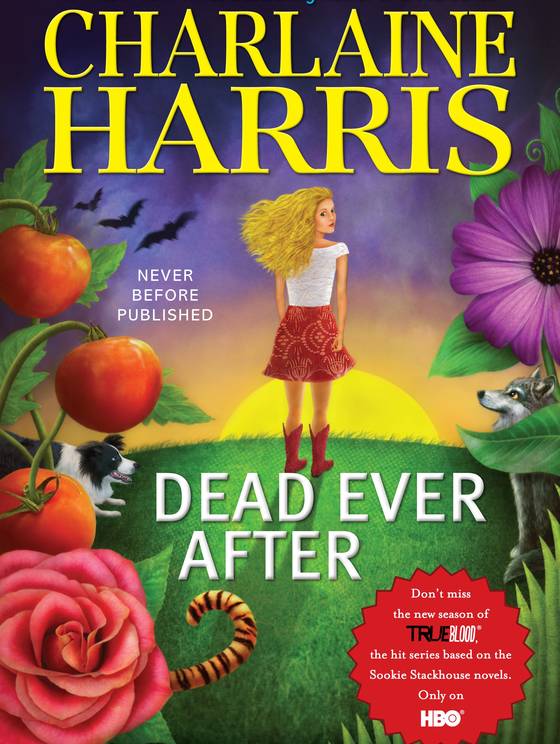
dead-ever-after-by-charlaine-harris-cover-3_4_r560

Well, the time has come. After 10 years and a whopping 13 books, Charlaine Harris last week released the final novel in the long-running Sookie Stackhouse series, the literary impetus for hit HBO show True Blood.

People always ask me if they should bother reading these books, and the answer is: It depends. Do you like absurd plots and a murder-to-novel ratio of approximately 24:1? Do you enjoy a narration style that feels only a few degrees shy of a fifth-grade diary? Do you like sexy vampires? If the answer to any of the above is yes, then by all means, read the Sookie books. They’re like cotton candyβ€”saccharine, fluffy, and delicious.

But if you’ve got something pesky like “standards,” or simply don’t have the time, worry not: I’ve got you covered. Here’s everything that happens in the Sookie Stackhouse world. [SPOILERS SPOILERS LIKE LITERALLY A BILLION SPOILERS]:

Continue reading “All the Sookie Stackhouse novels, in 100ish words or less”

I read the Amanda Knox memoir so you don’t have to

Waiting-to-be-Heard

My favorite impression of Italy comes from my college roommate, who broke her arm there over winter break in our senior year. Although she returned to New York in high spirits, and ultimately no worse for wear, it was with a humongous cast, the kind of heavy, awkward creation that looked like it came out of a 1950s sitcom, or like she broke her arm playing football with Charlie Brown. Granted, Alyce approached our final semester gamelyβ€”I have inspiring photos of her in full costume/party attire/dance regalia carrying that monstrosity of a castβ€”but I remember thinking at the time, “Note to self: Never let anything bad happen to you in Italy.”

And so it was with this in mind that I approached Waiting to Be Heard, the memoir for which Amanda Knox received a reported $4 million. (Admittedly, I also suspected it would make for an entertaining blog post.)

If you’ve been living under a rockβ€”a rock with no access to Nancy Grace or the Huffington Postβ€”Knox, better known as “Foxy Knoxy,” was charged with the 2007 murder of Meredith Kercher, a British student killed while the two lived together during Knox’s semester abroad in Perugia, Italy. The case, as presented by the prosecution, is a story of sexcapades gone wrong: Knox is said to have tried to initiate some sort of orgy/Satanic sex ritual with Kercher, accompanied by her (Knox’s) boyfriend Raffaele Sollecito, and acquaintance Rudy Guede. When Kercher refused to participate in said sexcapade, Guede raped her, and then Raffaele and Guede held her down while Knox slashed her throat. Knox then returned to her boyfriend’s apartment, woke up the next morning, and “discovered” the body upon returning to her flat.

Continue reading “I read the Amanda Knox memoir so you don’t have to”

Fine, The Great Gatsby isn’t as bad as I remembered

gatsby-original-cover-art

Here’s a fun fact: I grew up about 5 miles away from F. Scott Fitzgerald …’s grave, as he is buried in an otherwise nondescript cemetery in Rockville, Maryland, where I went to high school. Fun Fact #2: I never visited his grave, in part because at the time it seemed creepy but mostly because of Fun Fact #3: For the better part of two decades, I have been quietly scornful of Mr. Fitzgerald, because for the better part of two decades I have assumed that I really really did not like The Great Gatsby.

I suppose it started as one of those things that was mildly and inoffensively true, like maybe I hated having to read The Great Gatsby for school, or maybe I got a bad grade on a quiz about The Great Gatsby, or (most likely) I simply decided to dislike it for the mere accomplishment of being contrarian (I mean come on, is it really the best novel of all time?) But for many years, I told myself — and others; believe me, and others — that I didn’t really care for its rich white people plot, or its vapid characters. I suppose I said it so often (as often as The Great Gatsby comes up in daily life) that it became more of a truism than it ever was originally, like swearing you hate yogurt and then realizing one day that you haven’t actually eaten it in 15 years. Long story short, I owed Gatsby a reread, and I may have been a little (a lot) swayed by the prospect of seeing Leonardo DiCaprio play yet another poor scrappy white guy trying to scam his way to success.

Continue reading “Fine, The Great Gatsby isn’t as bad as I remembered”

When people kill people, does it matter why?

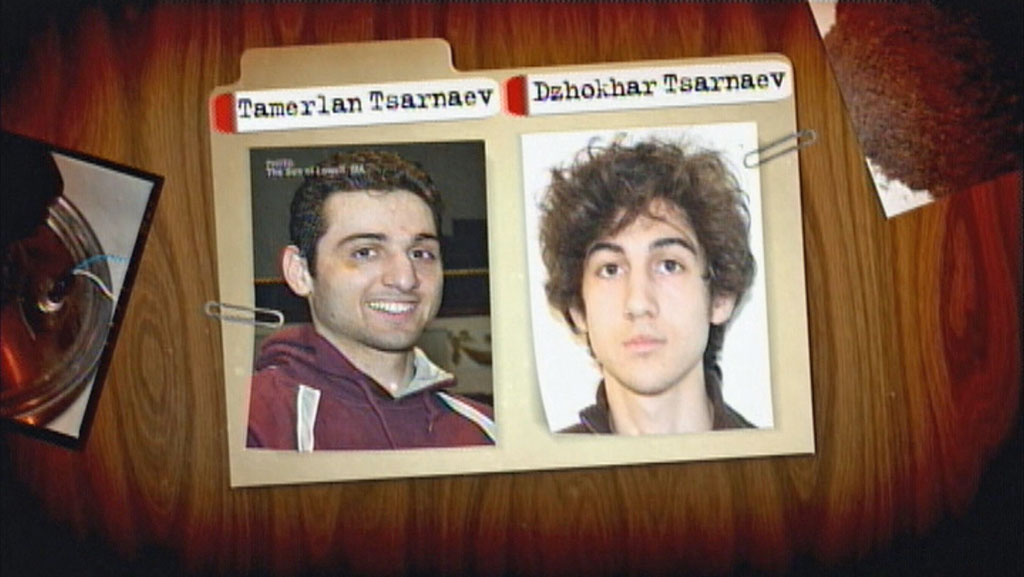
Tamerlan and Dzhokhar Tsarnaev

In the wake of our six-billionth national tragedy this month, I keep hearing one question when it comes to Boston bombers Dzhokhar and Tamerlan Tsarneav (whose names I will literally never ever remember how to spell). More than anything, perhaps sometimes even more than outrage, people seem to want to know why: What motivated them? What could have possibly led two otherwise mediocre brothers to set off bombs, to blow up children, and to fuck with Boston.

Indeed, we as Americans (we as humans?) appear keen on filing the Marathon incident away into a pre-determined folder of Why Bad Things Happen. Was it terrorism? Was it politically motivated? Were they lonely and alienated in their non-native country? Were they tired of being asked for donations every time one of their friends ran a 5K? Were they just crazy?

A byproduct of my extremely cynical worldview (on a crocheted pillow, it would boil down to something like “People are awful human beings”) I don’t find myself as preoccupied with the Tsarneav brothers’ motive. Since there is nothing they could say or reveal (rather, that Dzhokhar could say or reveal) that would make me go, “Ohhhh, well that totally makes sense then,” their reasons for wreaking havoc in this country — which never appears to never have treated them with anything worse than apathy — are somehow frivolous to me.

Taking it a step further, I sometimes feel that attempting to publicize their justifications for the bombing does little except give those justifications undeserved exposure. Yes, I suppose I’d like to know whether they were linked to a broader group with additional targets, but then again maybe not. Maybe some part of me would like to trust that the authorities will suss that out, and leave the rest of us to forget the name Tsarneav post-haste, to drop the duo into the bucket of Stupid Awful Idiots Who Did Terrible Things But Otherwise Don’t Matter, not the bucket of Terrorists Whose Ideology We’ll Talk About for Decades to Come and Who Have Basically Defined Our Foreign Policy. It’s a tough balance — seeking justice for the victims, preparing for the possibility of a next time, and yet also finding a way to lessen the impact of these people, to avoid giving them the attention they so desperately want. It feels like getting bullied at school and being told to ignore it, that they’re only trying to get a rise out of you, that reacting is how they win.

Continue reading “When people kill people, does it matter why?”