So are we living in a literary dystopia?

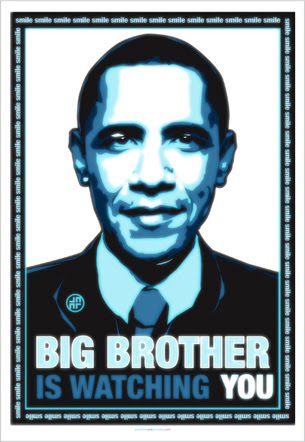
big-brother-is-watching-you-poster

To the chagrin of many (and the surprise of few) it turns out that the National Security Agency is keeping an eye on us. If you’ve been sending tongue-in-cheek missives to your UK friends about “blowing up all of the buses because ughhh,” now might be the time to stop.

With this week’s revelations—brought to you by patriot/traitor/poor man’s Alexander Skarsgard Edward Snowden—Americans are understandably displeased. And, it would seem, anxious: Sales of George Orwell’s 1984 have spiked on Amazon.

But are we really so close to the worlds envisioned by authors like Orwell, Aldous Huxley and Margaret Atwood? Let’s take a look.

Continue reading “So are we living in a literary dystopia?”

Stop what you’re doing and read Beautiful Ruins

Beautiful_Ruins

I’m happy to report that Beautiful Ruins, Jess Walter’s eighth book (seventh novel) lives up to every enthusiastic blurb that adorns its front and back covers, including accolades like “a literary miracle!” and “damn near perfect.” As a result of this victory, Walter is now my second-favorite guy with a girl name, though he remains behind reigning champion Ashley Wilkes from Gone With the Wind. (Because I mean, wasn’t he just so nice?)

Ruins opens on the Italian coast in 1962, in a nearly defunct fishing village where Pasquale Tursi—owner and proprietor of the only hotel—is busy rearranging rocks in an attempt to form a beach, which he hopes will draw tourists to the otherwise desolate town. As if summoned, there suddenly appears on the dock Dee Moray, a striking American actress who is spending a night in Porto Vergogna before traveling onwards to Switzerland, where she is slated to receive medical treatment for stomach cancer. Enamored of Dee’s beauty—and struck by her serendipitous arrival—Pasquale sets about getting to know her, and in so doing unearths a story whose ramifications span continents, decades and generations.

Continue reading “Stop what you’re doing and read Beautiful Ruins”

The Witches of East End: Just no

witcheseastend

In the last 48 hours, I’ve taken about 37 cold showers. I’ve tried eight different fan/window combinations to see which might make my apartment (whose windows all face in the same direction, cross-breeze be damned) slightly less suffocating, and I’ve unearthed every ice pack I ever owned, all of which are now in the rotating employ of cooling my forehead/neck/brain. You guys, it is hot.

See, my apartment has sprouted a new “quirk,” which is that my window AC unit can’t be on an actual AC setting (versus “fan,” which is like the non-alcoholic beer of mechanized cooling) for more than 20 minutes without blowing a fuse. Consequently I spent the weekend doing such normal summer activities as the aforementioned fan rearranging, plus ordering a takeout dinner that included one turkey wrap and three smoothies, and traveling by bus to the nearest gym so that I could “exercise” (walk at a leisurely pace) in the comfort of central air. Ah, New York. You mock me, you do.

When home, I thought I might survive the heat with distraction, and embarked upon a new series whose description seemed to put it in the same league as the saccharine and ridiculous (and recently concluded) Sookie Stackhouse books. Witches of East End follows “a family of Long Island witches that are struggling against dark forces that are conspiring against them” and is written by the same author as a young adult series called “Blue Bloods,” apparently about vampires in the same universe. WOEE is author Melissa de la Cruz’s first foray into writing “for adults” and in 2012, it was announced that Lifetime was developing a series based on the books. Because of course.

Continue reading “The Witches of East End: Just no”
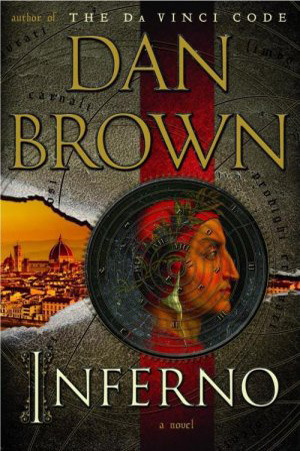
Dan Brown’s Inferno: Spoiler alert, there are symbols

inferno

Dan Brown really wants you to know that Sienna Brooks has a ponytail. I know this because Brown—famous author and mediocre contributor to the Tom Hanks ouvre—uses the word ponytail at least 20 times in Inferno, the fourth novel in America’s favorite dashing-symbologist series.

Here’s my thing with Dan Brown. I know that his books are considered, let’s say, “accessible” to the average American, like the third of the population who can’t name the vice president. And I understand that for some people, who prefer to exercise their brain waves on books and other materials of a more intellectual caliber, this may be a deal-breaker. I get it. I too dislike Brown’s over-attention to certain descriptors, his propensity for using big words when they aren’t needed, and his seeming inability to create female characters who aren’t ponytailed intellectuals with a wardrobe of only cream sweaters. He’s got his faults.

Continue reading “Dan Brown’s Inferno: Spoiler alert, there are symbols”

Farm to table to mouth to stomach to intestines to….

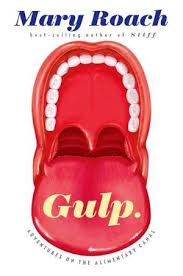
gulp

There’s been all manner of hullabaloo in the last few years over how food makes its way from wherever it started — ground, tree, plant, pig, chicken, cow — to the kitchen table (or if you’re me, to the deli counter sandwich). And that’s all well and good; I don’t know that I need to be made aware of my chicken’s first name, but there certainly isn’t any harm in knowing some stuff about the things you put in your mouth (that’s what she said).

Mary Roach, however, is concerned with none of that. Whether you’re eating a farm-raised chicken named Sarah — whose hobbies including pecking, clucking and the occasional egg — or spending an evening attempting to house a 40-piece McNugget meal is of no concern to Roach. She cares only about what happens after.

Continue reading “Farm to table to mouth to stomach to intestines to….”