The meaning of Life After Life

9780316176484_custom-471ca800e5fe1258f2d4059059b24d8c1d95a7ba-s6-c30

In The Simpsons’ sixth-season Halloween episodeβ€””Treehouse of Horror V,” primarily remembered for its Shining knock-off, The Shinningβ€”Homer accidentally turns his toaster into a time machine, travels back to the prehistoric age, and realizes that anything he does in the past has the capacity to change the future. It’s a lesson as pivotal to time travel (see: every story ever told about time travel) as it is irrelevant to everyday life. After all, we can’t not make decisions. Should our choices send us down one path at the expense of othersβ€”or, to get more J.J. Abrams about it, should each of our choices create countless additional paths which themselves generate still more simultaneously occurring futuresβ€”so be it. We’ll never know the difference.

Unless. Kate Atkinson’s Life After Life is elegantly concerned with this abundance of potential paths, and with the possibility that one might indeed be aware of their existence. At the heart of LAL is Ursula, born on a snowy night in 1910, dead within minutes, and then born againβ€”on a snowy night in 1910. Nor is Ursula’s first rebirth her last: She dies in a variety of ways, and at a variety of ages, over the course of the book, and only in certain versions of her life does she mature enough to experience significant rites of passage, (or in some cases enough to make major contributions to the trajectory of world history). In this way, Life After Life is not so much about reincarnationβ€”Ursula is in all iterations herself, never a cat or a horse or a blade of grassβ€”and more about how even small choices have the power (or maybe just the capacity?) to redirect our lives. In other words, Ursula is not repeatedly reborn to a different set of circumstances, but rather given multiple opportunities to live within the same set of circumstances. It’s how she handles each life that shapes its direction.

Continue reading “The meaning of Life After Life”
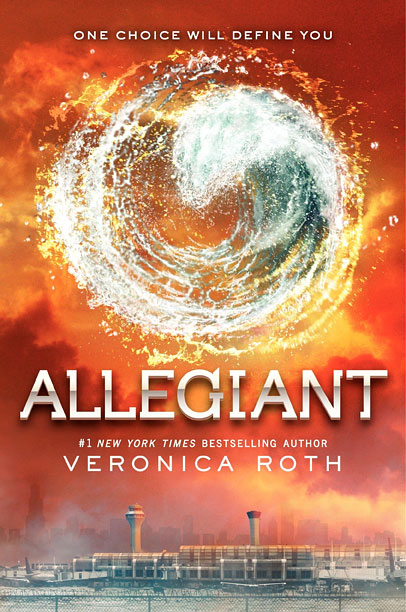
Katniss doesn’t have anything on Beatrice Prior

Allegiant hc c.JPG

Fans of the Young Adult Dystopia genre (YAD for short) should at this point be at least vaguely familiar with Divergent, the first book in a trilogy by Veronica Roth that tracks Beatrice (Tris) and various other residents of a post-apocalyptic Chicago whose society is divided into five factions, each founded on respect for a particular virtue (Candor/honesty, Abnegation/selflessness, Dauntless/bravery, Amity/peace and Erudite/intelligence.) Divergent, which comes out in movie form on March 21, was released in 2011, while Book #2 (Insurgent) came out in May 2012 and the final book in the series (minus all the BS “extras” Roth will publish over the coming years to reap untold profits from obsessive tweens) was released in October.

It’s always hard to review the second or third book in a series without inevitably giving away some of the haps in the preceding titles. But given the impending theatrical release of Divergent (which I reviewed about a year ago) I would be remiss to not weigh in on the Divergent series in its entirety, which feels* so plainly desperate to capitalize on the popularity of Hunger Games that one almost expects Katniss herself to wander into a scene by accident. (*In the interest of full disclosure, Roth did write Divergent before HG was a thing, and HG itself has been criticized for its similarity to other novels.)

Continue reading “Katniss doesn’t have anything on Beatrice Prior”

Some belated thinky thoughts on Justin Bieber

1390500405_justin-bieber-mugshot-467

Being a card-carrying* member of the lame-stream media, I am often forced to accept the ease with which the average consumer can — and loves to — pillory the current state of news. In 2014, finding an example of lazy, pandering or simply nonexistent journalism is as easy as turning on the television, or daring to type the word “cat” into a Google image search. And while there’s still a great deal of good work out there — for those so inclined to spend more time looking for it than bemoaning its alleged absence — it’s difficult to ignore that the ever-blurring line between information and entertainment has resulted in an America where MSNBC interrupts a congresswoman to report on breaking Bieber news.

*Still waiting for card.

As an emblem of The Problem With Media, Justin Bieber is tailor-made. He’s young, attractive and famous to a degree that both fascinates and disgusts us, revealing as it does some fundamental human tendency toward idolatry. As of late, Bieber has also proven himself a perfect storm of wealth and immaturity, the kind of person who gets his mansion raided by police because he egged his neighbor’s mansion. Without getting all intense about the state of journalism, it’s fair to say that Bieber is a car crash and America loves rubbernecking.

Continue reading “Some belated thinky thoughts on Justin Bieber”

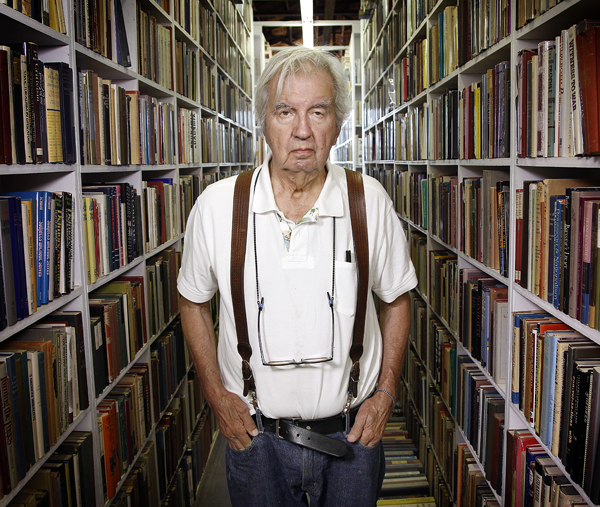
A little ode to Larry McMurtry

This week’s guest post comes to us from Tyler Allard: Princeton alum, good pal, and voted Most Likely to Become President in our high school (Spoiler: He has not yet been president). I swear I’ll be back in the reviewing saddle once I finish binge-watching all nine seasons of One Tree Hill my life calms down. 

Metro

So….I have a literary man-crush on Larry McMurtry.

Perhaps I should back up a bit.

As a Washingtonian, I am drawn to works that exude a sense of place. After all, having grown up in a region that thinks of itself as a mΓ©lange of all the types and regional personalities that make up American culture (and whose local celebrities include members of Congress who — by their very job descriptions — are conceptualized as representing certain places), I am fascinated by the romantic notion that places have auras that can be embodied or captured. And what American place hovers more strongly in the American imagination than Texas?

Continue reading “A little ode to Larry McMurtry”

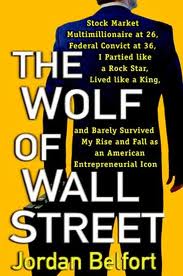
The Wolf of Wall Street glorifies no things

download

As a belated superlative of 2013, I dub The Wolf of Wall Street one of the year’s best movies, and one of its worst books.

While much fanfare has been made of Martin Scorsese’s newest film — which stars Leonardo DiCaprio in his traditional fake-it-till-you-make-it tragic hero role — less attention has been paid to the tome of a memoir that inspired it, a 500-page free-association rant written by the real-life iteration of DiCaprio’s character, Jordan Belfort, a stockbroker-turned-millionaire who lives large on hookers, drugs and shady financial transactions until he’s busted for fraud and stock manipulation. Belfort’s book, which he claims in a the-man-doth-proclaim-self-awareness-too-much prologue is written in a “voice that allowed me to rationalize anything that stood in my way of living a life of unbridled hedonism,” provides much of the running monologue for the movie adaptation, as well as most scenes and a great deal of dialogue. And no wonder: It is a story that demands to be told, with characters who demand to be portrayed, and it unfolds in a voice so simultaneously earnest and vile that you find yourself conflicted about whether to hate Jordan Belfort or pity him.

Because Belfort is, by all accounts, an asshole. He cheats on his wife with his girlfriend, then marries his girlfriend and cheats on her with prostitutes. He does an astounding array of drugs — at one point, he tests positive for cocaine, methaqualone, benzodiazepines, amphetamines, MDMA, opiates, and marijuana — both on the job and off. And then there’s the job itself: scamming investors, rigging IPOs, and making money hand over fist. Belfort is a complex man only in so much as he’s found myriad ways to suck. He’s simple-minded, greedy, sexist, deceitful, self-absorbed, careless and a borderline sociopath. 

Continue reading “The Wolf of Wall Street glorifies no things”