Unbroken broke me a little

unbroken-book-cover-01

As I was closing out the final pages of Laura Hillenbrand’s Unbroken on the train last week, a woman stopped me to ask how I was liking it. I replied that it takes it out of you—this book whose every chapter is more grim than the one before. “But it’s okay right?” she responded, shopping bags and Starbucks cup in tow. “Because he goes free in the end?”

It’s a credit to our threshold for human suffering that a World War II bombardier lost at sea for 47 days and then imprisoned in Japanese POW camps for more than two years is considered a victor in his life story. Yes, Louis Zamperini, the recently deceased subject of Hillenbrand’s wildly successful 2010 biography, was eventually freed. Yes, he lived to tell the tale. But a man does not walk away from such experiences cleanly, and the effects of Louie’s POW life on his post-POW life are apparent down to Unbroken’s very last page.

Much of this book’s plot has become common knowledge, perhaps by virtue of the comprehensive movie trailer, perhaps because of various interviews with Louis in the last few years. So I’ll sacrifice the time I’d usually spend on plot summation to jump directly to Hillenbrand, an author whose own limitations (chronic fatigue syndrome and its attendant symptoms have kept her homebound for years) are her personal testament to human resilience in the face of adversity. I’ve never read anything by LH before, and was pleased to find in her, like Erik Larson (author of Devil in the White City and In the Garden of Beasts) a penchant for research that borders on the insane (Unbroken ends with 8 pages of detailed acknowledgments and 40 pages of reference notes). This book is so thoroughly executed that it reads like fiction, and Hillenbrand’s dedication to describing 60-year-old events in vivid detail is beyond impressive. Of course, she had help—a pertinent quote from Louie kicks off the book’s acknowledgments section: “I’ll be an easier subject than Seabiscuit,” he tells her, “because I can talk.”

Continue reading “Unbroken broke me a little”
The irrefutable best books of 2014, as determined by science*

IMG_0092

It’s been a trying year here at Sorry Television. Sidetracked by work—and, let’s be honest, an endless procession of binge-worthy Netflix inventory—I am set to close out 2014 with a mere 32 books under my belt, near enough to bi-weekly that I should probably rebrand as You’re Welcome Television (subtitle: Reading Books Every So Often, Like When the Power Goes Out). I’m already planning redemptive 2015 reading goals (a book a day? a book an hour?) but for the time being I’ll have to accept mediocrity, and foist as much blame as possible on a shorter commute’s ability to stymie even the most dedicated bibliophile.

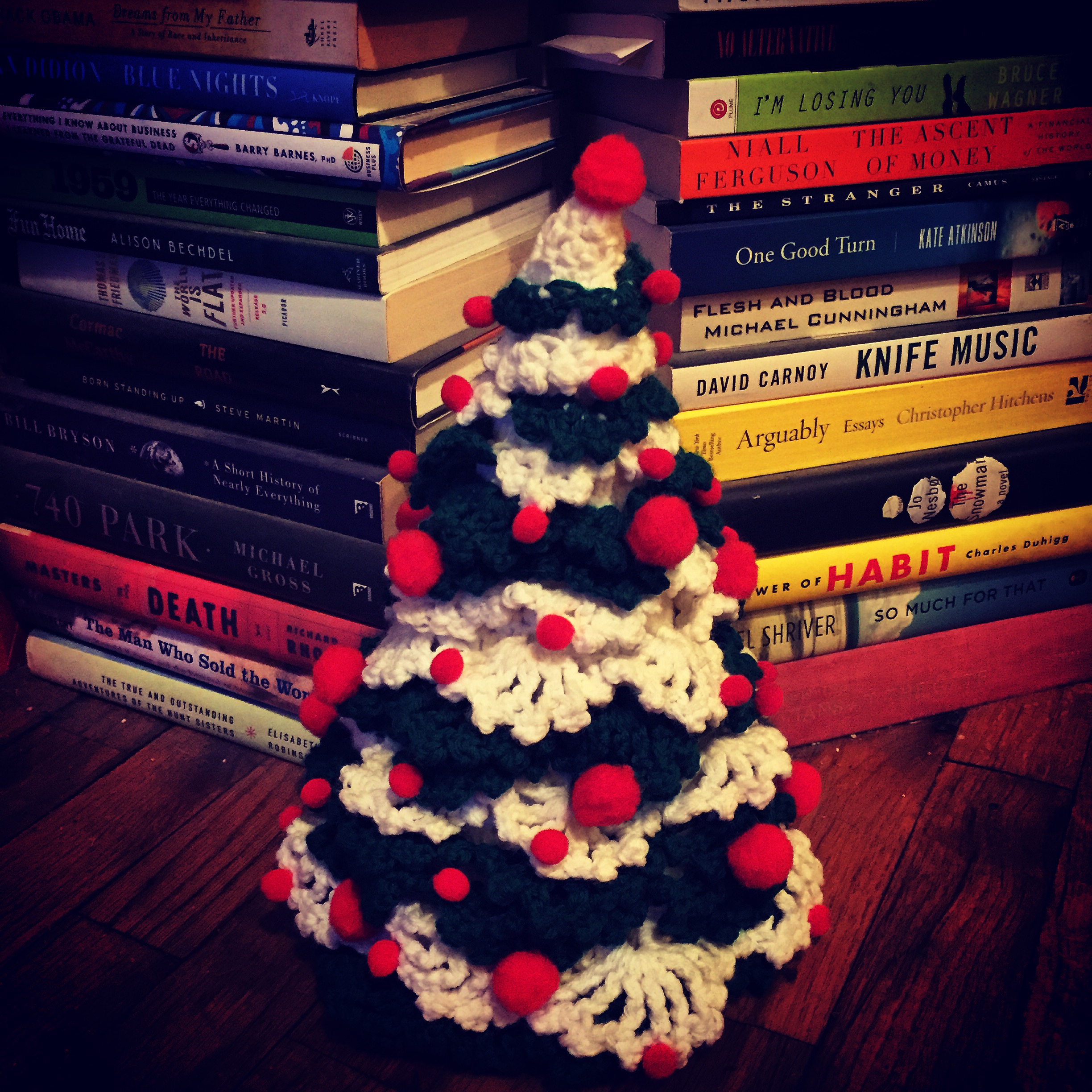
But I can claim a smidge of productivity this month, which is why I’m Indiana-Jonesing under the content door that is Christmas week to bring you The Irrefutable Best Books of 2014, a master list of this year’s greatest hits, as determined by 21 other “best of”s written by people who have actually read them. Let’s get into it.

Continue reading “The irrefutable best books of 2014, as determined by science*”

Serial fans should be getting down with Tana French

books31f-1-web

If you have ears and you haven’t been listening to Serial, you frankly don’t deserve them.

The beloved podcast, a pseudo-real-time deep dive into the 1999 murder of high school student Hae Min Lee and the conviction of her ex-boyfriend Adnan Syed, dropped its 10th episode today. Which means right now listeners all over the country are spending Thursday as they always do in this, our post-Serial world: debating the merits of a 15-year-old homicide investigation, and emphatically declaring or protesting Adnan’s proclaimed innocence. Somewhere, during a quick bite at the office cafeteria, coworkers are arguing over the inherent shadiness of Adnan’s accuser, Jay. Somewhere, a wife is screaming at her husband: “But what about the Nisha call!?!

As runaway hits go, Serial lives up to its hype—and I say this as someone who generally keeps the Podcasts app in her phone”s “NOPE” folder, along with Stocks and iTunes U. The program is smart and thought-provoking, and bizarrely compelling for something you experience as only a listener.

Continue reading “Serial fans should be getting down with Tana French”

Chuck Palahniuk’s ‘Beautiful You’ is 240 pages of what the whaaat?

beautiful-you-cover-official

As a woman and/or literate person, it’s difficult to finish Chuck Palahniuk’s latest novel without wanting to throw it across a room. Without scoffing audibly while reading on a packed subway car. Without texting your friends context-less lines from the novel’s more ludicrous moments, linguistic gems like “blazing dildos shrieked across the sky” and “‘Hear me, my sister women! You must quit abusing your loins.'” As a woman and/or literate person, it’s difficult to read Beautiful You without having to willfully remind yourself that it’s all satire.

At Comic-Con, Palahniuk told an interviewer that Beautiful You—whose working title was “Fifty Shades of the Twilight Cave Bear Wears Prada”—is “kind of a mash-up of the most popular chick lit novels….comparable to something the Marquis de Sade would have written.” In an interview with Curious Animal, Palahniuk said he’s “hybridized the ultimate chick-lit novel” and wanted to pack BY “with as many tropes as possible, from the ‘almost-as-pretty’ best friend, who’s always a person of color, to the designer label fashions, the quest for a primitive mentor and, finally, a big wedding scene.”

Beautiful You has all of those chick lit tropes, as well as some, well, rarer ones, like the aforementioned flying dildos, and a 200-year-old sex mystic who lives at the top of Mount Everest. The novel—to the extent that I can summarize it without a) giving away spoilers or b) laughing—centers on Penny Harrigan, the kind of spineless female lead that does feel at home in books like Fifty Shades of Grey and The Devil Wears Prada. Penny is your typical errand girl at a high-profile law firm, and is on the hunt for meeting chairs one day when she stumbles across C. Linus Maxwell—quite literally; she falls through a doorway and lands at his feet. A billionaire with a reputation for courting soon-to-be powerful women (see: the first female president of the United States, a young queen, an Oscar-winning actress), Maxwell strikes up an affair with Penny, which consists primarily of his taking dutiful notes while giving her mind-blowing orgasms with an endless procession of proprietary sex toys. Penny soon discovers that she is the guinea pig for Maxwell’s forthcoming line of “feminine products”—named Beautiful You—and when said products are released, finds herself to be almost the only woman alive capable of resisting the compulsion to abandon her life for 24/7 “me time.” And I mean literally: Women stop leaving their bedrooms; husbands are ignored; children left motherless. Meanwhile, Maxwell’s intentions with respect to the Beautiful You empire are revealed to be far more sinister than previously imagined—this is a spoiler but I’m sorry I just can’t resist: NANOBOTS ARE INVOLVED.

Continue reading “Chuck Palahniuk’s ‘Beautiful You’ is 240 pages of what the whaaat?”

Amy Poehler on life, comedy, & humping Justin Timberlake

2D274905957270-YesPlease.blocks_desktop_medium

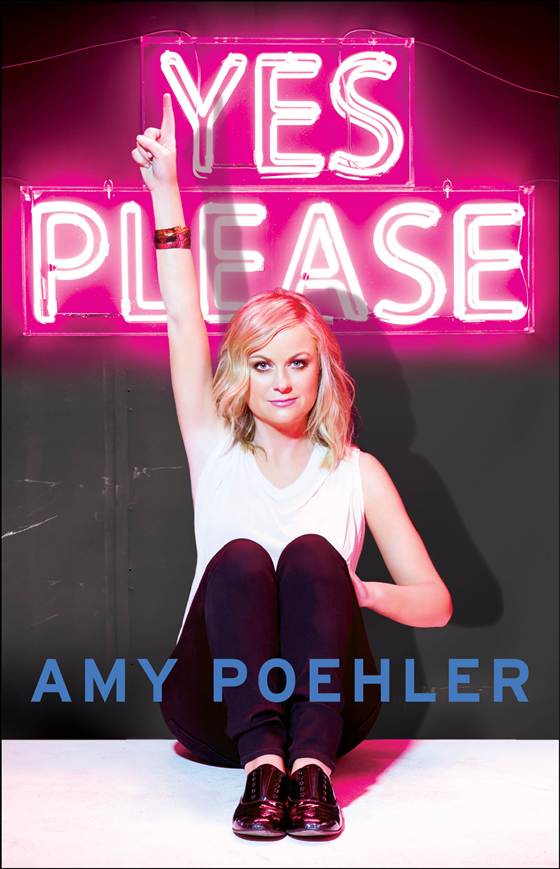
I generally try not to review two lady memoirs in a row (for variety’s sake, if not to avoid alienating my strong contingent of ultramasculine readers) but when an advance copy of Amy Poehler’s Yes Please falls into one’s lap, one does not let opportunity pass them by. One does spend all of Sunday eating mozzarella sticks in bed while laugh/cry/nodding at Poehler’s engaging, insightful and overall A+ addition to the Lady Library, whose other contributors (Fey, Kaling, SilvermanGriffin, Dunham) have graced Sorry Television in the past. One does, after spilling marinara sauce on one’s pillow and accidentally eating a mozzarella stick the cat licked, ruminate on whether one is in fact living her life to the fullest—engaging in behavior likely to engender the sort of chance encounters, dedicated friendships and hard-won professional achievements Poehler documents in her book. One does, briefly, regret not having been a teenager in the 80s, for the #tbt photo possibilities alone. One does, not briefly, feel proud to be a woman.

It would be wrong to try and rank the titles in the Lady Library from best to worst, or funniest to least funny, or most predictable to most surprising. It feels barely not wrong to call it the Lady Library, and I only do so because those books above are in many ways about being female, in a male-dominated world (comedy, Hollywood, America, Earth), and with all the assumptions and expectations womanhood implies. But if I had to rank the ladybooks, like if someone put a gun to my head and said “Quick! What’s your favorite female comedian’s memoir?”—I dunno, it could happen—I’d have to call it a tie: Between, naturally, Tina Fey and Amy Poehler.

Continue reading “Amy Poehler on life, comedy, & humping Justin Timberlake”