Oh, God…

Confession time: I didn’t care for Gilead.

Now I know what you’re thinking: The book won a Pulitzer, how bad can it be? Well I’m glad you asked. Gilead isn’t bad, not at all. Rather, it’s one of the more beautiful things I’ve ever read, filled with lines that address spirituality in a way uncommon among modern literature, in a way meant to resonate with people who have themselves considered the implications of being religious in the modern era. In fact, I can’t emphasize enough how truly beautiful and poignant the language in Gilead is.

Unfortunately, no amount of beautiful language could have saved this book for me. Rather, my objection lies with the subject matter. Gilead is told from the point of view of a priest, spending his dying days writing a letter to his rather young son, a letter intended to bequeath upon his kin all the various thoughts and suggestions he might have otherwise shared in fatherhood. Alone, this sounds charming. In practice, Gilead is an exercise in religion, and more specifically in what it might mean for a religious man in the 20th century to decide which parts of his life and thoughts are worth sharing with his child. Lest this still sound appealing, for me personally it read a lot like a father describing to his son his impression of unicorns, and how their supposed presence had affected his outlook on life. Which is to say I found it almost entirely irrelevant. Continue reading “Oh, God…”

Kurt Cobain, The Afterlife

51K7hqIHV7LEtgar Keret is an odd duck.

I could debate whether the quirkiness of his stories is best attributed to a “lost in translation” type of effect, but even that kind of discrepancy wouldn’t be enough to account for how unique they are, and how downright weird. In reading up on the author (thank you Wikipedia) I found that his stories are widely popular among Israeli youth, who see them as something of a reflection on their national ethos. What does this mean? While American 20-somethings are texting and playing video games, young adults in Israel are poignantly preoccupied with thoughts of life and death, heaven and hell, good and evil.

Indeed, many of the stories in The Bus Driver who Wanted to be God touch on some of those central themes: the meaning of life, what happens after we die, the fairness of God. Some reference Israeli youths’ (mandatory) time in the military, while others touch on Holocaust Remembrance Day, for obvious reasons a rather heavy subject there.

Yet despite its dark themes, I would be remiss if I didn’t mention that Bus Driver in particular, and Keret in general, is funny. Not laugh out loud funny, often not even chuckle to oneself funny, but humorous in a darker way, in a way that suggests lamenting the injustices of life is pointless, so laughing about them seems like a good second choice. Continue reading “Kurt Cobain, The Afterlife”

I’m a young adult, too

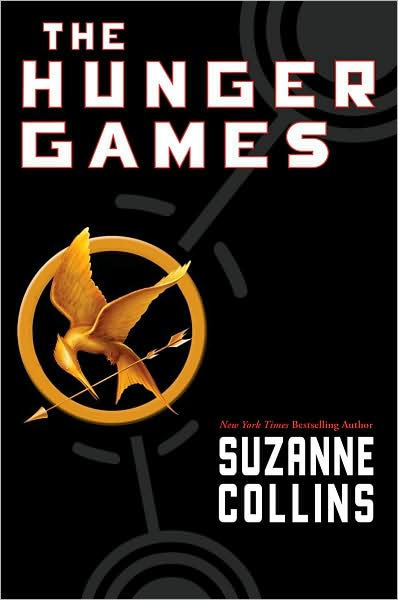
Well as I suspected, Too Big to Fail was, appropriately, too big. Even after several days of dedicated reading, I’m still barely past page 200 and although I find myself riveted by the story–riveting financial news, who knew–today I made an executive decision and I’ve spent the better part of the last eight hours reading The Hunger Games, the first in Suzanne Collins’ much-acclaimed young-adult trilogy.

For those who don’t follow the incredibly important happenings in teen fiction, The Hunger Games is something like a modern-day 1984: The story is set in a post-apocalyptic North America, now known as Panem, where a Capitol city rules over 12 distinct districts. So as to remind the districts of their impotence, every year one boy and one girl from each is chosen at random (though, without going into too much detail, poverty plays a role in one’s chances of being picked) to participate in The Hunger Games, a fight to the death broadcast on live television throughout the country. Yeah, it’s pretty grim reading for the weekend before Christmas.

I’ll say off the bat that the book is incredible, even considering it’s geared at young adults. I haven’t devoured 350 pages in a sitting since the last Harry Potter, which I distinctly remember reading in full on a similarly lazy Sunday, sustaining myself on takeout Chinese since I couldn’t be bothered to leave the apartment. The comparison to 1984 is fair, and the writing itself is suspenseful and accessible without feeling dumbed-down. Unlike the Twilight saga, which I never quite liked reading on the train, no adult would or should feel silly for reading this book (and I assume the rest in the trilogy).

Continue reading “I’m a young adult, too”

Enough about suicide already

So I’m in a bit of a funk this morning, which I’ll need to get past in short order as I’m soon headed to Penn State for a night of good old-fashioned state-school drinking. In any case, this morning I read about Mark Madoff, the elder son of disgraced financier (and current prison resident) Bernard Madoff. Mark committed suicide yesterday, undoubtedly due to the number of lawsuits pending against him and the rest of his family, and what I can only imagine have been years of criticisms and death threats against him for his alleged involvement in the Ponzi scheme. Which is particularly sad since it was both Mark and his brother who told authorities about the scheme as soon as they found out, thereby setting the stage for their own father’s 150-year prison sentence.

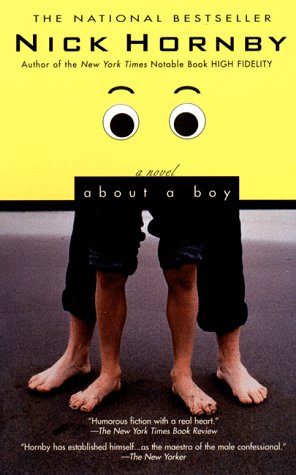
I guess it was only appropriate that a real-life tragedy would occur on the morning that I finished this week’s read, Nick Hornby’s About a Boy. I know what you’re thinking: If the Hugh Grant movie is any indication, About a Boy isn’t a sad story–it’s about a mildly bizarre 12-year-old who befriends an affable but clueless middle-aged guy who otherwise hates kids and meaningless social interaction (in other words, every Hugh Grant character ever). But if you’ll remember, the catalyst for the development of that relationship is the weird boy’s mother’s attempt to kill herself, which is discovered by Marcus (the boy) and Hugh Grant on their first day together. Indeed, much of About a Boy is really about life, and whether it’s worth living, and if so, why. This isn’t unprecedented territory for Hornby who, despite his reputation for writing generally humorous novels, actually uses a comedic voice to touch on fairly poignant issues: High Fidelity was about lost love; How to Be Good was about failed marriages; Juliet, Naked was about unfulfilled aspirations. And A Long Way Down was, well that one was pretty much entirely about suicide. If I had to hazard a guess, I would say the point of life, or lack thereof, is something Hornby has given a considerable amount of thought.Reading About A Boy–which I’ve owned for so long that the pages were yellowed–years after having seen the movie (which I’ve seen multiple times) was an interesting experience. Certainly I’ve read books that have become movies before, but I generally prefer to do it the other way around, where the book is my first impression of the story and I’m then free to judge the caliber of the cinematic adaptation. It’s more difficult to see the movie first; the sense of discovery that comes with reading is a bit lost, since you already know how everything turns out. Particularly with Nick Hornby, whose novels read so much like movies that much of the dialogue is exactly the same, it felt a little redundant. I will say that the movie version, which Hornby had a hand in, is pretty much perfection. The voices and qualities of the characters are near-identical, and the overall temperament of many of the scenes, which is some odd cross between existential crisis and mundane hilarity, is spot-on. More than once I would read a line in the book and remember fondly its delivery in the film.

Continue reading “Enough about suicide already”

To ma’am, with love

Unlike journalist, veterinarian and inventor of self-cleaning bathrooms, teacher was never on my short list of potential careers. For one, I don’t particularly like children, and I certainly don’t enjoy talking to people who are, by definition, stupider than me. One might argue that my undeniable lack of compassion for others wouldn’t have made for a very good teacher anyhow, but I like to think the choice was all mine.

So it’s always been with some degree of awe that I regard the teaching profession. That some people in this world are willing to get up at the crack of dawn to impart knowledge of algebra, American history or biology to generally unreceptive adolescents is enough for me to swallow; that still others actually enjoy this endeavor is almost outside my comprehension.

“Ms. Hempel Chronicles” documents the generally mundane adventures of one such brave soul: a young and relatively inexperienced English teacher. A blurb from the Washington Post refers to the book as a novel, but “Hempel” is really a collection of stories, many of which appeared on their own in various literary magazines. The themes and characters are the same throughout–indeed, these are the ties that bind the stories together–but the book is absent the sort of beginning/middle/end structure that I would typically consider necessary for noveldom.Similarly misleading (as was pointed out to me by a friend, who also read “Hempel”) is the book’s cover, which if taken literally, seems to indicate a woman 50 feet tall teaching a sea of students who are all the same height, dress like the Amish and have an unnatural affinity for clogs. Even figuratively, the cover’s message is off: For one, “Hempel” is set in modern times; one story even discusses Ms. Hempel’s unconscious adaptation of her students’ slang.

Continue reading “To ma’am, with love”