Spacious Studio, Doorman Building

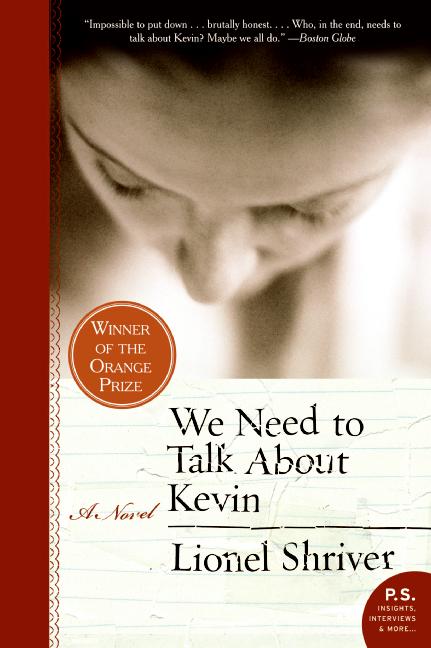
I’ve been reading some fucked up books about kids lately. First there was Kevin, a mass murderer trapped in a teenager’s body, whose dubious childhood raised the question (or rather, made the assertion) that some people are just born off.

And now I’ve spent a week with Jack, the five-year-old protagonist of Emma Donoghue’s Room, whose entire universe consists of an eleven-by-eleven-foot soundproofed shed. Which brings up an entirely different question: If Kevin, raised with everything, can grow up to be a shit, can Jack, raised with nearly nothing, grow up to be normal?

I should clarify: Jack and his mother don’t live in a shed by choice. Rather, said mother (who remains nameless throughout the novel) was kidnapped some seven years before Room takes place, by a man who has over the years raped her repeatedly, resulting in one stillborn child and another—Jack. The novel is told from Jack’s perspective, as a disarmingly content child who sees nothing necessarily strange about his living situation, or his mother’s assertion that what’s inside the room is real, whereas everything on television—which she only lets him watch in short bursts—is fantasy. Jack is accustomed to routine, attached to rules and feels only occasionally stifled by his limited environment. In fact, until Jack’s mother latches onto the idea of staging an escape, the duo exist in something sickly akin to normalcy inside their furnished prison cell.  Continue reading “Spacious Studio, Doorman Building”

The Great White Hype

Based on the success of Malcolm Gladwell’s books—approximately 8 zillion sold and counting—I went into Outliers with moderately high expectations. For a nonfiction author to attain Gladwell’s level of notoriety, even with a platform like the New Yorker, I assumed one of two things must be true: Either he’s a phenomenal writer, or every book includes a $50 Red Lobster gift certificate in the back flap. Sadly, neither is the case.

Now, in fairness, Outliers is not a bad book. The idea is compelling—Gladwell seeks to identify the stories behind some of the world’s most successful people, without settling for “Oh Bill Gates is just like, super awesome with computers” logic. His overall point—explained through multiple interesting examples—is that factors like upbringing, cultural background and circumstance play a very large role in success. And once you start reading, it’s kind of a “duh” realization. In fact, any kid who’s ever been the youngest in his elementary school class (sorry late birthdays!) realizes that even something as uncontrollable as your birth month can have every effect on your ability to stand out in a crowd.  Continue reading “The Great White Hype”

Talking about Kevin

I have never been much of a kid person. What was at one point a general disgust has tempered over the years into more of a dull annoyance, but for the most part, I wouldn’t consider myself a huge fan. Being around other people’s children is like watching an episode of Planet Earth: I can enjoy a lion for 45 minutes without wanting one as a pet.

I have, like all 20-something women who openly espouse the anti-kid viewpoint, been tutted at by my slightly older peers (and mother), who assure me that I will at some point in life—a point most likely decided upon by my uterus—execute an about-face and forget the part of myself that shudders when a boisterous youngster boards my subway car. And in the interest of realism, I suppose that may very well be true. Despite having never been the type to coo over newborns or feel any particular affinity toward onesies, I can still understand that—objectively speaking—my indifference when it comes to the young is nothing to be self-righteous about, and could very well be impermanent.

But even if I allow that my now 26-year-old emotional geography will change over the next decade, I still wonder why it is that I’m averse to the idea of creating another person. Some of the reasons are obvious: By measures of current-me happiness—financial comfort, peace and quiet, lack of obligation to touch human feces—having a child is clearly bullshit. But these are things that people get past, by which I don’t simply mean that new parents are willing to make such sacrifices for their progeny, but rather that the very state of being a parent somehow dulls those needs. Touching poop isn’t something you can resent when the poop comes out of the wholly helpless human being that you made exist.

Continue reading “Talking about Kevin”

My new role model

As a New Yorker by choice, rather than birthright, I’ve always had mixed feelings about the city’s somewhat incessant need to define its residents as either “natives” or “transplants.” Which isn’t to say that I don’t respect the unique blend of street savvy and odor tolerance that it takes to actually grow up in the Big Apple, but rather feel that the city is—must be, really—a byproduct of its residents in their entirety, not merely those who happen have owned Upper West Side co-ops since the late 1970s.

Still, as a dutiful transplant, I’d like to think that I’ve made a decent effort to avail myself of all that New York has to offer, not only in the sense of museums and landmarks, but also in history and culture. Of course New York’s more famous progeny—Woody Allen comes to mind, as do the Rockefellers and Roosevelts after whom the entire city seems to be named—maintain reputations steeped in NYC charm even as their exports reach the country as a whole. But there are a whole host of other people—from politicians to playwrights to restaurant proprietors—about whom a Maryland native like myself can be lambasted for not knowing, should they come up in conversation this side of the GW Bridge. To this day, not a month passes without my stumbling into some social faux pas whereby I reveal that I’ve never heard of Robert Moses, learned about Ed Koch or read anything by Gay Talese (for the record, only the last of these is still true.)

Continue reading “My new role model”

Super awesome printed artifact

When I started Super Sad True Love Story a few weeks ago, I knew just a few things about Gary Shteyngart:

  1. His last name is borderline impossible to spell. I’ve had to Google it every time I write it.
  2. He’s funny on Twitter.
  3. (actually 2b) Thanks to Jennifer Weiner, he occassionally watches and even more occassionally live-tweets The Bachelor. I mention this both because it is so fabulously out of character for a literary-minded person, and because it makes me feel about 48% better about my own Bachelor addiction.
  4. He was one of The New Yorker’s 20 Under 40 last year, which is how I first read an excerpt of Super Sad True Love Story (SSTLS from here on out).

As it turns out, with the exception of No. 1, these few things are completely appropriate factoids to have when going into SSTLS. The juxtaposition of Shteyngart’s amazing writing and almost unreal ability to both document and parody our current social/political/technological environment is bizarre, awesome and more than a little disconcerting. That this novel could feel both prescient, ludicrous and accurate all within the same page is a testament to how freaking interesting it is to read.

Continue reading “Super awesome printed artifact”