This isn’t how

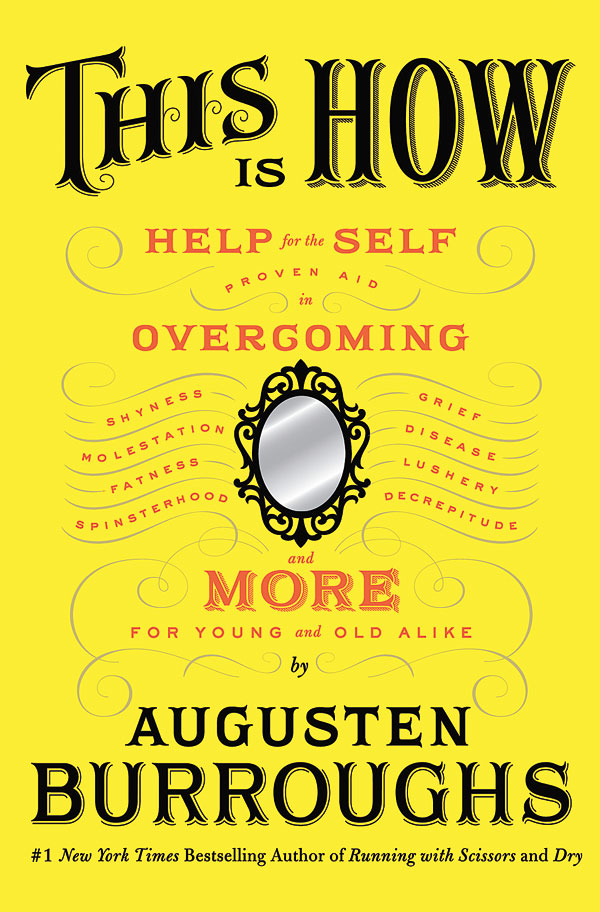
Let me start off today’s (very belated, I know) review of Augusten Burroughs’ This is How with a passage from one essay in the book, “How to Be Fat”:

“Almost every serial dieter I know speaks of his or her ‘relationship with food’ and how ‘complex’ it is.

As with any shitty relationship, the solution is not to spend years in couples therapy and scheduling sex every Wednesday.  If it’s really a shitty relationship, you have to leave it.

If you go on a diet and you lose weight and keep the weight off, that means you wanted it, you got what you wanted, then you actually liked having it, so you’ve kept it.

But if you diet and fail and diet and fail, you clearly have to stop with the dieting because you don’t like diets of any kind enough to follow them.

So. You let yourself eat anything you want and food becomes a commodity. It’s less interesting to stand before the glittering, freshly stocked All You Can Eat buffet when you have been standing there every night for the past six months, eating all you want, which is less and less each time. When no food is off-limits, all food becomes equal and calories evaporate, even if they pile on. But these calories, no matter how actually fattening, contain no meaning. Your war with your weight must end because wars require more than one active party.”

There you have it, guys. Augusten Burroughs, just ten short years after releasing his debut novel, Running with Scissors, has managed to cure obesity. Tired of being fat? Eat whatever you want! Don’t worry, eventually your body will figure it out. I mean, eventually might be five years from now, when you weigh 500 pounds and end up starring in one of those TLC specials about people who can’t leave their houses without removing an entire wall. But don’t worry: You’ll be content in the knowledge that at least you didn’t waste time fighting with yourself over the fact that carrots suck more than cookies.

Out of all of the essays in This is How, the one on weight loss annoyed me the most—big surprise from the girl whose own “eat whatever I want” regimen has resulted in a weight gain over the last five years equivalent to about three medium-sized toddlers. Let me just tell everyone from the trenches of this particular healthy living methodology: If you really like food, it’s not going to work. Sure, maybe after a week at the beach—subsisting on beer and funnel cake—some part of my sugar-addled brain thinks “Huh, it’d be nice to eat some vegetables right now,” but the thought is fleeting, and lasts about as long as it takes me to find the caramel popcorn. My yearning for high-fat, high-sugar amazingness has very little to do with whether I consider that food novel and much more to do with how much I like having that food in my mouth. 

Continue reading “This isn’t how”
The old ball game

As I doubt many of you are aware, except those privileged few who knew me in my formative teen years (I had really awesome hair), I was for a time the player manager of my high school’s baseball team. I’d like to say that this was because of some great love of the game, but it was really motivated by a) my desire to leave class early b) my desire to flirt with baseball players and c) my desperate need to convince the coach—who was also my physics teacher—that despite all grade-related evidence to the contrary, I actually did have a vague understanding of things like “force” and “gravity.” (Or, is gravity a type of force? I seriously almost failed physics, guys.)

Anyway, in spite of my ulterior motives, over the course of my managership I acquired two things: 1) the Richard Montgomery High School Baseball sweatshirt that I now honor daily by wearing it to watch TV, and 2) a solid appreciation for the sport (which is fortunate, since I ultimately moved to a city with a borderline maniacal love of it.)

To the unaccustomed eye, baseball is, let’s be honest, slow, and full of the kind of nuance that sports like hockey and basketball eschew. It’s a game that seems equally focused on the team and the individual—how do concepts like sacrifice and error exist in the same game?—and, perhaps most importantly, it involves men wearing hilarious pants. But there’s something elegant in baseball that you don’t really get out of watching 300-pound dudes run directly into each other. Baseball’s got mad panache.

I also love professional baseball because it’s splendidly American, and not just in the pastime sort of way. The salaries are exorbitant, the beers are overpriced, and literally everything in the game—from the first home run to the seventh-inning stretch—is sponsored to within an inch of its life. It’s kind of amazing to sit in the stands of a modern ballpark: The same old teams wearing the same old uniforms playing the same old game, only now surrounded by noise-o-meters, jumbotrons and $10 hot dogs. It’s like baseball is simultaneously American and ‘Merican.

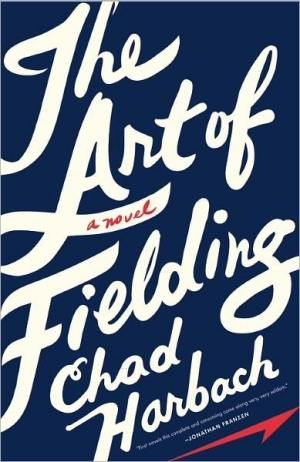
Anyway, given all of the above, it should come as little surprise to you all that I truly enjoyed The Art of Fielding, Chad Harbach’s debut novel about, duh, baseball. Kind of. The Art of Fielding is about baseball like Lord of the Flies is about islands, or Animal Farm is about animals. Which isn’t to say that the sport is an allegory—though it may very well be; I’m as good with allegories as I am with physics—just that baseball is the backdrop to an ensemble cast of characters with a wealth of non-baseball-related problems.

The novel hinges on Henry Skrimshander, an unassuming shortstop who gets recruited to Westish College by the captain of the university’s baseball team, Mike Schwartz. Henry is one of the best players the school has ever seen, until one false throw shakes his confidence and throws multiple other characters into turmoil.

Continue reading “The old ball game”

The kids are all right

Here’s how I see it. These days the life expectancy for women is somewhere around 86, which means I’m only a little less than a third done with my life, which means I still have two-thirds of said life to live as a full-on responsibility-having adult. Which means it would be fair, considering the math, to at this point in time consider myself a young adult, relatively speaking. Which means, as you may all be guessing by now, one very important thing: It’s totally okay that I keep reading all these novels intended for 13-year-olds.

My younger sister turned me on to the latest in my YA addiction: The Gone series, by Michael Grant. There are six books in the series, five of which are published (the sixth is due out next year) and two of which I’ve now finished. Since I value you people’s time (and it would be difficult to review later books in the series without giving away spoilers) I’ll kind of review the whole concept here, rather than in six separate posts. Also because I’m lazy.

Continue reading “The kids are all right”

Time travel travel speed

Guys, I am writing to you from space!

I mean, not actually. I’m actually writing to you from a plane, where apparently you can buy Wi-Fi access now (it seems “Internet isn’t safe on planes” only meant free Internet.) I’m on my way to Chicago, during which time I will hopefully be able to catch up on some book reviews that are long overdue. I’m a reading machine lately, and my writing machine (read: combination of brain, hands and laptop) is struggling to keep up.

It’s kind of appropriate to be writing this review from THE SKY (sorry, I’m still excited about it.) I fly very infrequently, and every time I do find myself on a plane I’m somewhat amazed at how jaded people are by the whole process. My fellow flyers are casually reading newspapers while a giant metal machine lifts off of the ground; they’re closing their little window shades and flipping through celebrity magazines instead of appreciating how crazy the earth looks from even 10,000 feet up. I’m not saying I expect everyone to still be drooling all over themselves a zillion years after the advent of commercial flying (I didn’t feel like looking it up) but a little reverence would be acceptable, no?

Continue reading “Time travel travel speed”

A short review of short stories

Etgar Keret strikes me as a weird dude. Like, if we went out to lunch, I’m not sure what we’d talk about. Somehow I suspect the short story author—whose vignettes generally cover such weighty fare as life and death, heaven and hell, and suicide bombers—would not care to hear me expound on the merits of this season’s Bachelorette contestants. Somehow I think maybe I’d run out of things to say.

Suddenly, a Knock on the Door is Keret’s latest volume of short stories, a former collection of which I’ve reviewed on this blog in the past. It’s a quick read—none of the stories are more than a few pages—and equally as odd as previous Keret books I’ve read. Interestingly, when people talk about short story authors they like (not that I have these types of conversations with any regularity), I often mention Keret, in part because a) I don’t really love short stories, so have a limited inventory of writers to bring up and b) whether or not I love each of his books (I don’t), I have to admit that what Keret does is seriously unique. His stories are funny, but not about funny things; they’re also serious, but not depressing. Maybe sarcastic? Maybe tongue-in-cheek? It’s hard to tell.

Have you ever met one of those people that’s just hard to read? (no pun intended) Like they’re just incredibly deadpan and you’re not always sure if it’s dry humor or if maybe they’re slightly autistic and don’t understand humor or general social interaction? Etgar Keret’s books are like those people—you’re never 100% sure what he’s trying to say, but you know he’s trying to say something. If nothing else, it’s interesting thing to watch (i.e. read).

Anywho, I’ve been plowing through books lately—I see it as my body preparing for summer hibernation, during which I sit within one foot of my air-conditioner at all times and read books or marathon-watch old shows on television—so Keret’s 188-page Suddenly, a Knock on the Door was a blip in my otherwise busy roster of longer reads. It’s a quirky little book—he strikes me as a quirky little guy—and if you’re into that sort of thing, you should read it, too.

🏆🏆

TITLE: Suddenly, a Knock on the Door
———————————————-
AUTHOR: Etgar Keret
———————————————-
PAGES: 188 (in paperback)
———————————————-
ALSO WROTE: The Nimrod Flipout, The Bus Driver Who Wanted to Be God
———————————————-
SORTA LIKE: Miranda July meets Jonathan Safran Foer
———————————————-
FIRST LINE: “‘Tell me a story,’ the bearded man sitting on my living-room sofa commands.”