Laline Paull’s The Bees: Honey doesn’t buy happiness

18652002

As highly functional and exceedingly authoritarian societies go, bees are legit. One need only skim some of the mass bee death headlines of the last few years to understand that for animals so small, seemingly innocuous and unwelcome at picnics, bees basically run the world. Or keep the world running.

Given their propensity for hierarchy, bees also seem an apropos topic for the ever-growing canon of dystopian fiction. After all, they’re an all-natural example of the kind of social order foisted on humans in books like 1984, The Handmaid’s Tale and Brave New World. Bees have a ruler, a class system, and a directive (however innate) to stick with the program lest the whole hive suffer for an individual’s absence of industry. Needles to say, I could never be a bee, or any other animal whose entire existence is synonymous with hard work and constant activity. (Given the choice, I’d be a house cat; their lives are 70% sleeping, 10% eating and 20% knocking things off tables.)

Continue reading “Laline Paull’s The Bees: Honey doesn’t buy happiness”

Flash Boys is lucky it doesn’t have weirder Google Image results

flash-boys-jkt_1

I know, I know–reviewing Flash Boys is so last week. But I approach my reading the way I approach my running: Don’t worry about what everyone else is doing, just get there in your own time. (Incidentally, this is also how I approach fashion, new music, travel, food fads, and pool.)

If you’ve managed to miss out on the Flash Boys Extravaganza (which sounds like a raunchy Chippendales show), it goes like this: Michael Lewis, best known for writing the seminal Wall Street memoir Liar’s Poker, as well as The Blind Side and Moneyball, published a book about high-frequency trading in which he said, essentially, that the stock market is rigged against the average investor. Flash Boys, which primarily investigates high-frequency trading through the eyes of Royal Bank of Canada whiz kid Brad Katsuyama, unpacks the wonky details of HFT to a damning conclusion: Firms are exploiting technological and regulatory limitations in the system to receive, and act on, advance knowledge of trades. More broadly, Flash Boys explains how over the last decade, the stock market has gotten more complex (in addition to the NYSE and Nasdaq, there a dozen other exchanges now) and less transparent (an increasing number of trading is done in “dark pools” whose makeup and workings aren’t public). As is his style, Lewis tells a great story, and what emerges is both a condemnation of HFT firms, banks and regulators for ignoring or taking advantage of the unfair market, and a bit of a love letter to Katsuyama, who Lewis paints as the humble hero, the guy who chooses to expose injustice rather than profit from it.

Continue reading “Flash Boys is lucky it doesn’t have weirder Google Image results”

The Maze Runner: A little bit of chafing

mazerunner

When you’re training for a half-marathon, there’s something fabulously appropriate about reading a book whose main foil is an unsolvable maze populated by murderous robot slugs. Even if that book reads like it’s meant for someone 15 years your junior. Even if that’s because, in fact, it is.

Someone mentioned The Maze Runner to me months ago, probably in the midst of a me-initiated conversation about dystopian young adult fiction, for which I have an affinity. “Teenagers Fight to Survive Against Unseen All-Powerful Forces” is one of my favorite sections in the bookstore.

Nor does it hurt that TMR already has a movie adaptation in the works, slated for release in September and starring Teen Wolf’s Dylan O’Brien, who I hereby dub the world’s next Adam Brody. As far as suggestible and easily enamored 12- to 17-year-olds go—and intellectually lazy 28-year-olds—The Maze Runner has all the makings of a runaway success. MOVE OVER, PEETA.

The gist is this: Thomas wakes up in The Box, a dark metal container that delivers him to The Glade, a clearing at the center of maze in which a group of young-to-teenage boys has been living for nearly two years, trying to solve said maze in the hopes of escaping. None of the boys, including Thomas, remember what’s outside The Glade, or who they are, and each month a new boy arrives. Until one day a girl shows up in The Box, bearing a message: She’ll be the last.

Continue reading “The Maze Runner: A little bit of chafing”

It’s always crummy in Philadelphia

wendy-ruderman-barbara-laker-busted-book

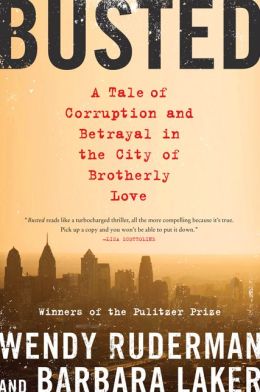
In some ways, Busted is about Philadelphia, the city in which authors Wendy Ruderman and Barbara Laker expose a corrupt ring of police officers while reporting for the bankrupt Philadelphia Daily News. After all, it is Philly’s abandoned houses and resigned drug pushers who serve as the backdrop to Ruderman and Laker’s investigation. It is the City of Brotherly Love that offers up Busted’s memorable characters: Benny, the informant-turned-source who raises the first red flag about a Philly narcotics cop; George Bochetto, that cop’s combative and boxing-obsessed attorney; Jose Duran, a local bodega owner whose innovative surveillance system turns the women on to a series of store lootings by police officers. It’s not that Busted couldn’t have taken place outside of Philly—corruption is nothing if not equal-opportunity—but Philadelphia is very much a presence in the book, a city of both blight and beauty, struggle and charm.

More than anything, though, Busted is about journalism, about how the seismic shift in media over the last decade has played out at your average metropolitan daily, and for your average (and increasingly unemployed) newspaper reporter. The book is not so much a call to arms as a window into reality, a frank look at how the real work of reporting—already up against online aggregation and viral cat videos—is doubly challenged by the newspaper industry’s rapid desiccation.

Continue reading “It’s always crummy in Philadelphia”

Pack me in an apple and smoke me when I die. We’ve got the environment to think about

willie

There are times—like every day ending in ‘y’ and if they invented a new day that somehow didn’t end in y, probably that one too—when I need to chill out. Relative to the stability I see in others, I’m wired just a bit too tightly, the kind of person who has day-nightmares about burglars and apartment fires, and spends her evenings compiling color-coordinated To Do lists. It was only in the last few years—despite a lifelong affinity for Fern Gully—that I stopped rewriting notes every time I had to cross a word out. I mean, even my Post-its have Post-its.

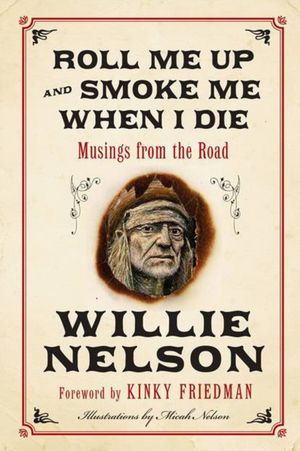
Given my propensity for worry, I have always seen Willie Nelson as something of an ideal, a man so simultaneously successful and laid back that one finds it hard to believe he’s aware of his own fame. Indeed, the music legend’s latest book, a short compendium of lyrics, essays and random thought bubbles called Roll Me Up and Smoke Me When I Die, cedes both space and heart to many members of Nelson’s large family, and those who have been with him throughout his career. Roll Me Up is as much a massive Acknowledgments section as it is a standalone title, and the correlation between Nelson’s placid exterior and the size of his support network is hard to ignore. 

Continue reading “Pack me in an apple and smoke me when I die. We’ve got the environment to think about”