Put down your McNuggets and read The Meat Racket

bwoutlook0302011393112821

On the long list of careers at which I know I would fail miserably, farmer is near the top, right next to schoolteacher, personal trainer and anything involving dead bodies. Farming requires more than an extraordinary work ethic, a high tolerance for early-morning hours and physical exertion, and a certain resilience when it comes to the smell of poop. It calls for a stoic acquiescence to the whims of the universe, which has the power to make or break a farmer’s very livelihood with one infestation, one storm or one drought. Certainly everyone contends with the uncontrollableβ€”to do so is in some way to be humanβ€”but farmers do it more than most. Their business is with the planet, and their job is to impose ritual on its otherwise unfettered chaos.

To cede control to the capricious nature of…nature is an inevitable facet of agricultural life, up there with muddy boots and waking up before bars have even closed in New York. But the sacrifice is, theoretically, in pursuit of a greater good, of an American dream that has less to do with big houses and nice things and more to do with living off the land, with owning something and using that something to generate something, not just wealth.

America has a long history of attempting to level the playing field for farmers, with subsidies and regulations intended to limit the volatility wrought by both mother earth and the free market, equally fickle bitches. But perils persist: In 2012, the median farm income was negative $1,453. You read that right: Half of farmers are losing more than $1,453 a year. It’s no wonder that they commit suicide at a rate just under two times that of the general population. One need look no further than the produceβ€”and now meatβ€”sections at Walmart to understand that food has become Big Food, and where Big ___ goes, the slow suffocation of the average employee follows.

Christopher Leonard’s The Meat Racket is concerned with only a microcosm of a microcosm of the food business as a whole: The book focuses on the genesis of the now-ubiquitous Tyson Foods, a company that currently raises 1 of every 5 chickens eaten in the United States. But while Tyson is just one company, and chicken (plus, as Tyson expands, beef and pork) are just one agricultural sector, the Tyson story could and does easily stand in for the plight of farmers as a whole. TMR is a maddening, soul-sucking tour through the influence of big business, and the bumbling complicity of government and regulators in the endless conglomeration of the American private sector.

Continue reading “Put down your McNuggets and read The Meat Racket”
Dear Anthony Kiedis: Because of Scar Tissue, I forgive you for “Otherside”

Scartissuebook

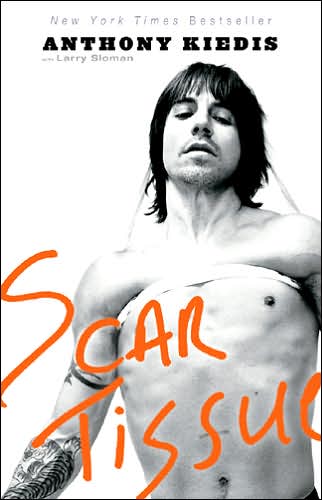
The overwhelming first impression one gets of Anthony Kiedis’s autobiography is: Drug Memoir. Released in 2004, Scar Tissue (co-written with Larry Sloman, who also co-wrote Howard Stern’s Private Parts) did well sales-wise, ultimately hitting No. 1 on the New York Times bestseller list. There’s even an audio version read by Rider Strong (I repeat, Rider Strong). But Kiedis’s whopper of a memoir (~500 pages), was ultimately boiled down into a handful of talking points: band drama, women, drugs. Especially drugs.

That connotation has stayed with STish in the intervening decade, and so what I expected when I first bought my now-battered paperback edition for $1 at Strand circa 2010 was to get mired in a haze of substance abuse, to be taken through a Kerouacian whirlwind of gigs and girls and superstardom. At the very least, I kind of expected Kiedis to be a dick, an “author” because he was convinced of his own magnetism, not because he felt compelled to reflect.

Don’t get me wrong, Scar Tissue is about drugs. Kieidis has at one point or another been a frequent if not daily user of all the usual suspects (marijuana, cocaine, heroin) and, when using, will go for pretty much anything else in a pinch. He smokes his first joint at 11 years old; decades later, his tolerance for opiates is so high that ER doctors have to give him seven shots of morphine, a hospital record. Kiedis’s drug use is hard to read about, and to picture. It’s sad and desperate and nearly destroys his relationships, his career and his life many times. At its heart, Scar Tissue is indeed a drug book.

Continue reading “Dear Anthony Kiedis: Because of Scar Tissue, I forgive you for “Otherside””

Things that don’t need to be open 24/7: liquor stores, gun stores, bookstores

13538873

At first glance, a 24-hour bookstore makes no sense. At second glance also, and third, and really all glances because despite my valiant one-woman effort to visit all of them, bookstores are struggling. One need only look at the American Booksellers Association’s website (or the husk of a shuttered Borders) to know that bookstores are going the way of record stores: quaint, beloved, rare. It’s not so much a matter of if at this point, but when.

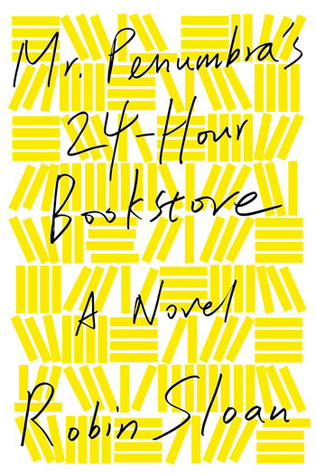
Fortunately, Mr. Penumbra’s 24-Hour Bookstore, a San Francisco outfit at which the hapless Clay Jannon is a newbie night clerk, isn’t your ordinary bookstore. The vast majority of MP24HB’s customersβ€”who are few and far betweenβ€”don’t bother with the popular fiction or latest fantasy titles at the front of the store; they’re concerned only with the back, where a collection of teetering multi-story shelves house what Clay calls the “Waybacklist,” nondescript hardcovers whose contents he is not allowed to explore.

Continue reading “Things that don’t need to be open 24/7: liquor stores, gun stores, bookstores”

5 passages from The Woman Upstairs because I just can’t

9780307743763_custom-b3d21306fc90bac3dd282a2a361c641b402b7f2c-s6-c30

It’s not that Claire Messud’s The Woman Upstairs was my favorite book ever, or even the best book I’ve read this year. It’s that the opportunities for analysis in Messud’s lovely fifth novel are so ripe, so abundant, that I have found myself for more than a week overwhelmed by the possibilities of this review, by the intellectual tangents and gender-theory diatribes it might inspire. The 16-year-old living inside of me who never really “got” the appeal of Virginia Woolf is afraid I wouldn’t do The Woman Upstairs justice.

So instead here are five passages from TWU, which is about an elementary-school teacher who becomes enamored of a new student and his family. If you don’t like these quotes, you won’t like the novel. If you do, pick it up post-haste.

Continue reading “5 passages from The Woman Upstairs because I just can’t”

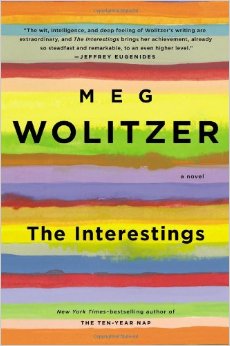
The Interestings reminds us that we kind of never were

51zPTVP+crL._SY344_BO1,204,203,200_

Over the course of my moderately awkward youth, I attended a lot of summer camps. Day camps and sleep-away camps, camps for sailing or crafting or “adventures” or spirituality, or some progressive combination thereof. Camps for girls, where the evening’s recreations included confessions about our limited experience with kissing; or camps for both genders, which are themselves little more than overly scheduled pretexts to kissing.

While I didn’t make lifelong friends at summer camp, I appreciate having been able to spend a few weeks away from home. Camp was a precursor to the first few weeks of college, after the parents leave and your universe is suddenly a bunch of strangers and the byproducts of a dozen Bed Bath & Beyond trips. A camper, like a freshman, is forced to contend with their individuality, and given the chance to decide which heretofore defining personal traits are worth hanging onto, and which might be cast off like snakeskin at the first opportunity. Camp lets you reinvent yourself in an afternoon, or become better acquainted with who you were in the first place.

Continue reading “The Interestings reminds us that we kind of never were”