Serial fans should be getting down with Tana French

books31f-1-web

If you have ears and you haven’t been listening to Serial, you frankly don’t deserve them.

The beloved podcast, a pseudo-real-time deep dive into the 1999 murder of high school student Hae Min Lee and the conviction of her ex-boyfriend Adnan Syed, dropped its 10th episode today. Which means right now listeners all over the country are spending Thursday as they always do in this, our post-Serial world: debating the merits of a 15-year-old homicide investigation, and emphatically declaring or protesting Adnan’s proclaimed innocence. Somewhere, during a quick bite at the office cafeteria, coworkers are arguing over the inherent shadiness of Adnan’s accuser, Jay. Somewhere, a wife is screaming at her husband: “But what about the Nisha call!?!

As runaway hits go, Serial lives up to its hype—and I say this as someone who generally keeps the Podcasts app in her phone”s “NOPE” folder, along with Stocks and iTunes U. The program is smart and thought-provoking, and bizarrely compelling for something you experience as only a listener.

Continue reading “Serial fans should be getting down with Tana French”

Chuck Palahniuk’s ‘Beautiful You’ is 240 pages of what the whaaat?

beautiful-you-cover-official

As a woman and/or literate person, it’s difficult to finish Chuck Palahniuk’s latest novel without wanting to throw it across a room. Without scoffing audibly while reading on a packed subway car. Without texting your friends context-less lines from the novel’s more ludicrous moments, linguistic gems like “blazing dildos shrieked across the sky” and “‘Hear me, my sister women! You must quit abusing your loins.'” As a woman and/or literate person, it’s difficult to read Beautiful You without having to willfully remind yourself that it’s all satire.

At Comic-Con, Palahniuk told an interviewer that Beautiful You—whose working title was “Fifty Shades of the Twilight Cave Bear Wears Prada”—is “kind of a mash-up of the most popular chick lit novels….comparable to something the Marquis de Sade would have written.” In an interview with Curious Animal, Palahniuk said he’s “hybridized the ultimate chick-lit novel” and wanted to pack BY “with as many tropes as possible, from the ‘almost-as-pretty’ best friend, who’s always a person of color, to the designer label fashions, the quest for a primitive mentor and, finally, a big wedding scene.”

Beautiful You has all of those chick lit tropes, as well as some, well, rarer ones, like the aforementioned flying dildos, and a 200-year-old sex mystic who lives at the top of Mount Everest. The novel—to the extent that I can summarize it without a) giving away spoilers or b) laughing—centers on Penny Harrigan, the kind of spineless female lead that does feel at home in books like Fifty Shades of Grey and The Devil Wears Prada. Penny is your typical errand girl at a high-profile law firm, and is on the hunt for meeting chairs one day when she stumbles across C. Linus Maxwell—quite literally; she falls through a doorway and lands at his feet. A billionaire with a reputation for courting soon-to-be powerful women (see: the first female president of the United States, a young queen, an Oscar-winning actress), Maxwell strikes up an affair with Penny, which consists primarily of his taking dutiful notes while giving her mind-blowing orgasms with an endless procession of proprietary sex toys. Penny soon discovers that she is the guinea pig for Maxwell’s forthcoming line of “feminine products”—named Beautiful You—and when said products are released, finds herself to be almost the only woman alive capable of resisting the compulsion to abandon her life for 24/7 “me time.” And I mean literally: Women stop leaving their bedrooms; husbands are ignored; children left motherless. Meanwhile, Maxwell’s intentions with respect to the Beautiful You empire are revealed to be far more sinister than previously imagined—this is a spoiler but I’m sorry I just can’t resist: NANOBOTS ARE INVOLVED.

Continue reading “Chuck Palahniuk’s ‘Beautiful You’ is 240 pages of what the whaaat?”

Amy Poehler on life, comedy, & humping Justin Timberlake

2D274905957270-YesPlease.blocks_desktop_medium

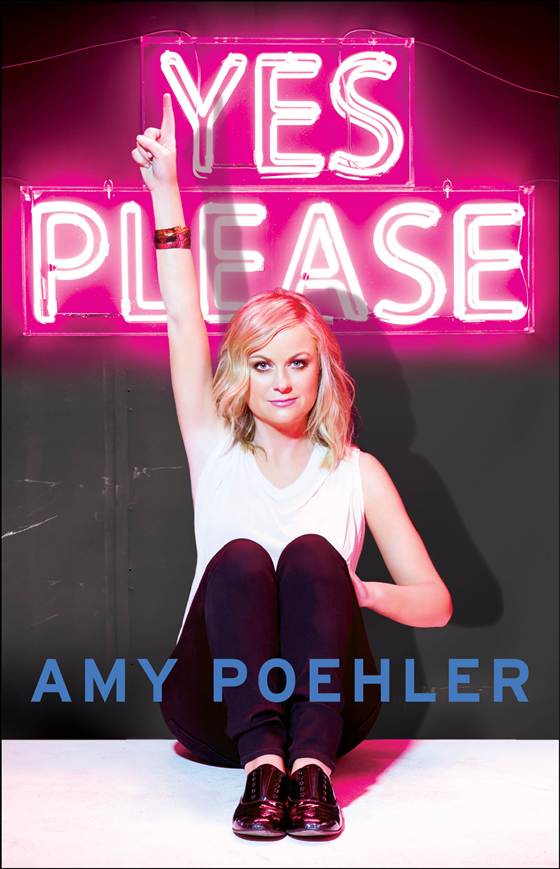
I generally try not to review two lady memoirs in a row (for variety’s sake, if not to avoid alienating my strong contingent of ultramasculine readers) but when an advance copy of Amy Poehler’s Yes Please falls into one’s lap, one does not let opportunity pass them by. One does spend all of Sunday eating mozzarella sticks in bed while laugh/cry/nodding at Poehler’s engaging, insightful and overall A+ addition to the Lady Library, whose other contributors (Fey, Kaling, SilvermanGriffin, Dunham) have graced Sorry Television in the past. One does, after spilling marinara sauce on one’s pillow and accidentally eating a mozzarella stick the cat licked, ruminate on whether one is in fact living her life to the fullest—engaging in behavior likely to engender the sort of chance encounters, dedicated friendships and hard-won professional achievements Poehler documents in her book. One does, briefly, regret not having been a teenager in the 80s, for the #tbt photo possibilities alone. One does, not briefly, feel proud to be a woman.

It would be wrong to try and rank the titles in the Lady Library from best to worst, or funniest to least funny, or most predictable to most surprising. It feels barely not wrong to call it the Lady Library, and I only do so because those books above are in many ways about being female, in a male-dominated world (comedy, Hollywood, America, Earth), and with all the assumptions and expectations womanhood implies. But if I had to rank the ladybooks, like if someone put a gun to my head and said “Quick! What’s your favorite female comedian’s memoir?”—I dunno, it could happen—I’d have to call it a tie: Between, naturally, Tina Fey and Amy Poehler.

Continue reading “Amy Poehler on life, comedy, & humping Justin Timberlake”

Lena Dunham, GamerGate and [insert SEO keyword here]

81ZqOFyzSjL

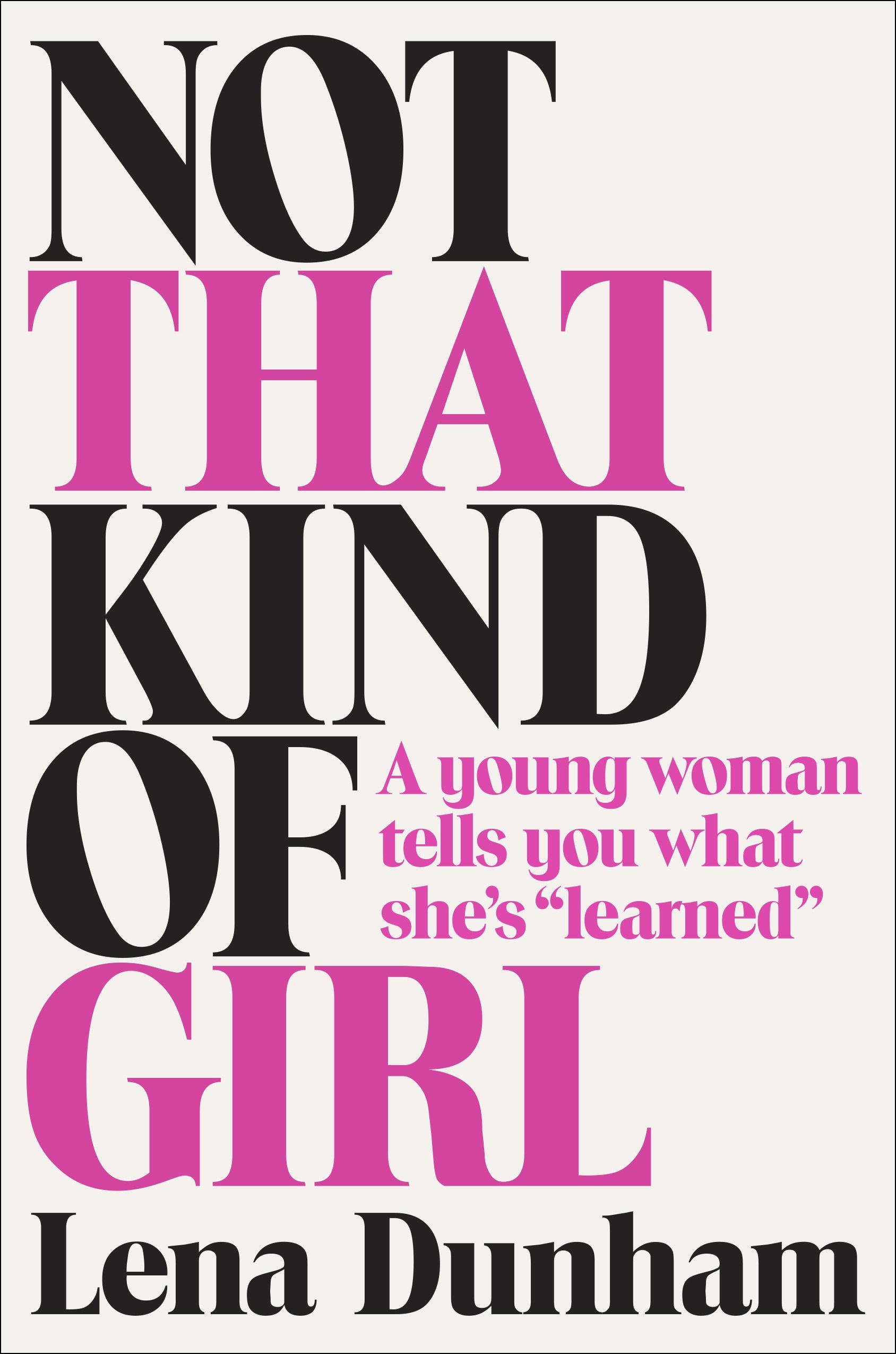
A few weeks ago, after handmade pasta and a few too many specialty cocktails, my friends and I got into it over Lena Dunham. Empowered by that special brand of self-righteousness unique to personal opinions about popular things, we loudly and enthusiastically debated the merits of the Dunham Phenomenon—two of us against and one (me) in favor, with a fourth maintaining a wishy-washy neutrality that belied the definitive nature of Dunham’s fame. Indeed, if we’ve learned anything from the post-Girls age, it’s that one is either pro-Lena or against, impressed by her or annoyed, on the same page or reading a different book entirely. There is no Switzerland when it comes to Dunham.

Without even touching on the specifics of her body of work—wry stories of self-involved 20-somethings fumbling their way through adulthood—it would be hard to overstate the size of Lena Dunham’s zeitgeist footprint. She became a household name seemingly overnight, at first because of the critical reception to Girls—both good and bad—and later because of the critical reception to Lena herself: Why so whiny? Why so frequently naked? When clothed, why so much like a toddler? Over time, Dunham’s fame became a self-fulfilling prophecy, and talking about being so over talking about Lena Dunham morphed into the cultural high ground, like hating Uggs or giving up on post-1990 Saturday Night Live.

Continue reading “Lena Dunham, GamerGate and [insert SEO keyword here]”

On The Road is the original ‘Why I left New York’ essay

kerouac-on-the-road-611x940

In a cosmic sense, I think it’s fair to blame Jack Kerouac for the glorification of Leaving New York. Ever since On The Road “defined a generation” in 1957, people exhausted by the hardscrabble urine-scented life of an NYC resident can feel validated, self-righteous even, over their decision to pack up and Go West, to set down new roots in the sunny climes of San Francisco and LA, or the laid-back liberal enclaves of Denver and Portland.

As Kerouac did (under the guise of “Sal” in On The Road) people who leave New York seem almost immediately overcome by the compulsion to write about their departure, and for all the other things OTR has become since its publication—an American classic, the signature novel of a social movement, a favorite book of recreational drug users everywhere—it is also the OG of “Why I Left New York” rants. In his rambling and disorganized account of several years road-tripping back and forth across the country with Neal Cassady (Dean Moriarty in OTR) and a rotating cast of other since-canonized Beatniks (also represented by fictional alter egos), Kerouac beautifully romanticizes trading in his New York life (technically Paterson, NJ, but still) for a whirlwind and often penniless tour to and from and across the western half of the country, a tour filled with charismatic hitchhikers and negligent gas station attendants and drugs and alcohol and women and old friends whose wives are never happy to see Sal and Dean show up on their doorsteps.

On the Road has a reputation, as many books of this genre do, of being exhausting to read, or at least difficult to engage with. Kerouac wrote the novel as if writing a letter to a friend, and it feels like it: sentences run on and seem unedited, punctuation is sparse, characters are introduced with a presumed familiarity that makes the reader feel like they’ve stumbled across a stranger’s journal, not a book written for public consumption. But once acclimated to the format—sort of drug memoir meets travel diary—I found OTR engaging enough, like listening to a friend who’s had a few too many Red Bull/vodkas tell you about their European backpacking trip, or finding yourself on a long cab ride with a chatty driver who has a soothing voice and an interesting life story. While Kerouac wastes little energy on the character development of anyone except Dean (who is, more than anyone, the novel’s main character and most vibrant “creation”), it is the style and feel of On the Road that allows the reader to understand Sal, and in turn Kerouac, and to appreciate the former’s fictional insights as the latter’s real ones.

Continue reading “On The Road is the original ‘Why I left New York’ essay”