Broken Monsters: too many plots, not enough monsters

books14f-1-web

At first glance, Lauren Beukes’s Broken Monsters has one of the most WTF magnetic plot summaries I’ve read in recent memory: “Detective Versado has seen a lot of bodies. But this one is unique even by Detroit’s standards: half boy, half deer, somehow fused together.” YES, Law & Order superfan me thought to myself at the bookstore. Yesyesyesyes.

Broken Monsters begins with the discovery of deer boy, but he is not the last human/imal corpse to be found among the ruin porn, working-class families and upstart artistic communities that constitute post-recession Detroit. The novel unfolds from the alternating perspectives of several residents of this busted city: Detective Gabriella Versado and her teenager daughter Layla; aspiring freelance videographer Jonno and his artsy girlfriend Jen; and street-savvy and world-weary Thomas Keen (d.b.a. “TK”), a homeless man with a fierce loyalty and a sharp intuition.

Continue reading “Broken Monsters: too many plots, not enough monsters”

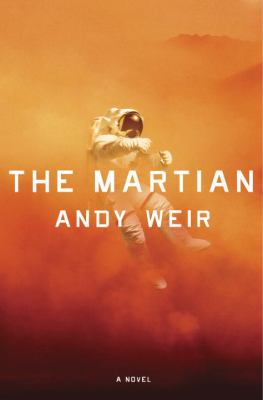
The Martian deserves everything it’s getting, Matt Damon included

The_Martian_2014

The most surprising thing about The Martian isn’t that it’s going to be a major Ridley Scott film starring [typecast?] astronaut Matt Damon in the leading role. Or that the novel’s author, Andy Weir, wrote some 350 page of extremely technical aerospace detail with little more than Google research. Or that he published the book himself through Amazon, where it is currently (having since been picked up by a major publisher) tooling around in the Top 10 science-fiction list. No, what’s most surprising about The Martian is that in spite of its Cinderella-story creation and enthusiastic technicality, in spite of its corny humor and disorganized pacing, in spite of the fact that it’s primarily narrated by one person who spends all his time completely alone, this is one of the most unique and excellent novels I’ve read in recent memory.

“The Martian,” in this case, is Mark Watney, a NASA astronaut (slash botanist slash engineer) who gets stranded on the red planet when a dust storm-related accident separates him from his crew, who assume him dead and have to get the hell out of Dodge (i.e. abort their mission). When Watney comes to—saved by a fluke congealed blood situation worthy of a reverse Darwin Award—he is left with the daunting task of figuring out how to survive on an uninhabitable planet until his only possible rescue: the next Mars mission, in four years. 

Continue reading “The Martian deserves everything it’s getting, Matt Damon included”

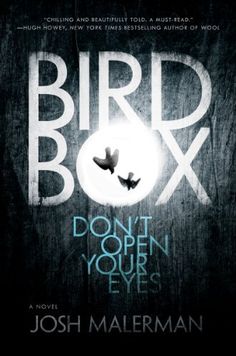
Bird Box is creepy as hell and I like it

83296177dfebdbf60972d38be97824cf

No one is sure how it started. Or what started it. One day there was a report of a man in Russia who was riding in a truck with his friend. He asked the friend to pull over and then attacked him, removing his lips with his fingernails. A few days later, another report: five thousand miles east of St. Petersburg. A mother buries her children alive and then kills herself with broken dishes. Then a video; a man trying to attack the videographer with an axe, and eventually succeeding. No one knows what spurs the attacks or why, just that people see something—just, something—and then violently murder those around them before killing themselves. The only way you can be sure to avoid catching it, whatever it is, is to avoid opening your eyes.

No it’s okay. I’ll wait while you shit your pants.

Continue reading “Bird Box is creepy as hell and I like it”

A Brief History of Seven Killings: not brief, includes about a billion killings

A_Brief_History_of_Seven_Killings.JPG

To go from reading A Brief History of Seven Killings to reading anything that isn’t A Brief History of Seven Killings is like running a marathon with ankle weights and then taking them off for a walk around the block. A challenging, sweeping, impressive novel, ABH7K is a mental and emotional workout. It taxes the brain and the heart—the former’s capacity for ensemble narration and multiple dialects, and the latter’s tolerance for brutality.

Spanning 1976 to 1991; Kingston, Jamaica, to New York City; ABH7K is a spiral of subplots and broader themes surrounding the (IRL) December 3, 1976 assassination attempt on Bob Marley, which took place two days before a free concert organized to foster peace between warring gangs (who were backed by opposing political parties, who were backed by—or opposed by—the CIA/U.S. government). At various points throughout the 70s and subsequent decades, we peer inside the heads of, among others, the gang members behind the shooting, a journalist hunting for the inside story, a Marley one-night stand desperate to get out of Jamaica, CIA agents stationed in Kingston, and a murdered politician narrating from beyond the grave. What emerges through these intertwined experiences is a window onto a cyclical power struggle of epic criminal and political proportions, a complex web of—to use the appropriate regional terminology—fuckery.

Continue reading “A Brief History of Seven Killings: not brief, includes about a billion killings”

Unbroken broke me a little

unbroken-book-cover-01

As I was closing out the final pages of Laura Hillenbrand’s Unbroken on the train last week, a woman stopped me to ask how I was liking it. I replied that it takes it out of you—this book whose every chapter is more grim than the one before. “But it’s okay right?” she responded, shopping bags and Starbucks cup in tow. “Because he goes free in the end?”

It’s a credit to our threshold for human suffering that a World War II bombardier lost at sea for 47 days and then imprisoned in Japanese POW camps for more than two years is considered a victor in his life story. Yes, Louis Zamperini, the recently deceased subject of Hillenbrand’s wildly successful 2010 biography, was eventually freed. Yes, he lived to tell the tale. But a man does not walk away from such experiences cleanly, and the effects of Louie’s POW life on his post-POW life are apparent down to Unbroken’s very last page.

Much of this book’s plot has become common knowledge, perhaps by virtue of the comprehensive movie trailer, perhaps because of various interviews with Louis in the last few years. So I’ll sacrifice the time I’d usually spend on plot summation to jump directly to Hillenbrand, an author whose own limitations (chronic fatigue syndrome and its attendant symptoms have kept her homebound for years) are her personal testament to human resilience in the face of adversity. I’ve never read anything by LH before, and was pleased to find in her, like Erik Larson (author of Devil in the White City and In the Garden of Beasts) a penchant for research that borders on the insane (Unbroken ends with 8 pages of detailed acknowledgments and 40 pages of reference notes). This book is so thoroughly executed that it reads like fiction, and Hillenbrand’s dedication to describing 60-year-old events in vivid detail is beyond impressive. Of course, she had help—a pertinent quote from Louie kicks off the book’s acknowledgments section: “I’ll be an easier subject than Seabiscuit,” he tells her, “because I can talk.”

Continue reading “Unbroken broke me a little”