This isn’t how

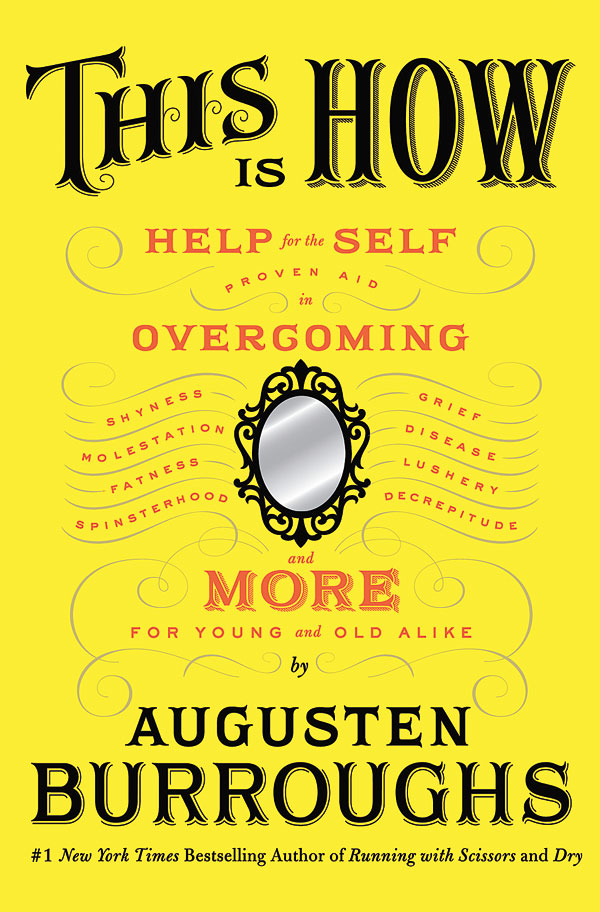
Let me start off today’s (very belated, I know) review of Augusten Burroughs’ This is How with a passage from one essay in the book, “How to Be Fat”:

“Almost every serial dieter I know speaks of his or her ‘relationship with food’ and how ‘complex’ it is.

As with any shitty relationship, the solution is not to spend years in couples therapy and scheduling sex every Wednesday.  If it’s really a shitty relationship, you have to leave it.

If you go on a diet and you lose weight and keep the weight off, that means you wanted it, you got what you wanted, then you actually liked having it, so you’ve kept it.

But if you diet and fail and diet and fail, you clearly have to stop with the dieting because you don’t like diets of any kind enough to follow them.

So. You let yourself eat anything you want and food becomes a commodity. It’s less interesting to stand before the glittering, freshly stocked All You Can Eat buffet when you have been standing there every night for the past six months, eating all you want, which is less and less each time. When no food is off-limits, all food becomes equal and calories evaporate, even if they pile on. But these calories, no matter how actually fattening, contain no meaning. Your war with your weight must end because wars require more than one active party.”

There you have it, guys. Augusten Burroughs, just ten short years after releasing his debut novel, Running with Scissors, has managed to cure obesity. Tired of being fat? Eat whatever you want! Don’t worry, eventually your body will figure it out. I mean, eventually might be five years from now, when you weigh 500 pounds and end up starring in one of those TLC specials about people who can’t leave their houses without removing an entire wall. But don’t worry: You’ll be content in the knowledge that at least you didn’t waste time fighting with yourself over the fact that carrots suck more than cookies.

Out of all of the essays in This is How, the one on weight loss annoyed me the mostโ€”big surprise from the girl whose own “eat whatever I want” regimen has resulted in a weight gain over the last five years equivalent to about three medium-sized toddlers. Let me just tell everyone from the trenches of this particular healthy living methodology: If you really like food, it’s not going to work. Sure, maybe after a week at the beachโ€”subsisting on beer and funnel cakeโ€”some part of my sugar-addled brain thinks “Huh, it’d be nice to eat some vegetables right now,” but the thought is fleeting, and lasts about as long as it takes me to find the caramel popcorn. My yearning for high-fat, high-sugar amazingness has very little to do with whether I consider that food novel and much more to do with how much I like having that food in my mouth. 

Continue reading “This isn’t how”

Dead boring

Given that it’s almost True Blood season, I found myself moderately excitedโ€”moderatelyโ€”for the newest Sookie Stackhouse book, Deadlocked, which came out earlier this month. I say moderately because I am of the humble opinion that Harris has been phoning it in for a few years now, and/or ran out of supernatural creatures to cast in her increasingly redundant series.

Phoning it in can be a death knell for any authorโ€”to be discussed further when I review the latest Augusten Burroughs book, whose lack of substance is depressing me greatly. But Harrisโ€”as much as I love the fact that she’s inadvertently generated one of the most ridiculously fun shows on televisionโ€”didn’t have much room to fall. The Sookie Stackhouse books are like Anne Rice for dimwits, and rival Twilight for the title of worst-written vampire series of all time (editor’s note: I have read about three vampires series and thus am wildly unqualified to make this claim.)

In a nutshell, this is how a Sookie Stackhouse novel goes: 

Continue reading “Dead boring”

Throwing shade

I’m going to start today’s review with a confession. Well, part confession, part memory. A confessory, if you will.

When I was a kidโ€”I’m going to guess around age 10โ€”we had a VHS recording of Mr. Mom, the (still completely awesome) Michael Keaton movie about a dude who loses his job and has to stay at home and take care of the kids. So controversial, that film! Men staying home? Women working!?

Anyway, for whatever reason, I watched Mr. Mom with some regularity, and in it there’s a scene where a cadre of local housewives take Michael Keaton with them to a Chippendale club, to see some male strippers. In the beginning of that scene, ominous music plays while distinctly 1980s-looking guys in astronaut costumes come on stage and slowly reveal their naked selves. And by naked I mean in underwear and space boots. 

Continue reading “Throwing shade”

$#*! my grandma says

If there were an alternate title for I Remember Nothing, it would be #whitepeopleproblems.

It’s funny that Nora Ephron’s latest book reminds me of a hashtag, since Twitter is one of several things Ephron swears in an introductory essay that she will never take the time to understand (also see: Jay-Z, the Kardashians, soccer). Funny since I’m sure Nora Ephron objects to Twitter for the same reasons so many people who’ve never used it do: it’s frivolous, indulgent, emblematic of a global case of  ADD, full of people tweeting about their breakfasts. Why is this funny? Because I Remember Nothing is basically 150 pages of Ephron’s brain farts, piled together in a hardcover and sold for $23. At least on Twitter it’s all short, sweet and free.

Now before I tear into this book, I should pause for a moment to respect my elders. Ephron’s essays here are very much about being old, and she’s 69 so that’s fair enough. I don’t know the point at which you’re allowed, as an adult, to throw up your hands and give in to the stodgy bitterness that comes with old age, but I am willing to grant that it’s probably somewhere around 70. In a way, I Remember Nothing feels a lot like a goodbye bookโ€”the last two “essays” are devoted to things Ephron will and won’t miss, ostensibly about life. So I sympathize. When you’ve had a 40-year career, maybe you reserve the right to fart out your last contribution to nonfiction. I just don’t think you should actually do it.  

Continue reading “$#*! my grandma says”

It’s the tweaking weekend

Whenever I’m feeling a bit frustrated with one of my own vices, I like to read about drugs. Now, before you get all high (pun intended) and mighty, I’m not saying it’s an ideal personality trait to be comforted by the struggles of others, but hey, the entire reality television genre is predicated on this kind of schadenfreude.

In a way, what appeals to me about the genre is that drug addiction is an equal-opportunity affliction. Certainly, upbringing and socioeconomic status all play a role in one’s predilection, or lack thereof, for addiction – but at the end of the day, anyone can be an addict. The problem transcends generations, geography and politics (to the extent that anything can).

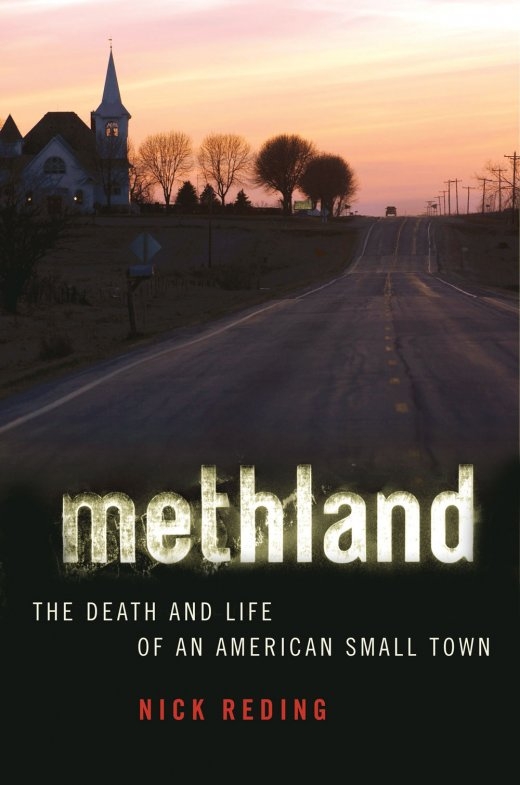
So I had been looking forward to Nick Reding’s Methland, which I bought after reading Beautiful Boy, a father’s memoir about his son’s addiction to methamphetamine. Here is a drug with which I have no personal experience but, for all intents and purposes, is one of the worst, one of the addictions from which few recover. While Beautiful Boy focused on one family’s experience, Methland promised a broader overview: How it’s produced, where, by whom, and most importantly, the scale of the meth problem and the severity of its fallout.

Continue reading “It’s the tweaking weekend”