Before there was Gone Girl, there were Sharp Objects

sharp-objects-book-cover

People who have read Gillian Flynn’s Gone Girl tend to have opinions about Gillian Flynn’s Gone Girl. And I mean OPINIONS. Loved the first half, hated the second. Loved her, hated him. Can’t believe they cast Ben Affleck in the movie. And so on.

Personally, I was a fan. Flynn’s approach to the mystery genre was weird and interesting and unpredictable and sometimes uncomfortable. I can get down with that. Which is why I’d been looking forward to reading her first novel, Sharp Objects.

Sharp Objects homes in on the same creepy vibe as Gone Girl, centered on characters who seem just a touch shy of believable, but interesting all the same. The novel focuses on bottom-tier Chicago reporter Camille Preaker, who is assigned to write about a series of murders in her small hometown. Spending time at home is trouble for Camille, who must face her passive-aggressive hypochondriac mother, her 13-year-old half-sister (think Regina George meets Satan) and a slew of other characters from her not-so-great childhood. Truth be told, Camille is perhaps not entirely in her right mind, having recently spent some time in a mental institution.

Continue reading “Before there was Gone Girl, there were Sharp Objects”
All the Sookie Stackhouse novels, in 100ish words or less

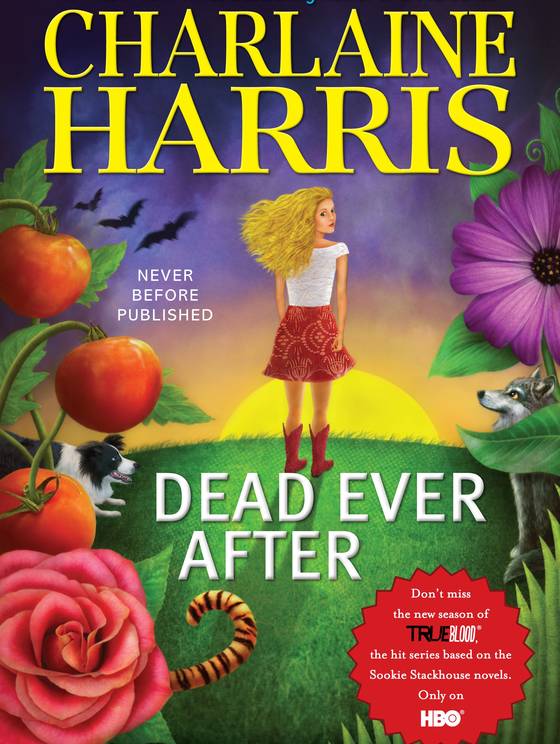
dead-ever-after-by-charlaine-harris-cover-3_4_r560

Well, the time has come. After 10 years and a whopping 13 books, Charlaine Harris last week released the final novel in the long-running Sookie Stackhouse series, the literary impetus for hit HBO show True Blood.

People always ask me if they should bother reading these books, and the answer is: It depends. Do you like absurd plots and a murder-to-novel ratio of approximately 24:1? Do you enjoy a narration style that feels only a few degrees shy of a fifth-grade diary? Do you like sexy vampires? If the answer to any of the above is yes, then by all means, read the Sookie books. They’re like cotton candyβ€”saccharine, fluffy, and delicious.

But if you’ve got something pesky like “standards,” or simply don’t have the time, worry not: I’ve got you covered. Here’s everything that happens in the Sookie Stackhouse world. [SPOILERS SPOILERS LIKE LITERALLY A BILLION SPOILERS]:

Continue reading “All the Sookie Stackhouse novels, in 100ish words or less”

I read the Amanda Knox memoir so you don’t have to

Waiting-to-be-Heard

My favorite impression of Italy comes from my college roommate, who broke her arm there over winter break in our senior year. Although she returned to New York in high spirits, and ultimately no worse for wear, it was with a humongous cast, the kind of heavy, awkward creation that looked like it came out of a 1950s sitcom, or like she broke her arm playing football with Charlie Brown. Granted, Alyce approached our final semester gamelyβ€”I have inspiring photos of her in full costume/party attire/dance regalia carrying that monstrosity of a castβ€”but I remember thinking at the time, “Note to self: Never let anything bad happen to you in Italy.”

And so it was with this in mind that I approached Waiting to Be Heard, the memoir for which Amanda Knox received a reported $4 million. (Admittedly, I also suspected it would make for an entertaining blog post.)

If you’ve been living under a rockβ€”a rock with no access to Nancy Grace or the Huffington Postβ€”Knox, better known as “Foxy Knoxy,” was charged with the 2007 murder of Meredith Kercher, a British student killed while the two lived together during Knox’s semester abroad in Perugia, Italy. The case, as presented by the prosecution, is a story of sexcapades gone wrong: Knox is said to have tried to initiate some sort of orgy/Satanic sex ritual with Kercher, accompanied by her (Knox’s) boyfriend Raffaele Sollecito, and acquaintance Rudy Guede. When Kercher refused to participate in said sexcapade, Guede raped her, and then Raffaele and Guede held her down while Knox slashed her throat. Knox then returned to her boyfriend’s apartment, woke up the next morning, and “discovered” the body upon returning to her flat.

Continue reading “I read the Amanda Knox memoir so you don’t have to”

The Big Girls, no longer my suggested title for an Oxygen dating show about overweight but still sassy single women

The Big Girls, by Susanna Moore

I’m cheating this week. The truth is that I’m still knee-deep (waist-deep I guess, since I’m about halfway through) on The Broom of the System, which is frustrating since it’s the end of the year, i.e. book goal crunch time, and I have big reading/blogging plans for the next few weeks (re-reading Perks of Being of Wallflower, first-time reading Les Miserables and writing some sort of roundup of my favorites of 2012.) But it’s David Foster Wallace, and proper respect must be paid — by which I mean I’m willing to backtrack four times per reading session to make sure I haven’t lost the thread of characters I’m supposed to know about, or connections I’m supposed to have identified. I swear on Honey Boo Boo that I will finish that book this week, especially since I’m officially finished crushing two full seasons of Downton Abbey.

In the meantime, a few weeks ago I finished The Big Girls, by Susanna Moore. I picked this one up at The Strand (I wouldn’t remember things like this except all my Strand books have $1 price tags on them) since I’d read Moore’s In the Cut years ago, and vaguely remember liking it (actually, I remember very little about the book, and more about the eventual movie made from it, which I saw with my mom, which entailed very awkwardly sitting together to watch Meg Ryan and Mark Ruffalo have lots of sex.) Also, see the aforementioned $1β€”at that price, I’ll buy any book that doesn’t have biologically questionable stains on it.

Continue reading “The Big Girls, no longer my suggested title for an Oxygen dating show about overweight but still sassy single women”

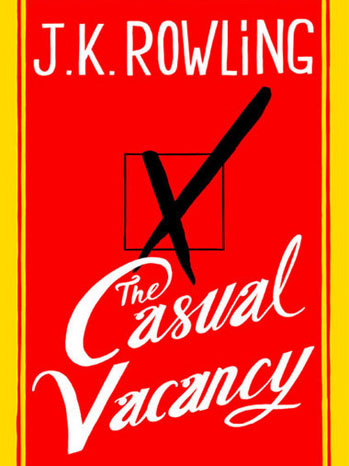
J.K. Rowling’s The Casual Vacancy: Accio excitement?

Casual Vacancy J.K. Rowling

As book titles go, The Casual Vacancy is pretty appropriate. Not only because a casual vacancy — a seat on a local city council made suddenly available by the unexpected death of its holder — is the circumstance around which J.K. Rowling’s latest novel revolves, but also because somehow this particular turn of phrase seems to define book itself: unceremoniously lackluster.

In light of the array of negative reviews that have already been written about TCV, I feel like I should start off with two editor’s notes. The first is that I’ve spent a fair amount of time daydreaming about what it would be like to be J.K. Rowling (like circa 2005, not during all that poor-person business) and so I sympathize with how difficult it must have been (in a first-world-problems sort of way) to even consider writing another book after the conclusion of the Harry Potter series. In Rowling’s place, I would have been sorely tempted to rest on my laurels (my $1 billion laurels) and hang it up Harper Lee style. I mean, we’re talking about the literary equivalent of Adele’s sophomore album (ignoring for the purposes of analogy that 21 was actually the sophomore album) — I’d at least have considered writing under a pen name.

I also want to note that I did not go into The Casual Vacancy expecting some sort of reprise of Harry Potter. I like to read about books before I buy them, and it was fairly widely reported that TCV was to be Rowling’s first grown-up novel , and therefore ostensibly not about magical candies and invisibility cloaks. (In other words, not like when R.L. Stine wrote Superstition, and it was basically just a longer Fear Street book with sex scenes.) I appreciate that Harry Potter will always be a thing unto itself, and that perhaps Rowling might have wanted to get as far away from the fantasy genre as possible, to forestall any potential murmurings about trying to best her own series.

Continue reading “J.K. Rowling’s The Casual Vacancy: Accio excitement?”