The Maze Runner: A little bit of chafing

mazerunner

When you’re training for a half-marathon, there’s something fabulously appropriate about reading a book whose main foil is an unsolvable maze populated by murderous robot slugs. Even if that book reads like it’s meant for someone 15 years your junior. Even if that’s because, in fact, it is.

Someone mentioned The Maze Runner to me months ago, probably in the midst of a me-initiated conversation about dystopian young adult fiction, for which I have an affinity. “Teenagers Fight to Survive Against Unseen All-Powerful Forces” is one of my favorite sections in the bookstore.

Nor does it hurt that TMR already has a movie adaptation in the works, slated for release in September and starring Teen Wolf’s Dylan O’Brien, who I hereby dub the world’s next Adam Brody. As far as suggestible and easily enamored 12- to 17-year-olds goβ€”and intellectually lazy 28-year-oldsβ€”The Maze Runner has all the makings of a runaway success. MOVE OVER, PEETA.

The gist is this: Thomas wakes up in The Box, a dark metal container that delivers him to The Glade, a clearing at the center of maze in which a group of young-to-teenage boys has been living for nearly two years, trying to solve said maze in the hopes of escaping. None of the boys, including Thomas, remember what’s outside The Glade, or who they are, and each month a new boy arrives. Until one day a girl shows up in The Box, bearing a message: She’ll be the last.

Continue reading “The Maze Runner: A little bit of chafing”

Pack me in an apple and smoke me when I die. We’ve got the environment to think about

willie

There are timesβ€”like every day ending in ‘y’ and if they invented a new day that somehow didn’t end in y, probably that one tooβ€”when I need to chill out. Relative to the stability I see in others, I’m wired just a bit too tightly, the kind of person who has day-nightmares about burglars and apartment fires, and spends her evenings compiling color-coordinated To Do lists. It was only in the last few yearsβ€”despite a lifelong affinity for Fern Gullyβ€”that I stopped rewriting notes every time I had to cross a word out. I mean, even my Post-its have Post-its.

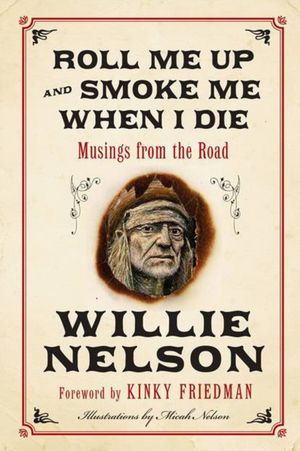
Given my propensity for worry, I have always seen Willie Nelson as something of an ideal, a man so simultaneously successful and laid back that one finds it hard to believe he’s aware of his own fame. Indeed, the music legend’s latest book, a short compendium of lyrics, essays and random thought bubbles called Roll Me Up and Smoke Me When I Die, cedes both space and heart to many members of Nelson’s large family, and those who have been with him throughout his career. Roll Me Up is as much a massive Acknowledgments section as it is a standalone title, and the correlation between Nelson’s placid exterior and the size of his support network is hard to ignore. 

Continue reading “Pack me in an apple and smoke me when I die. We’ve got the environment to think about”

Katniss doesn’t have anything on Beatrice Prior

Allegiant hc c.JPG

Fans of the Young Adult Dystopia genre (YAD for short) should at this point be at least vaguely familiar with Divergent, the first book in a trilogy by Veronica Roth that tracks Beatrice (Tris) and various other residents of a post-apocalyptic Chicago whose society is divided into five factions, each founded on respect for a particular virtue (Candor/honesty, Abnegation/selflessness, Dauntless/bravery, Amity/peace and Erudite/intelligence.) Divergent, which comes out in movie form on March 21, was released in 2011, while Book #2 (Insurgent) came out in May 2012 and the final book in the series (minus all the BS “extras” Roth will publish over the coming years to reap untold profits from obsessive tweens) was released in October.

It’s always hard to review the second or third book in a series without inevitably giving away some of the haps in the preceding titles. But given the impending theatrical release of Divergent (which I reviewed about a year ago) I would be remiss to not weigh in on the Divergent series in its entirety, which feels* so plainly desperate to capitalize on the popularity of Hunger Games that one almost expects Katniss herself to wander into a scene by accident. (*In the interest of full disclosure, Roth did write Divergent before HG was a thing, and HG itself has been criticized for its similarity to other novels.)

Continue reading “Katniss doesn’t have anything on Beatrice Prior”

The Wolf of Wall Street glorifies no things

download

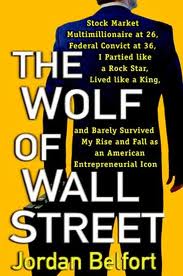
As a belated superlative of 2013, I dub The Wolf of Wall Street one of the year’s best movies, and one of its worst books.

While much fanfare has been made of Martin Scorsese’s newest film — which stars Leonardo DiCaprio in his traditional fake-it-till-you-make-it tragic hero role — less attention has been paid to the tome of a memoir that inspired it, a 500-page free-association rant written by the real-life iteration of DiCaprio’s character, Jordan Belfort, a stockbroker-turned-millionaire who lives large on hookers, drugs and shady financial transactions until he’s busted for fraud and stock manipulation. Belfort’s book, which he claims in a the-man-doth-proclaim-self-awareness-too-much prologue is written in a “voice that allowed me to rationalize anything that stood in my way of living a life of unbridled hedonism,” provides much of the running monologue for the movie adaptation, as well as most scenes and a great deal of dialogue. And no wonder: It is a story that demands to be told, with characters who demand to be portrayed, and it unfolds in a voice so simultaneously earnest and vile that you find yourself conflicted about whether to hate Jordan Belfort or pity him.

Because Belfort is, by all accounts, an asshole. He cheats on his wife with his girlfriend, then marries his girlfriend and cheats on her with prostitutes. He does an astounding array of drugs — at one point, he tests positive for cocaine, methaqualone, benzodiazepines, amphetamines, MDMA, opiates, and marijuana — both on the job and off. And then there’s the job itself: scamming investors, rigging IPOs, and making money hand over fist. Belfort is a complex man only in so much as he’s found myriad ways to suck. He’s simple-minded, greedy, sexist, deceitful, self-absorbed, careless and a borderline sociopath. 

Continue reading “The Wolf of Wall Street glorifies no things”

The Circle is a dystopian brain fart

circle

About a quarter of the way into Dave Eggers’ new novel, Mae is summoned to the office of her immediate superior at The Circle. Mae’s presence has been requested at the behest of Alistair, a developer from another department who is peeved that Mae — after being sent three notices — failed to RSVP for or attend his brunch for staffers interested in Portugal. Her “non-participation,” a mortal sin in the world of The Circle, is grounds for a passive-aggressive tongue lashing from her boss, plus a note on record with HR. When it comes to “engagement,” The Circle don’t play.

As an Eggers fan and closet Luddite, the concept of The Circle appealed to me. The novel is set at a large tech company, whose efficient and superior services have come to dominate the Internet slash world. Mae, a 20-something desperate to escape her job at a local utility, is hired by The Circle on the recommendation of her friend Annie, who is a high-level executive there. Through Mae’s nascent and later significant experiences as a Circle employee, Eggers’ latest chronicles the company itself, a business darling whose thinly veiled aspirations of world domination are excused by its image as a benevolent superpower, intent on making the planet a better place. And while The Circle’s true motives are something of a narrative foil, they also – in the grand scheme of things – don’t entirely matter: Good intentions or bad, is there a point at which the price of omniscience is too high?

Continue reading “The Circle is a dystopian brain fart”