How to read safely in a science fictional universe

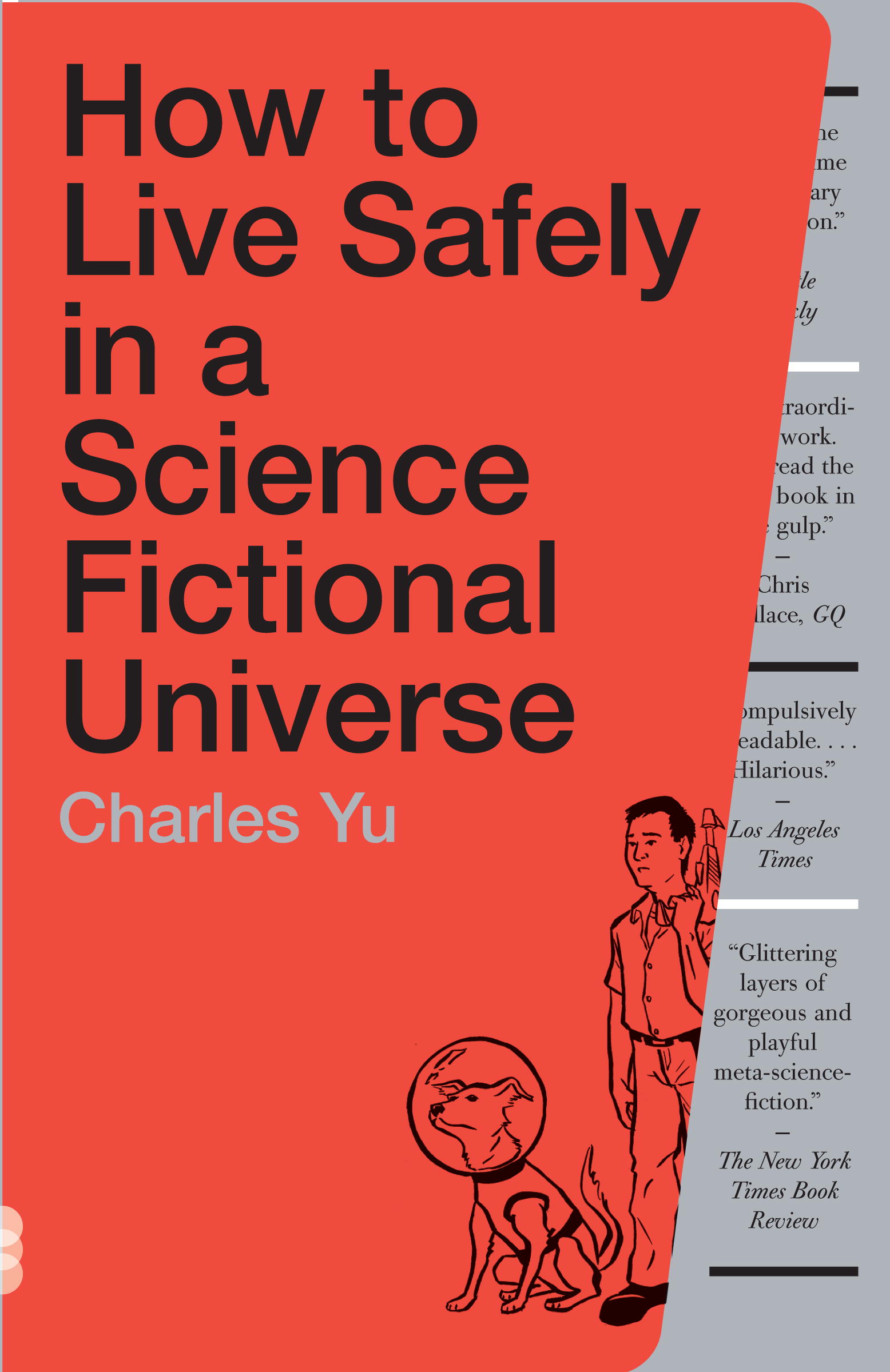
how-to-live-safely-in-a-science-fictional-universe-book-cover-01

After finishing Charles Yu’s How to Live Safely in a Science Fictional Universe, I can honestly say that I’m still not sure how to life safely in a science fictional universe. Whether this is a failing of the book’s contents or its title (or both or neither) I’ll let you decide.

Charles Yu, time travel technician/narrator of HTLSSFU (not to be confused with…or TO be confused with? Charles Yu our author) lives in Minor Universe 31, a universe in which “reality represents 13 percent of the total surface area [and] the remainder consists of a standard composite based SF substrate.” Which is to say – science fiction.

Continue reading “How to read safely in a science fictional universe”

Blondes have less fun

81djqJv8lZL

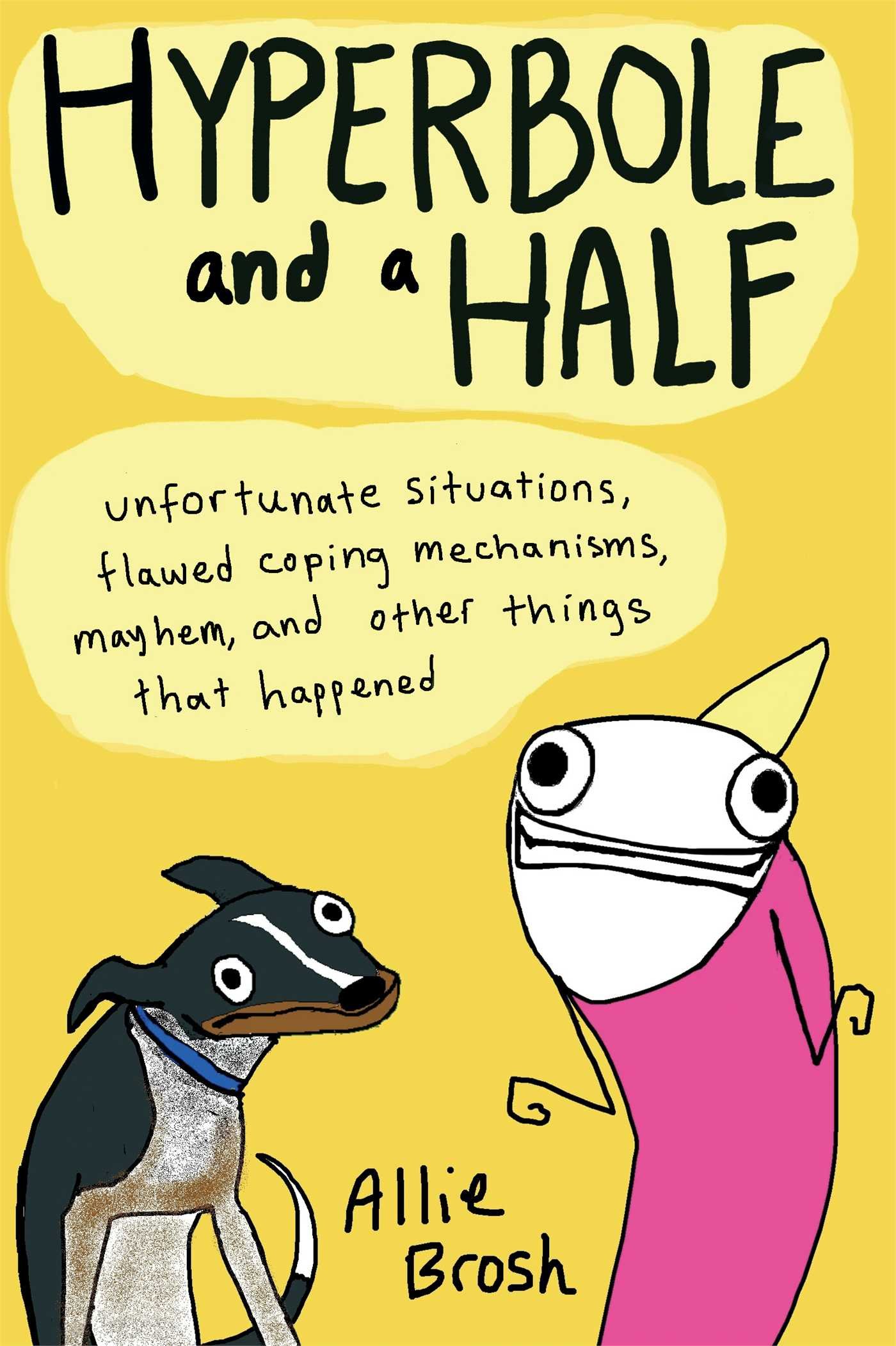
Everything you need to know about Allie Brosh comes in the first paragraph of Hyperbole and a Half:

“Here is a re-creation of a drawing I did when I was five. It’s a guy with one normal arm and one absurdly fucking squiggly arm. What you can’t see is that in the original, the squiggly arm continues for the entire length of a roll of butcher paper. It started on one end and then just kept going until I ran out of paper.”

I’m listening…

While HAAH is Brosh’s first book, it is primarily a collection of pieces from her blog of the same name, itself a fabulous diary of essays/comics featuring Brosh as a crudely drawn but adorably emotive version of herself. In HAAH the book, Brosh’s essays cover everything from her encounter with a goose-perpetrated home invasion to the time she ate her grandfather’s entire birthday cake before his party, just to spite her mother…and to eat cake.  

Continue reading “Blondes have less fun”

Shockingly, that kid from The Shining didn’t grow up to be totally normal

Dr.-Sleep-Cover

As superhuman abilities go, mind-reading has to be one of the worst. I mean yes, it’d be nice to call people on their bullshit, and the bar-trick possibilities are endless, but for the most part humans are vile creatures, and our thoughts the headquarters of depravity. Add to that telepathic stew an alcoholic and occasionally abusive father, plus a haunted hotel bent on your family’s destruction, and it’s no wonder that Danny Torrance, the child clairvoyant at the center of Stephen King’s The Shining, grew up to be Dan Torrance, an alcoholic and immoral drifter who drinks to dull the memories and manifestations of his own power.

Releasing a fiction sequel more than thirty years after its predecessor is the kind of gambit only Stephen King can pull off (though credit is due to the movie adaptation he’s so consistently talked down) and King, fortunately, seems to recognize the absurdity of trying to pick up where we left off, literally in ashes (in the book, the hotel blows up). And So Doctor Sleep is cast forward — through Danny’s troubled teenage years and his struggle to forget the Overlook (uh, YEAH), and into the present, where Obama is president, the Internet exists, and an adolescent boy band called ‘Round Here is at peak popularity. Even Twitter gets a mention.

In the present, Dan has learned – mostly through drinking – to temper his visions, and wanders from town to town doing odd jobs until some drunken episode forces him to pack up and move on. It’s only after settling down and getting sober that he is forced to face his shining head-on, and in so doing stumbles across a young girl in need of his help.

Continue reading “Shockingly, that kid from The Shining didn’t grow up to be totally normal”
Get your shine on

shining

Here’s the thing: I read at night. I mean, not only at night – also on the train, and on weekend mornings, during commercials, and during superfluous portions of TV shows (read: all of X Factor). But I do a lot of reading at night, in bed, acting as a human Berlin Wall between my cats and further damaging my grandma eyes with the light of a propped-up iPad mini. (I actually have a book holder/travel pillow that, for the record, is dope.) I like to read in the (extremely relative) quiet of Bushwick-After-Dark, when the 18-wheelers stop rolling by for long enough that you might catch the sound of a bump in the night.

Which is all to say that The Shining is most definitely not a night book.

Everyone and their mother has been pointing me to Doctor Sleep, Stephen King’s long-awaited sequel to The Shining, which came out in 1977. But it irks me to read sequels without reading their predecessors, and so even though I’ve seen Stanley Kubrick’s famous Shining film adaptation about 65 times, I wanted to check out the original material.

Continue reading “Get your shine on”

What if Chris Christie was a closet werewolf?

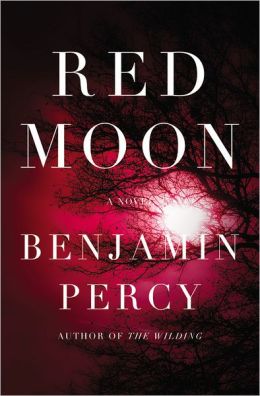
Red Moon

When you say you’re reading a novel about werewolf politics, there’s an understandably large group of people whose first inclination is to tune out. Generally speaking, I would be one of those people.  But sometimes, a political werewolf novel is both a political werewolf novel and just enough more to be good.

Benjamin Percy’s Red Moon takes place in a fictional present where 5.2% of the population are lycans, which is to say werewolves. Lycans can control when they “turn” (it involves hairy bodies and bleeding gums) but are still maligned by the general public and forced to endure certain indignities, like a national registration and a government-mandated sedative to suppress their aggression. Compounding the tension, a small faction of lycans have formed a resistance movement, which is carrying out acts as small as vandalism and as large as terrorism in defense of lycan rights and the independence of the Lupine Republic, lycans’ native country, which the U.S. is occupying and milking for uranium.

Continue reading “What if Chris Christie was a closet werewolf?”