On The Goldfinch, Dickens and haters

527141df7cd2b.preview-300

You know that uniquely torturous last week of work before you go on vacation, when you’re obsessively checking weather reports and find yourself spacing out to to thoughts of fudge and salt-water taffy? That’s me right now, just four days shy of my annual sojourn to the peaceful post-Labor Day rhythms of Ocean City, New Jersey. My bag is half-packed and I’ve got my reading list sorted (new Tana French, new-ish Marisha Pessl, new-adjacent Karen Joy Fowler); all I need is to survive the next 93 hours. It’s exactly like that James Franco movie, except less time and I’m not trapped and at the end of everything I anticipate still having both arms.

Little has been able to hold my attention since the 10-day New Jersey forecast became relevant, with the exception of The Goldfinch, the much-discussed winner of the 2013 Pulitzer Prize for fiction and Donna Tartt’s first novel since The Little Friend in 2002 (and before that, The Secret History in 1992). I’d been delaying starting The Goldfinch for months, both because it’s exceedingly long (around 800 pages) and because people have Opinions about The Goldfinch, and sometimes it’s hard to get objectively invested in a book when one is aware, however vaguely, of the existence of Opinions. But surely, I thought as I searched for the door-stopper of a galley copy I’d plopped onto my bookshelf six months ago (ultimately traded for the e-book within 10 pages), surely a Pulitzer Prize winner can’t be bad. Surely I couldn’t hate it. And so with some trepidation, and a quiet symphony of Atlantic Ocean waves playing at the edge of my subconscious, I dove in.

Continue reading “On The Goldfinch, Dickens and haters”
Things that don’t need to be open 24/7: liquor stores, gun stores, bookstores

13538873

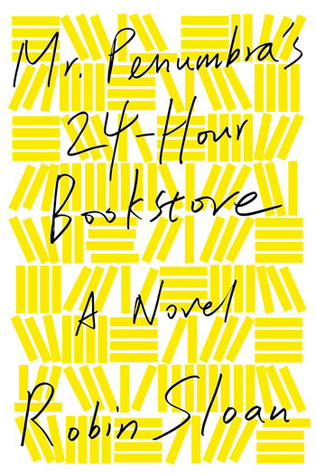
At first glance, a 24-hour bookstore makes no sense. At second glance also, and third, and really all glances because despite my valiant one-woman effort to visit all of them, bookstores are struggling. One need only look at the American Booksellers Association’s website (or the husk of a shuttered Borders) to know that bookstores are going the way of record stores: quaint, beloved, rare. It’s not so much a matter of if at this point, but when.

Fortunately, Mr. Penumbra’s 24-Hour Bookstore, a San Francisco outfit at which the hapless Clay Jannon is a newbie night clerk, isn’t your ordinary bookstore. The vast majority of MP24HB’s customersβ€”who are few and far betweenβ€”don’t bother with the popular fiction or latest fantasy titles at the front of the store; they’re concerned only with the back, where a collection of teetering multi-story shelves house what Clay calls the “Waybacklist,” nondescript hardcovers whose contents he is not allowed to explore.

Continue reading “Things that don’t need to be open 24/7: liquor stores, gun stores, bookstores”

5 passages from The Woman Upstairs because I just can’t

9780307743763_custom-b3d21306fc90bac3dd282a2a361c641b402b7f2c-s6-c30

It’s not that Claire Messud’s The Woman Upstairs was my favorite book ever, or even the best book I’ve read this year. It’s that the opportunities for analysis in Messud’s lovely fifth novel are so ripe, so abundant, that I have found myself for more than a week overwhelmed by the possibilities of this review, by the intellectual tangents and gender-theory diatribes it might inspire. The 16-year-old living inside of me who never really “got” the appeal of Virginia Woolf is afraid I wouldn’t do The Woman Upstairs justice.

So instead here are five passages from TWU, which is about an elementary-school teacher who becomes enamored of a new student and his family. If you don’t like these quotes, you won’t like the novel. If you do, pick it up post-haste.

Continue reading “5 passages from The Woman Upstairs because I just can’t”

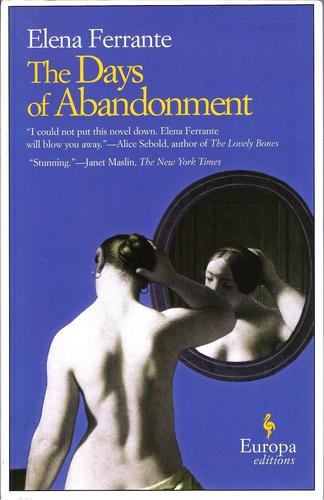
The Days of Abandonment is an epic breakup book

abandon

“One April afternoon, right after lunch, my husband announced that he wanted to leave me.”

It’s a fine way to start a book. From its first pages, The Days of Abandonmentβ€”a slim 2005 novel translated from Italianβ€”is a compelling exploration of frankness, unpredictability and unpredictable frankness. It is the same blithe detachment with which Olga’s husband announces his departure that Olga herself relates to us, the reader, the spiral of grief into which she descends, a spiral so severe as to approach madness.

Once past the suddenness of his announcement, Olga’s husband Mario proves himself to be an otherwise stereotypical soon-to-be-ex spouse: He has abandoned her for a younger woman, proves minimally sympathetic to the injustice of his decision, and becomes almost willfully detached not only from Olga but from their two children, who are old enough to understand their mother’s biting remarks about her defecting husband. Likewise, Olga’s tour through the emotions of the dumped is familiar to anyone who’s suffered through the sudden dissolution of a long-term relationship. Shock and anger give way to obsession and anxiety; depression sets in; small tasks prove monumentally overwhelming. 

Continue reading “The Days of Abandonment is an epic breakup book”

Flash Boys is lucky it doesn’t have weirder Google Image results

flash-boys-jkt_1

I know, I know–reviewing Flash Boys is so last week. But I approach my reading the way I approach my running: Don’t worry about what everyone else is doing, just get there in your own time. (Incidentally, this is also how I approach fashion, new music, travel, food fads, and pool.)

If you’ve managed to miss out on the Flash Boys Extravaganza (which sounds like a raunchy Chippendales show), it goes like this: Michael Lewis, best known for writing the seminal Wall Street memoir Liar’s Poker, as well as The Blind Side and Moneyball, published a book about high-frequency trading in which he said, essentially, that the stock market is rigged against the average investor. Flash Boys, which primarily investigates high-frequency trading through the eyes of Royal Bank of Canada whiz kid Brad Katsuyama, unpacks the wonky details of HFT to a damning conclusion: Firms are exploiting technological and regulatory limitations in the system to receive, and act on, advance knowledge of trades. More broadly, Flash Boys explains how over the last decade, the stock market has gotten more complex (in addition to the NYSE and Nasdaq, there a dozen other exchanges now) and less transparent (an increasing number of trading is done in “dark pools” whose makeup and workings aren’t public). As is his style, Lewis tells a great story, and what emerges is both a condemnation of HFT firms, banks and regulators for ignoring or taking advantage of the unfair market, and a bit of a love letter to Katsuyama, who Lewis paints as the humble hero, the guy who chooses to expose injustice rather than profit from it.

Continue reading “Flash Boys is lucky it doesn’t have weirder Google Image results”