The Fear Street books are back, and R.L. Stine offered me some of his french fries

23848058

R.L. Stine has been murdering teenagers for 30 years.

Considered the king of young-adult horror fiction—he remembers being described as a “literary training bra for Stephen King”—Stine is best known as the author of the popular 1990s book series Goosebumps and Fear Street. In the same way J.K. Rowling introduced many a young millennial to the recreational reading rainbow, Stine’s prolific penmanship—at his peak, he was writing one Goosebumps and one Fear Street a month—is the core around which many ’90s kids developed a love of fiction.

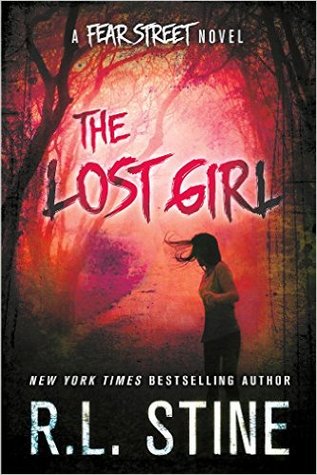
Stine has continued to write since his heyday, and the 72-year-old author recently returned to his roots with a six-book revival of the Fear Street series, whose third installment, The Lost Girl, was released in September. Goosebumps, a movie based on that series and starring Jack Black as Stine, came out in October.

For a man who seems to know his place in the fiction canon—he has sold more than 400 million books—Stine is matter-of-fact about his popularity, a humility that seems in part tied to his family. Stine’s wife, Jane, is his editor (“It’s the worst,” he says, smiling), and his 35-year-old son, Matthew, has never read one of his books, despite helping with Stine’s website. “[Matthew] used to sell characters to his friends at school,” Stine tells me. “He’d say, ‘Oh, for $20, you can be in my dad’s next book.’”

Continue reading “The Fear Street books are back, and R.L. Stine offered me some of his french fries”

Jonathan Franzen is a basic bitch, but I’m OK with it

Franzen is one of those unique human centipedes who only seems to get more famous the more he decries the consequences of his fame. I don’t mind.

Book Review-Purity

Like most great controversies, it all started with Oprah.

Back in 2001, Jonathan Franzen’s The Corrections was selected for Oprah’s Book Club, at a time when OBC was nirvana for publishers—an immediate launching pad to record-breaking sales and endless press. Franzen shot some b-roll with O, but his invitation for an official sit-down was rescinded after a series of interviews in which he expressed reservations about the pick. “I had some hope of actually reaching a male audience and I’ve heard more than one reader in signing lines now at bookstores say ‘If I hadn’t heard you, I would have been put off by the fact that it is an Oprah pick,”’ Franzen told NPR at the time. “Those are male readers speaking.”

Oprah and Franzen eventually made up—ever a badass, in 2010 she selected his novel Freedom for her book club and the duo intellectually hugged it out on camera—but even after a decade of half-assed backpedaling, Franzen has struggled (or refused) to shed his reputation as an ungrateful douche. “I think [Oprah] was surprised that I wasn’t moaning with shock and pleasure,” he told Slate of the Corrections debacle in 2013. “I’d been working nine years on the book and FSG had spent a year trying to make a best-seller of it. It was our thing. She was an interloper, coming late, and with an expectation of slavish gratitude and devotion for the favor she was bestowing.”

Oprah isn’t Franzen’s only beef. He also has a longstanding feud with author Jennifer Weiner, who has made Franzen the poster child for her crusade against the literary establishment’s gender problem. Weiner says male authors like Franzen get a disproportionate share of attention and review space, while Franzen says that if there is a lit-fiction gender gap, Weiner isn’t a victim of it. “She is asking for a respect that not just male reviewers, but female reviewers, don’t think her work merits,” Franzen said in February. “To me it seems she’s freeloading on the legitimate problem of gender bias in the canon, and over the years in the major review organs, to promote herself, basically.”

Continue reading “Jonathan Franzen is a basic bitch, but I’m OK with it”

Eating pastries with George Carlin’s daughter

cover+FINAL+-+A+Carlin+Home+Companion+1-5-15

One morning in the mid-1970s, a cocaine-addled George Carlin wakes up and thinks the sun is exploding. “I shake Brenda awake: ‘Get Kelly up! The sun has exploded! We have eight minutes to live!’” Carlin told Tony Hendra for his autobiography Last Words. “I was certain it had exploded and we had eight minutes for the shock wave to get here, which would then be the end of the world.”

Kelly Carlin, George’s daughter, was 11 at the time, but more than 40 years later she still remembers well those panicked minutes. Looking for a second opinion, George calls longtime friend Joe Belardino, who is five hours away in Sacramento. “I sat on the edge of my parents’ bed tensely listening as Dad hurriedly explained to Joe what was going on,” Kelly writes in her memoir, A Carlin Home Companion: Growing Up With George, which goes on sale this week. “With a look of hope on his face, Dad covered the mouthpiece and said, ‘He’s checking.’”

Joe ultimately confirmed the false alarm—“No, it looks okay up here”—and the story of the exploding sun becomes Carlin family legend, the kind of funny-in-hindsight anecdote that belies how terrifying it would be to have a parent shake you awake with warnings of an imminent doomsday scenario.

Continue reading “Eating pastries with George Carlin’s daughter”

The gamers will save us

ZZ48DF98EC

For more than five years—basically since I started living alone—there is a set window of time during which I can watch horror movies: 10 a.m. to 4 p.m. on weekends, and during the week never (unless I feel like some Freddy Krueger before breakfast). Because even as I settle into the throes of adulthood, I am still easily scared. I hate peeking under my bed, or behind the shower curtain, and closing my mirrored medicine cabinet still makes my heart flutter. All of which I credit to a childhood spent watching wildly inappropriate B horror movies rented from the kind of video store that had an adult section. When Scream and I Know What You Did Last Summer brought the horror genre back into the mainstream in the late ‘9os, I didn’t know whether to be more excited about my favorite genre’s budding popularity, or Skeet Ulrich.

Scream creator Wes Craven’s death this week is no small loss for scary cinema, and has me reflecting on what it was about Scream that catapulted a silly slasher flick into worldwide popularity. Despite a very of-the-moment cast (did I mention Skeet Ulrich?) and genius mask work, Scream’s true strength was in its wink at the fourth wall—the veil between fiction and reality that has to exist lest we start wondering why everyone in horror movies acts like they’ve never seen one before. Don’t go up the stairs! Don’t look for that laughing child! TURN AROUND!! Scream took cinematic self-awareness to the next level, as its main characters often preempted their own murders with diatribes on the inherent ridiculousness of horror movie tropes. “It was a tactic that made even Scream’s most cliche moments feel ironic and sophisticated,” I wrote in Newsweek.

Continue reading “The gamers will save us”

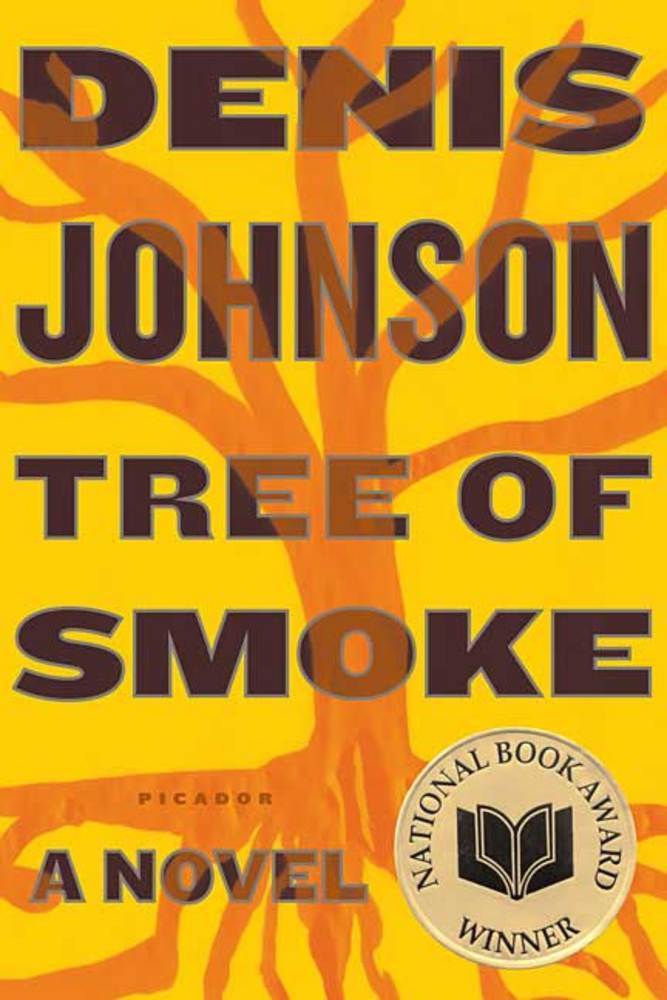
5 tips for reading Denis Johnson’s Tree of Smoke

9780312427740

Because you know you should.

1. MAKE YOUR BOOK CLUB READ IT 
bought Tree of Smoke at The Strand three years ago and it’s been straight loungin’ in my apartment ever since. Despite loving Jesus’s Son—Johnson’s  1992 short-story collection—I somehow couldn’t muster the energy to dive into TOS until it was selected by my book club last month. This novel is long and about Vietnam and…long, so the bigger your support network the better. After all, book clubs were made for these situations; they’re basically voluntary homework for adults. 

2. GOOGLE “VIETNAM WAR” FIRST
While it’s not strictly necessary, it was hugely helpful for me to read up on Vietnam before getting into TOS. I’m not saying you should do enough research to like… write a thesis or anything. Just take 10 minutes to refresh your memory of the basics, the CliffsNotes—who was fighting whom and why, or, you know, “why.” Then clear your search history. 

Continue reading “5 tips for reading Denis Johnson’s Tree of Smoke”