Working title: Monks in Space!

canticleOh how I wanted to love this book.

A Canticle for Leibowitz was a recommendation from a friend, an avid Sorry Television reader who makes my day every few weeks when we run into each other socially and talk books. After our most recent such encounter, I dug through my memory bank for his long-ago recommendation and promptly ordered it online. What arrived in my mailbox two days later (thank you Amazon Prime) was this, a weighty paperback whose intimidating cover art is paralleled only by its introduction’s promise of frequent use of Latin. Apprehensive and intrigued, I dug in.

It’s difficult to explain what ACFL is “about,” a struggle not entirely helped by my edition’s vaguely worded back cover, which devotes a third of its real estate to phrases like “one of the most accomplished, powerful, and enduring classics of speculative fiction.” The book opens in post-apocalyptic timesโ€”roughly the 26th centuryโ€”when the human race has long since crippled itself in a nuclear war known as the Flame Deluge. Off the bat, we meet Brother Francis, a monk in the “Albertian Order of Leibowitz,” a monastic order devoted to the preservation of knowledge, a task they accomplish by hoarding, hiding, memorizing and copying books whose value has been drastically reduced by a post-Deluge society that frowns upon literacy. Leibowitz refers to Isaac Edward Leibowitz, a 20th-century electrical engineer employed by the U.S. military, who after being martyred for his devotion to scientific knowledge, was beatified by the Romance Catholic Church (“New Rome”). At the time of the book’s opening, he is a candidate for sainthood. Continue reading “Working title: Monks in Space!”
If a hurricane touches land and there’s no Chris Christie to meet it, is it still a hurricane?

Texas Great Storm
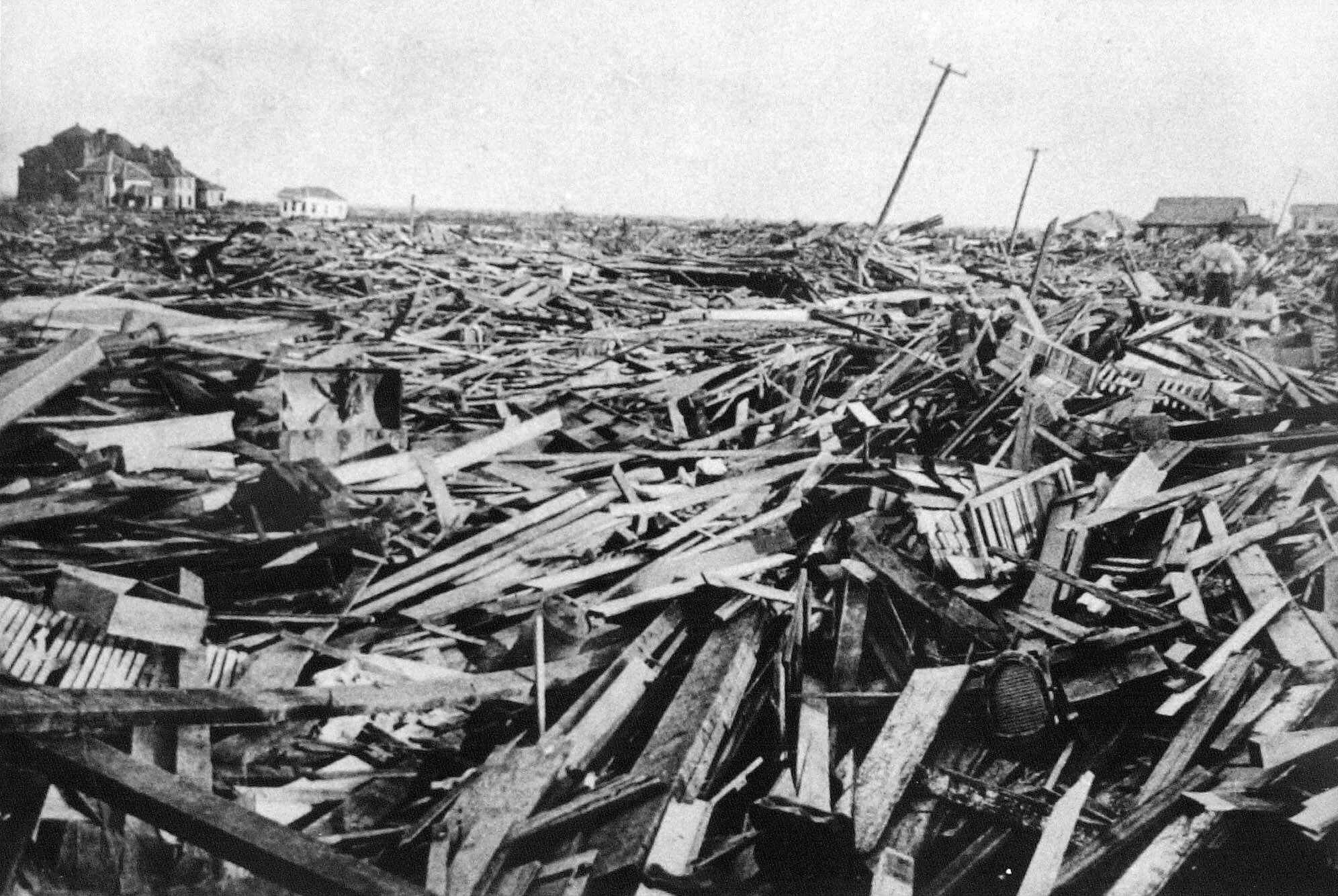
Galveston, post-destruction (obvi).

The year was 1900. The place: Galveston, Texas, a growing town with dreams of becoming the next Houston. The guy: Isaac Cline, resident meteorologist for the U.S. Weather Bureau, sent to Galveston with explicit instructions to establish a state-wide weather service, while simultaneously improving the perception of the bureau asโ€”gaspโ€”ineffective at predicting the weather.

So much for that plan. On September 8, Galveston is hit by an enormous hurricane, which over the course of the day destroys the town, kills more than 6,000 peopleโ€”some estimates put the total as high as 12,000โ€”and lends both anecdotal and scientific evidence to what was only recently proven again along the East Coast: hurricanes are serious business. 

Continue reading “If a hurricane touches land and there’s no Chris Christie to meet it, is it still a hurricane?”

The perks of being a wallflower? Probably very few, at least until college

Perksofbeingwallflower1

I first read The Perks of Being a Wallflower about a thousand years ago, by which I mean in high school. So when I saw that a movie version was being madeโ€”more than a decade after the book’s 1999 releaseโ€”it seemed like a logical time to go in for the reread.

Perks is a weird little book. It’s written as a series of letters from lead character Charlie, a quirky and potentially clinically depressed freshman who shortly into the school year befriends a group of decidedly cooler seniors, including brother-sister duo Patrick and Sam, the former openly gay (which, in a My So-Called Life sort of way, appears to be simultaneously brave and routine at their high school) and the latter the immediate object of Charlie’s bumbling affections. Over the course of the school year, Charlie experiences a series of teenage rites of passage: His first party, his first hookup, his first pot brownie, etc. In some situations, Charlie’s mildly autistic inability to read social cues comes across as endearing, while at other momentsโ€”such as when, during a game of truth or dare, he’s dared to kiss the prettiest girl in the room and goes for Sam instead of his girlfriendโ€”Charlie fails miserably at being what every 15-year-old really wants to be in high school: at least normal enough to fit in with a group of friends. 

Continue reading “The perks of being a wallflower? Probably very few, at least until college”

Are teenagers obsessed with post-apocalyptic politics now or what am I missing?

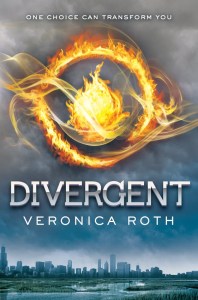
Divergent hc c(2)

After promising my sister that I would spend this past weekend hitting 20% on ye old Les Miserables, I did absolutely no such thing. Instead I got really caught up in this New York Times article about “new adult” books, then proceeded to read five books for teenagers instead. I know: I have the literary tastes of a 14-year-old me.

Of course, having now availed myself of the relevant resources (i.e. teen sex books) I have some things to say about this “new adult” trend, but that’s a post for another day. Instead, my first review of 2013 goes to Veronica Roth’s Divergent, Book #1 in a young adult series that will ring quite a few bells for anyone familiar with young adult series.

(It probably says something about today’s teens that all their literary blockbusters include dystopian future societies where political ideology results in the institutionalized oppression of the masses. Must be that Justin Bieber, influencing them on the causes that count.)

Continue reading “Are teenagers obsessed with post-apocalyptic politics now or what am I missing?”

I made a really detailed graphic explaining all the characters in The Broom of the System, which, incidentally, is a pretty good book

BroomOftheSystem
Exhibit A

In the latest example of my hands having far too much time on them (first example), please take some time to look over Exhibit A: a complex PowerPoint diagram I put together to document the intricate character relationships in The Broom of the System, David Foster Wallace’s now 25-year-old first novel. (Here’s a link to a legible version.)

BOTS, in an extremely simplified sense, is about Lenore Beadsman, a 20-something underemployed receptionist at the publishing house of Frequent and Vigorous, a job made all the less demanding by Lenore’s relationship status with F&V Chief Executive Richard “Dick” Vigorous (as the kids say, “it’s complicated.”) One day in 1990, Lenore gets a call from a Mr. Bloemker, manager at the Shaker Heights Home, where her great-grandmother (also named Lenore Beadsman) has apparently gone missing, along with another two-dozen patients and staff members. In the company of Dick Vigorous, Lenore goes in search of her missing great-grandmotherโ€”both physically and I suppose intellectuallyโ€”along the way discovering or re-discovering various people in her life and in many cases stumbling across histories or idiosyncrasies they had heretofore failed to disclose.

Continue reading “I made a really detailed graphic explaining all the characters in The Broom of the System, which, incidentally, is a pretty good book”