
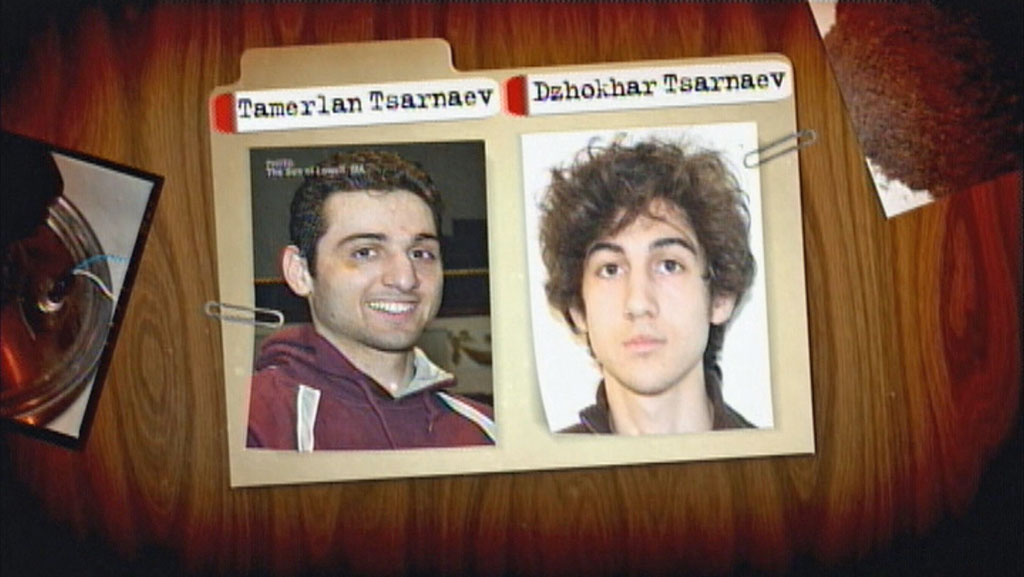
In the wake of our six-billionth national tragedy this month, I keep hearing one question when it comes to Boston bombers Dzhokhar and Tamerlan Tsarneav (whose names I will literally never ever remember how to spell). More than anything, perhaps sometimes even more than outrage, people seem to want to know why: What motivated them? What could have possibly led two otherwise mediocre brothers to set off bombs, to blow up children, and to fuck with Boston.
Indeed, we as Americans (we as humans?) appear keen on filing the Marathon incident away into a pre-determined folder of Why Bad Things Happen. Was it terrorism? Was it politically motivated? Were they lonely and alienated in their non-native country? Were they tired of being asked for donations every time one of their friends ran a 5K? Were they just crazy?
A byproduct of my extremely cynical worldview (on a crocheted pillow, it would boil down to something like “People are awful human beings”) I don’t find myself as preoccupied with the Tsarneav brothers’ motive. Since there is nothing they could say or reveal (rather, that Dzhokhar could say or reveal) that would make me go, “Ohhhh, well that totally makes sense then,” their reasons for wreaking havoc in this country — which never appears to never have treated them with anything worse than apathy — are somehow frivolous to me.
Taking it a step further, I sometimes feel that attempting to publicize their justifications for the bombing does little except give those justifications undeserved exposure. Yes, I suppose I’d like to know whether they were linked to a broader group with additional targets, but then again maybe not. Maybe some part of me would like to trust that the authorities will suss that out, and leave the rest of us to forget the name Tsarneav post-haste, to drop the duo into the bucket of Stupid Awful Idiots Who Did Terrible Things But Otherwise Don’t Matter, not the bucket of Terrorists Whose Ideology We’ll Talk About for Decades to Come and Who Have Basically Defined Our Foreign Policy. It’s a tough balance — seeking justice for the victims, preparing for the possibility of a next time, and yet also finding a way to lessen the impact of these people, to avoid giving them the attention they so desperately want. It feels like getting bullied at school and being told to ignore it, that they’re only trying to get a rise out of you, that reacting is how they win.
Continue reading “When people kill people, does it matter why?”


 couldreads