The girl (being held prisoner and tortured) next door

Ketchum_bookcover

Many moons ago (high school) I wrote a paper about Nazi Germany, with which I was (and still, to some degree, am) mildly obsessed. My paper was on the very topic that so fascinated me about the Nazis, and myriad other large-scale abdications of morality. Who, in short, were the Nazis? Monsters, capable of gleefully (or at least not un-gleefully) executing one of the most intense genocides in history? Or ordinary dudes, caught up in a whirlwind of power and authority and perhaps some misguided notion that theirs was a laudable mission?

The answer, of course, lies somewhere in between. Because the question is really the point. Are people bad and if so why? Or are people good and if so to what degree?

Jack Ketchum’s The Girl Next Door is one of a series of adaptations of the 1965 case of Sylvia Lekins, an Indiana teen who was held captive in the basement of her de facto foster mother, the bouffant-ed Gertrude Baniszewski. Along with her two daughters, son, and a group of neighborhood children, Baniszewski tortured Sylvia, and at times her younger sister Jenny, in ways that I almost feel uncomfortable writing here. Sylvia was burned with scalding water, forced to eat her own feces and sexually abused with a Coke bottle. She ultimately died in the house, and Baniszewski was later convicted of first-degree murder.

Continue reading “The girl (being held prisoner and tortured) next door”
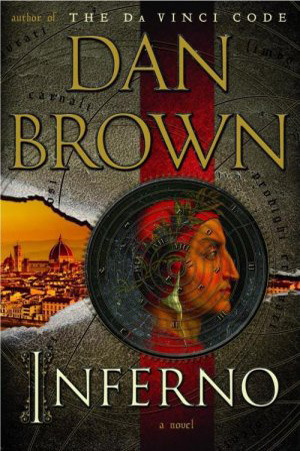
Dan Brown’s Inferno: Spoiler alert, there are symbols

inferno

Dan Brown really wants you to know that Sienna Brooks has a ponytail. I know this because Brownβ€”famous author and mediocre contributor to the Tom Hanks ouvreβ€”uses the word ponytail at least 20 times in Inferno, the fourth novel in America’s favorite dashing-symbologist series.

Here’s my thing with Dan Brown. I know that his books are considered, let’s say, “accessible” to the average American, like the third of the population who can’t name the vice president. And I understand that for some people, who prefer to exercise their brain waves on books and other materials of a more intellectual caliber, this may be a deal-breaker. I get it. I too dislike Brown’s over-attention to certain descriptors, his propensity for using big words when they aren’t needed, and his seeming inability to create female characters who aren’t ponytailed intellectuals with a wardrobe of only cream sweaters. He’s got his faults.

Continue reading “Dan Brown’s Inferno: Spoiler alert, there are symbols”

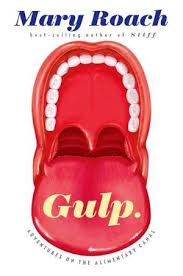
Farm to table to mouth to stomach to intestines to….

gulp

There’s been all manner of hullabaloo in the last few years over how food makes its way from wherever it started — ground, tree, plant, pig, chicken, cow — to the kitchen table (or if you’re me, to the deli counter sandwich). And that’s all well and good; I don’t know that I need to be made aware of my chicken’s first name, but there certainly isn’t any harm in knowing some stuff about the things you put in your mouth (that’s what she said).

Mary Roach, however, is concerned with none of that. Whether you’re eating a farm-raised chicken named Sarah — whose hobbies including pecking, clucking and the occasional egg — or spending an evening attempting to house a 40-piece McNugget meal is of no concern to Roach. She cares only about what happens after.

Continue reading “Farm to table to mouth to stomach to intestines to….”

Let’s explore ‘Let’s Explore Diabetes with Owls’

diabetesowls

If you’re a big fan of David Sedarisβ€”like you want to crawl inside his brain and/or get stuck with him on a broken elevator or malfunctioning roller coaster (what? He’d have great commentary)β€”then take this piece of advice: Don’t read The New Yorker.

Sedaris released a new book of essays this month, the bizarrely named Let’s Explore Diabetes with Owls, which I bought with all the speed and joy of a stoner hitting up Taco Bell for his or her first Ranch Dorito Taco. And although LEDWO is chock full of traditionally hilarious Sedaris observationsβ€”on everything from the restroom situation in China to the litter situation in rural Englandβ€”I found myself suffering from a prolonged sense of dΓ©jΓ  vu. Indeed, the majority of the essays featured in Sedaris’ latest contribution to the bookshelf have been published before, most of them in the New Yorker.

Now, I’ve got nothing against authors double-pubbing their essaysβ€”Nick Hornby has an entire series of books based on his “Stuff I’ve Been Reading” column in The Believerβ€”but it does take some of the joy out of acquiring a new collection from one of your favorite writers. Sedaris in particular covers subjects so mundane on their face that one can’t help but remember his past contributions to the essay genreβ€”never have I thought to myself “Now, who wrote that piece about the predatory habits of Normandy house spiders again?”

Continue reading “Let’s explore ‘Let’s Explore Diabetes with Owls’”

Fine, The Great Gatsby isn’t as bad as I remembered

gatsby-original-cover-art

Here’s a fun fact: I grew up about 5 miles away from F. Scott Fitzgerald …’s grave, as he is buried in an otherwise nondescript cemetery in Rockville, Maryland, where I went to high school. Fun Fact #2: I never visited his grave, in part because at the time it seemed creepy but mostly because of Fun Fact #3: For the better part of two decades, I have been quietly scornful of Mr. Fitzgerald, because for the better part of two decades I have assumed that I really really did not like The Great Gatsby.

I suppose it started as one of those things that was mildly and inoffensively true, like maybe I hated having to read The Great Gatsby for school, or maybe I got a bad grade on a quiz about The Great Gatsby, or (most likely) I simply decided to dislike it for the mere accomplishment of being contrarian (I mean come on, is it really the best novel of all time?) But for many years, I told myself — and others; believe me, and others — that I didn’t really care for its rich white people plot, or its vapid characters. I suppose I said it so often (as often as The Great Gatsby comes up in daily life) that it became more of a truism than it ever was originally, like swearing you hate yogurt and then realizing one day that you haven’t actually eaten it in 15 years. Long story short, I owed Gatsby a reread, and I may have been a little (a lot) swayed by the prospect of seeing Leonardo DiCaprio play yet another poor scrappy white guy trying to scam his way to success.

Continue reading “Fine, The Great Gatsby isn’t as bad as I remembered”