The meaning of Life After Life

9780316176484_custom-471ca800e5fe1258f2d4059059b24d8c1d95a7ba-s6-c30

In The Simpsons’ sixth-season Halloween episodeβ€””Treehouse of Horror V,” primarily remembered for its Shining knock-off, The Shinningβ€”Homer accidentally turns his toaster into a time machine, travels back to the prehistoric age, and realizes that anything he does in the past has the capacity to change the future. It’s a lesson as pivotal to time travel (see: every story ever told about time travel) as it is irrelevant to everyday life. After all, we can’t not make decisions. Should our choices send us down one path at the expense of othersβ€”or, to get more J.J. Abrams about it, should each of our choices create countless additional paths which themselves generate still more simultaneously occurring futuresβ€”so be it. We’ll never know the difference.

Unless. Kate Atkinson’s Life After Life is elegantly concerned with this abundance of potential paths, and with the possibility that one might indeed be aware of their existence. At the heart of LAL is Ursula, born on a snowy night in 1910, dead within minutes, and then born againβ€”on a snowy night in 1910. Nor is Ursula’s first rebirth her last: She dies in a variety of ways, and at a variety of ages, over the course of the book, and only in certain versions of her life does she mature enough to experience significant rites of passage, (or in some cases enough to make major contributions to the trajectory of world history). In this way, Life After Life is not so much about reincarnationβ€”Ursula is in all iterations herself, never a cat or a horse or a blade of grassβ€”and more about how even small choices have the power (or maybe just the capacity?) to redirect our lives. In other words, Ursula is not repeatedly reborn to a different set of circumstances, but rather given multiple opportunities to live within the same set of circumstances. It’s how she handles each life that shapes its direction.

Continue reading “The meaning of Life After Life”

When planning to sail around the world, don’t

Exciting developments on Sorry Television! After three years (!!!) of fighting the good fight solo, I’ve invited some friends to submit guest posts, so that you fine people have something to read on those weeks when I get so distracted by reality television caught up in work that I run out of time to write reviews and/or finish books. Today’s guest post comes from John Peabody, and it’s about boats. (If you knew John, you’d understand why I expected nothing less.) Also there is a person in this book named Captain Richard Box. ….Captain. Dick. Box. Enjoy! 

9780071414296_p0_v1_s260x420

The ocean covers 140 million square miles, 70 percent of the Earth and is made up of about 352 quintillion (352,670,000,000,000,000,000) gallons of water. In 1968, Donald Crowhurst, a businessman and amateur sailor loaded with a heavy dose of British can-do spirit and anΒ oversizeΒ ego, set out to take this on by himself. He wanted to be the first personΒ to sail solo around the world without stopping. Spoiler alert: He didn’t make it.

Long before the invention of GPS. or modern safety equipment, Crowhurst joined the Golden Globe Race (not, unfortunately, a footrace among persons vying for Golden Globes.) The first of it’s kind, the race entailed master sailors leaving from England and making it back in roughly 220 days, if at all. Success would mean a lot of time alone at sea and failure meant probably dying there (or I suppose some kind of 60’s-era Cast Away situation).

Crowhurst’s story is masterfully told in The Strange Last Voyage of Donald Crowhurst, a work that inspired multiple plays and the documentary Deep Ocean. Rumors of a feature film starring Colin Firth and Kate Winslet are now circulating online.

While under-qualified for his journey, Crowhurst was seriously committed β€” stubbornly so. Even while construction of his boat the Teignmouth Electron (fantastic name) went over budget, missed deadlines and revealed unsafe design flaws, he only grew more passionate about his trip. Only for a moment did Crowhurst consider not leaving his wife and family behind (this, btw, is a conversation I like imagining). 

Continue reading “When planning to sail around the world, don’t”

The Night Guest is why everyone needs a Golden Girls house

the-night-guest

I have two secret wishes that I think betray how awesome I’m going to be at old age. The first is that I have always – always – wanted to go on a cruise. A children-less, alcohol-fueled cruise to various ports of call, at which I would disembark for the better part of an afternoon to buy tchotchkes and eat meals in fancy oceanside restaurants. I’m not saying I’m not aware of the various misadventures that can befall one on maritime vacations (we all went through poop cruise); I’m just saying that in a best-case-scenario, where the weather is lovely and my room is spacious and there are no icebergs, I think a cruise could be fun.

My other Secret Old Person Opinion is that I am pumped to live in a retirement community (again, in a best-case scenario where my room is spacious and there are no icebergs). My very first job was as busperson (feminism) for the swank dining room of a upscale retirement community in the DC suburbs. Outside of the elderly’s very serious demands when it comes to seating arrangements (“But I always sit at the third table on the left”), the job wasn’t bad: generally respectful clientele, no kids throwing food on the floor, and free dinner (plus waffle-bar Sundays). But more importantly, it didn’t seem that bad for them either. Retirement communities are where you can chill with other old people, take things slowly, have your meals delivered and be cranky without etiquette-related ramifications. I mean, I bet you only have to wear shoes like, 30% of the time. And finally, perhaps most importantly, in a retirement community you got people looking out for you.

Continue reading “The Night Guest is why everyone needs a Golden Girls house”

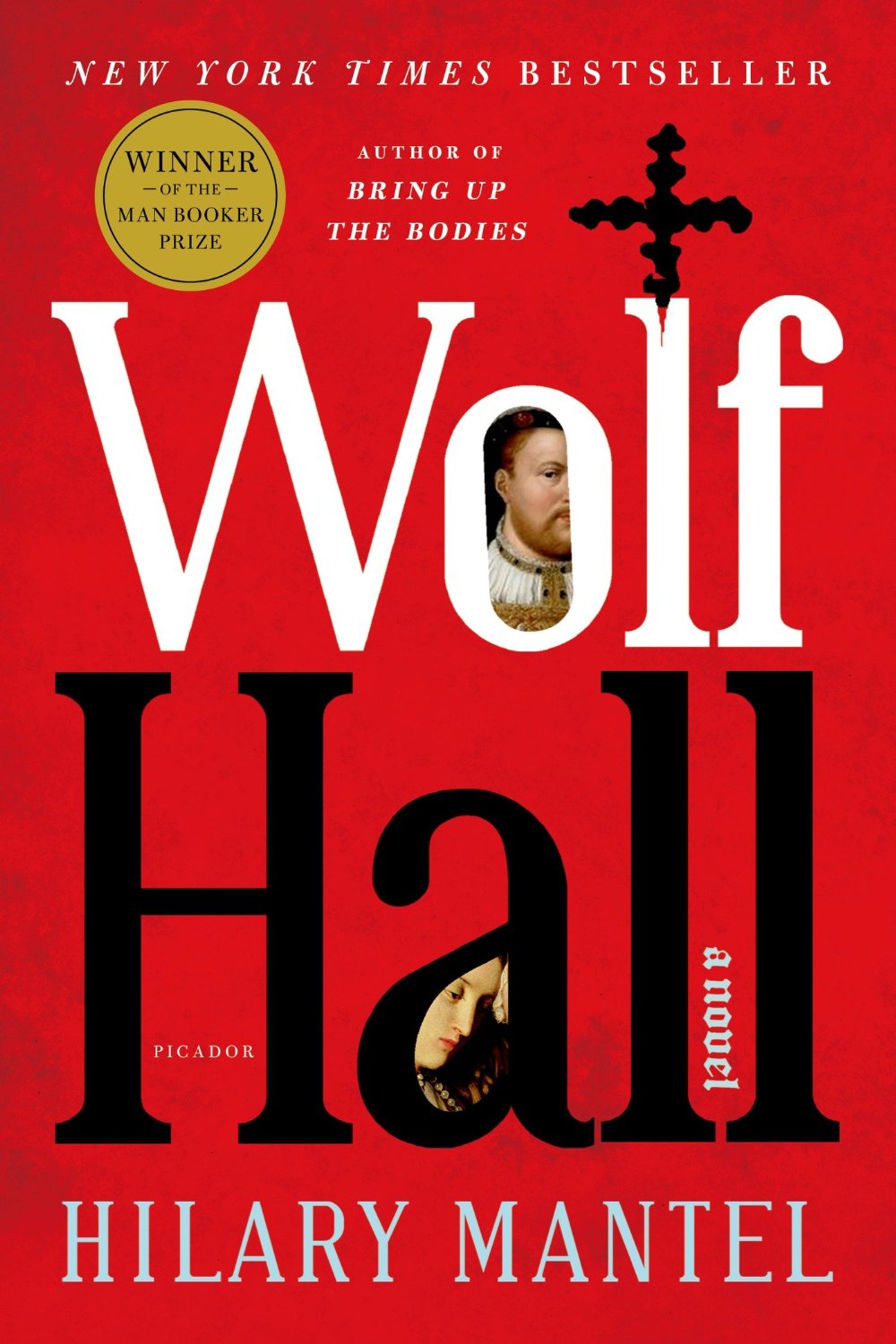
Wolf Hall: Not about a prep school for wolves

wolf

No matter how many accolades Wolf Hall has gotten, it’s hard not to tuck into a “Thomas Cromwell trilogy” without feeling a bit like the 73-year-old version of yourself (just with fewer afghans; I plan to have a lot of afghans). And for the first hundred pages of Hilary Mantel’s inaugural Cromwell novel, I wondered whether I had perhaps jumped the gun on King Henry-themed historical fiction: For all its wit and depth and (what I assume is) contextual accuracy, Wolf Hall was failing to take me out of myself. It seemed a book for a quiet afternoon at the library, or a peaceful morning in bed, not the kind of novel that might make itself heard over the cacophony of a subway commute.

Wolf Hall is, put simply, a fictionalized biography of Thomas Cromwell, from his time as right-hand man to Cardinal Thomas Wolsey (lots of Thomases in this book) through his ascension in the court of King Henry VIII. The novel won the Man Booker Prize and the National Book Critics Circle Award and has already been picked up for the stage and television. Its sequel, Bring up the Bodies, also won the Man Booker Prize, reminding us that British lady authors can write bestselling literary series that don’t include wizarding schools or vomit-flavored jelly beans.

Continue reading “Wolf Hall: Not about a prep school for wolves”

Finally digging into The Autobiography of Malcolm X

3 X slideshow

I decided to dive into The Autobiography of Malcolm X after last week’s 50th anniversary of the March on Washington, during which people like Barack Obama and Oprah touted how far our nation has come on civil rights in the last five decades. Said Obama in his speech: “To dismiss the magnitude of progress, or to suggest, as some have, that little has changed, dishonors the courage and sacrifice of those who paid the price to march.”

A week later, having delved into the life and thoughts of one of the country’s most recognizedβ€”and contentiousβ€”civil rights leaders, I find myself wondering whether Malcolm X would entirely agree

TAMX begins in Lansing, Michigan, where Malcolm Little is a generally good kid and upstanding student until the day he visits a relative in Boston and his mind is blown by all the hustle and bustle and black people. That tripβ€”coupled with a teacher’s admonition that Little could never be a lawyerβ€”inspires in him a certain frustration, and Malcolm soon drops out of school and moves to Boston, and later Harlem, where he becomes a small-time hustler: selling weed, shepherding men to prostitutes, robbing apartments, etc.

At 20, back in Michigan, Malcolm is arrested for robbery and sentenced to 8-10 years in prison (a sentence he notes is harsher for his choice of accomplices: white women) where he reads a shit-ton of books and discovers the Nation of Islam, a Muslim offshoot-slash-cult that promotes self-sufficiency, asceticism, surrender to Allah and that “the collective white man had acted like a devil in virtually every contact he had with the world’s collective non-white man.” (Which, true.)

Continue reading “Finally digging into The Autobiography of Malcolm X”