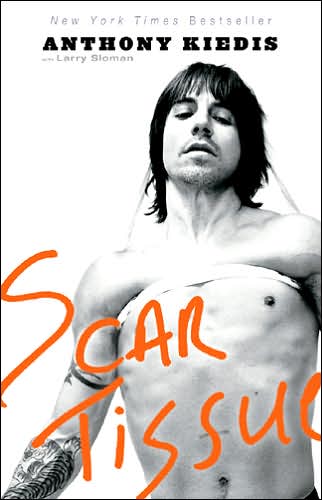
Dear Anthony Kiedis: Because of Scar Tissue, I forgive you for “Otherside”

Scartissuebook

The overwhelming first impression one gets of Anthony Kiedis’s autobiography is: Drug Memoir. Released in 2004, Scar Tissue (co-written with Larry Sloman, who also co-wrote Howard Stern’s Private Parts) did well sales-wise, ultimately hitting No. 1 on the New York Times bestseller list. There’s even an audio version read by Rider Strong (I repeat, Rider Strong). But Kiedis’s whopper of a memoir (~500 pages), was ultimately boiled down into a handful of talking points: band drama, women, drugs. Especially drugs.

That connotation has stayed with STish in the intervening decade, and so what I expected when I first bought my now-battered paperback edition for $1 at Strand circa 2010 was to get mired in a haze of substance abuse, to be taken through a Kerouacian whirlwind of gigs and girls and superstardom. At the very least, I kind of expected Kiedis to be a dick, an “author” because he was convinced of his own magnetism, not because he felt compelled to reflect.

Don’t get me wrong, Scar Tissue is about drugs. Kieidis has at one point or another been a frequent if not daily user of all the usual suspects (marijuana, cocaine, heroin) and, when using, will go for pretty much anything else in a pinch. He smokes his first joint at 11 years old; decades later, his tolerance for opiates is so high that ER doctors have to give him seven shots of morphine, a hospital record. Kiedis’s drug use is hard to read about, and to picture. It’s sad and desperate and nearly destroys his relationships, his career and his life many times. At its heart, Scar Tissue is indeed a drug book.

Continue reading “Dear Anthony Kiedis: Because of Scar Tissue, I forgive you for “Otherside””
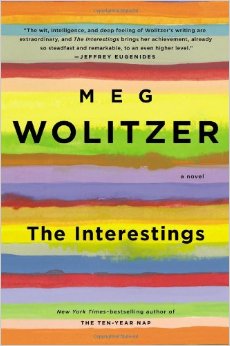
The Interestings reminds us that we kind of never were

51zPTVP+crL._SY344_BO1,204,203,200_

Over the course of my moderately awkward youth, I attended a lot of summer camps. Day camps and sleep-away camps, camps for sailing or crafting or “adventures” or spirituality, or some progressive combination thereof. Camps for girls, where the evening’s recreations included confessions about our limited experience with kissing; or camps for both genders, which are themselves little more than overly scheduled pretexts to kissing.

While I didn’t make lifelong friends at summer camp, I appreciate having been able to spend a few weeks away from home. Camp was a precursor to the first few weeks of college, after the parents leave and your universe is suddenly a bunch of strangers and the byproducts of a dozen Bed Bath & Beyond trips. A camper, like a freshman, is forced to contend with their individuality, and given the chance to decide which heretofore defining personal traits are worth hanging onto, and which might be cast off like snakeskin at the first opportunity. Camp lets you reinvent yourself in an afternoon, or become better acquainted with who you were in the first place.

Continue reading “The Interestings reminds us that we kind of never were”

Clockers: A blueprint for The Wire

clockers

It’s been two decades since Richard Price’s Clockers first hit bookshelves (kids, those are the things grown-ups had before tablets to hold their bound volumes of printed paper product). A lot has happened in those 22 years: America got its first black president, the Red Sox broke their 86-year curse, Justin Bieber was born. And yet, to read Clockers in 2014 doesn’t feel much like an exercise in time travel, or historical fiction. For all the emphasis the United States has put on in its wars on Drugs and Poverty, respectively, Clockers might as well have been written last year

Set in a fictional New Jersey town, Clockers follows the ins and outs of a group of housing projectsβ€”home to a complex network of drug dealersβ€”as well as the cops and detectives whose business it is to prevent the success of said drug trade. The novel is primarily concerned with Strike, an up-and-coming pusher struggling to balance his financial ambition against his disillusionment with hustling; and Rocco, a homicide detective charged with investigating a murder that may be connected to Strike’s crew. Split between the perspectives of its two main characters, Clockers is immediately reminiscent of the McNulty/Avon dynamic in the first season of The Wire. Which makes sense: author Richard Price was a writer on the show.

Continue reading “Clockers: A blueprint for The Wire”

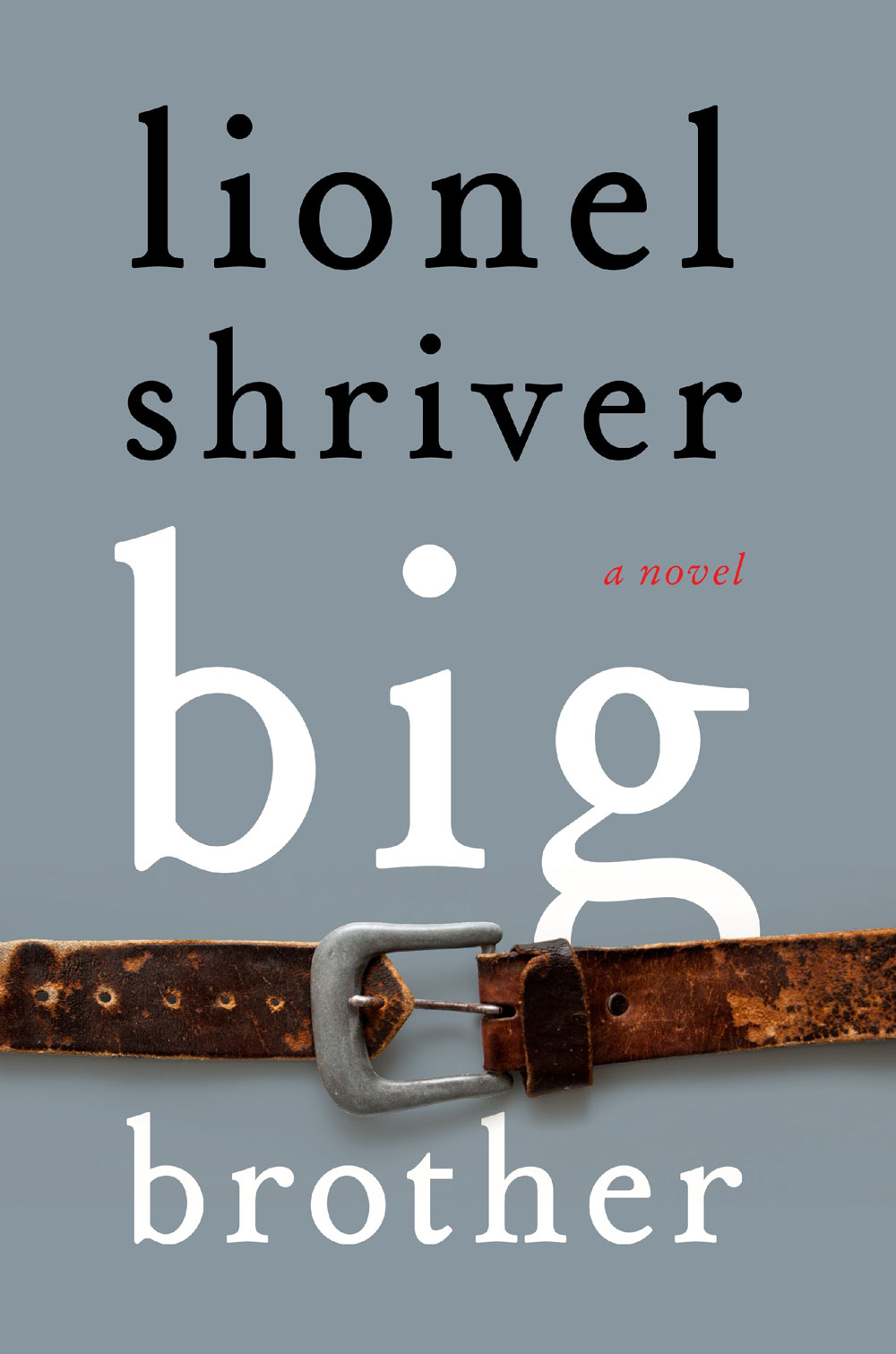
Lionel Shriver’s Big Brother will probably become a Julia Roberts movie

big-brother_custom

From the perspective of the weight-gainer, there’s something socially bizarre about getting fat. About facing, day in and day out, acquaintances for whom fat is a culturally endorsed obsession and yet still a conversational taboo. Next to sex, size might be the thing we think about the most in general and talk about the least in mixed company. Which makes gaining weight, for the gainer, sort of like dyeing an inch of your hair pink each month, both hoping and resenting that no one will mention it. That is, if pink hair could be mitigated by Spanx.

Big Brother is excellently concerned with this and other facets of the American obesity epidemic. The novel is centered on Pandora Halfdanarson, a married stepmother of two who has spent the last few years running a successful business while also settling into the trivial stalemates of a stable marriage (she’s gained weight; her husband Fletcher has become a fitness fanatic). Strapped for cash and in between jazz gigs, Pandora’s older brother Edison comes to stay with her, but when he arrives at the airport, Pandora doesn’t recognize him. Since they last saw each other, Edison has grown from a longstanding 160 pounds to nearly 400; the flight attendants insist on rolling him out in a wheelchair.

Continue reading “Lionel Shriver’s Big Brother will probably become a Julia Roberts movie”

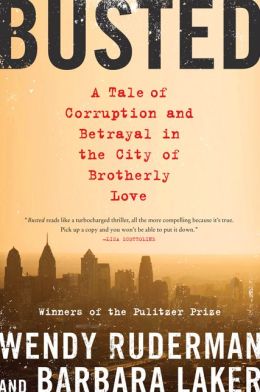
It’s always crummy in Philadelphia

wendy-ruderman-barbara-laker-busted-book

In some ways, Busted is about Philadelphia, the city in which authors Wendy Ruderman and Barbara Laker expose a corrupt ring of police officers while reporting for the bankrupt Philadelphia Daily News. After all, it is Philly’s abandoned houses and resigned drug pushers who serve as the backdrop to Ruderman and Laker’s investigation. It is the City of Brotherly Love that offers up Busted’s memorable characters: Benny, the informant-turned-source who raises the first red flag about a Philly narcotics cop; George Bochetto, that cop’s combative and boxing-obsessed attorney; Jose Duran, a local bodega owner whose innovative surveillance system turns the women on to a series of store lootings by police officers. It’s not that Busted couldn’t have taken place outside of Phillyβ€”corruption is nothing if not equal-opportunityβ€”but Philadelphia is very much a presence in the book, a city of both blight and beauty, struggle and charm.

More than anything, though, Busted is about journalism, about how the seismic shift in media over the last decade has played out at your average metropolitan daily, and for your average (and increasingly unemployed) newspaper reporter. The book is not so much a call to arms as a window into reality, a frank look at how the real work of reportingβ€”already up against online aggregation and viral cat videosβ€”is doubly challenged by the newspaper industry’s rapid desiccation.

Continue reading “It’s always crummy in Philadelphia”