A f@*k in the road

A few sentences into The Post-Birthday World, I stopped to watch some TV. Sometimes you just know a book is going to suck you in, and I figured it’d be in my best interest to get the DVR to a manageable capacity so it’d be able to withstand a few days without me.

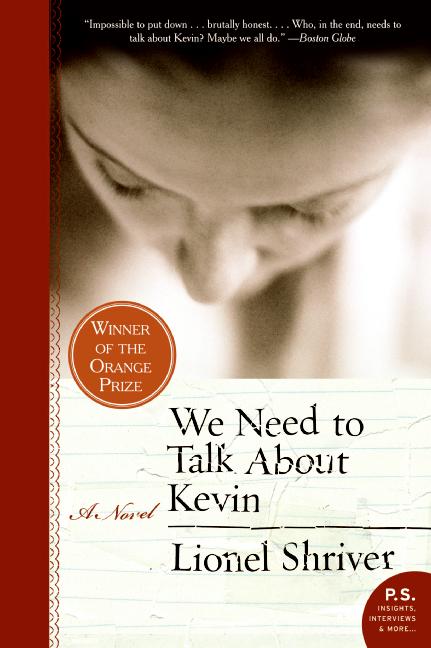
Sure enough, the DVR is now rocking 82% and I’m too emotionally wrecked to deal with it after 500 pages in the mind of Lionel Shriver. The author of We Need to Talk About Kevin—which I LOVED, despite its rather tragic subject matter—has such an on-point grasp of the reality of human existence that I never seem to finish her novels particularly happy or sad, so much as resigned to the fact that all situations in life have good and bad, and few offer definitive answers or conclusions.

Continue reading “A f@*k in the road”

From 9/11 to kids with cancer

Advance apologies if my syntax and otherwise generally awesome writing skills are off today: I’m in Day 3 of Operation Don’t Be a Fatty, which is the code name I’ve given my 345th attempt to lose weight this year. Whilst daydreaming about bagels and buckets of cream cheese, I’m finding it harder than usual to sound insightful.

What does ODBAF entail, you ask? (Or didn’t ask, but it’s my blog and I do what I want.) Give or take a few other minor changes (like alternating sides of the couch so as to more evenly distribute my butt indent) it primarily involves a) going to the gym more than once a year b) eating less candy and c) not always choosing the gnocchi at Italian restaurants. Just sometimes.

Though this is, as I mentioned, the umpteenth time I’ve gone down this path, it is not without reason that I bring up my renewed interest in health here, on a blog ostensibly about books. After finishing The Fault in Our Stars over the weekend, which focuses primarily on the lives of two teenagers with cancer, I came into Monday feeling particularly shitty about my inability to take care of my perfectly functional 26-year-old body.

Continue reading “From 9/11 to kids with cancer”

Goldman Suchs

In the world of financial news, last week’s completely badass op-ed from (now former) Goldman Sachs executive Greg Smith, titled “Why I Am Leaving Goldman Sachs” was, well, pretty huge. Like a real-life Jerry Maguire-ing, minus the pilfering of goldfish or a pleasantly pre-surgery Renee Zellweger. Smith’s diatribe—which you should definitely read—basically lamented the moral unhinging of a firm that, if always greedy, at least used to be that way on behalf of its clients.

“It makes me ill how callously people talk about ripping their clients off,” Smith wrote. “Over the last 12 months I have seen five different managing directors refer to their own clients as ‘muppets,’ sometimes over internal e-mail. Even after the S.E.C., Fabulous Fab, Abacus, God’s work, Carl Levin, Vampire Squids? No humility? I mean, come on. Integrity? It is eroding. I don’t know of any illegal behavior, but will people push the envelope and pitch lucrative and complicated products to clients even if they are not the simplest investments or the ones most directly aligned with the client’s goals? Absolutely. Every day, in fact.”

The op-ed sparked a great deal of backlash, some of it from people who mocked Smith for an alleged naivete about how the banking sector works. NYC Mayor Michael Bloomberg popped over to Goldman’s offices to reassure them—because doesn’t this firm just scream insecurity?—that he’s still their friend, and Bloomberg News (yes relation) published its own opinion piece scoffing at what they considered Smith’s perception of banks as “existing only to bring light and peace and happiness to the world.”

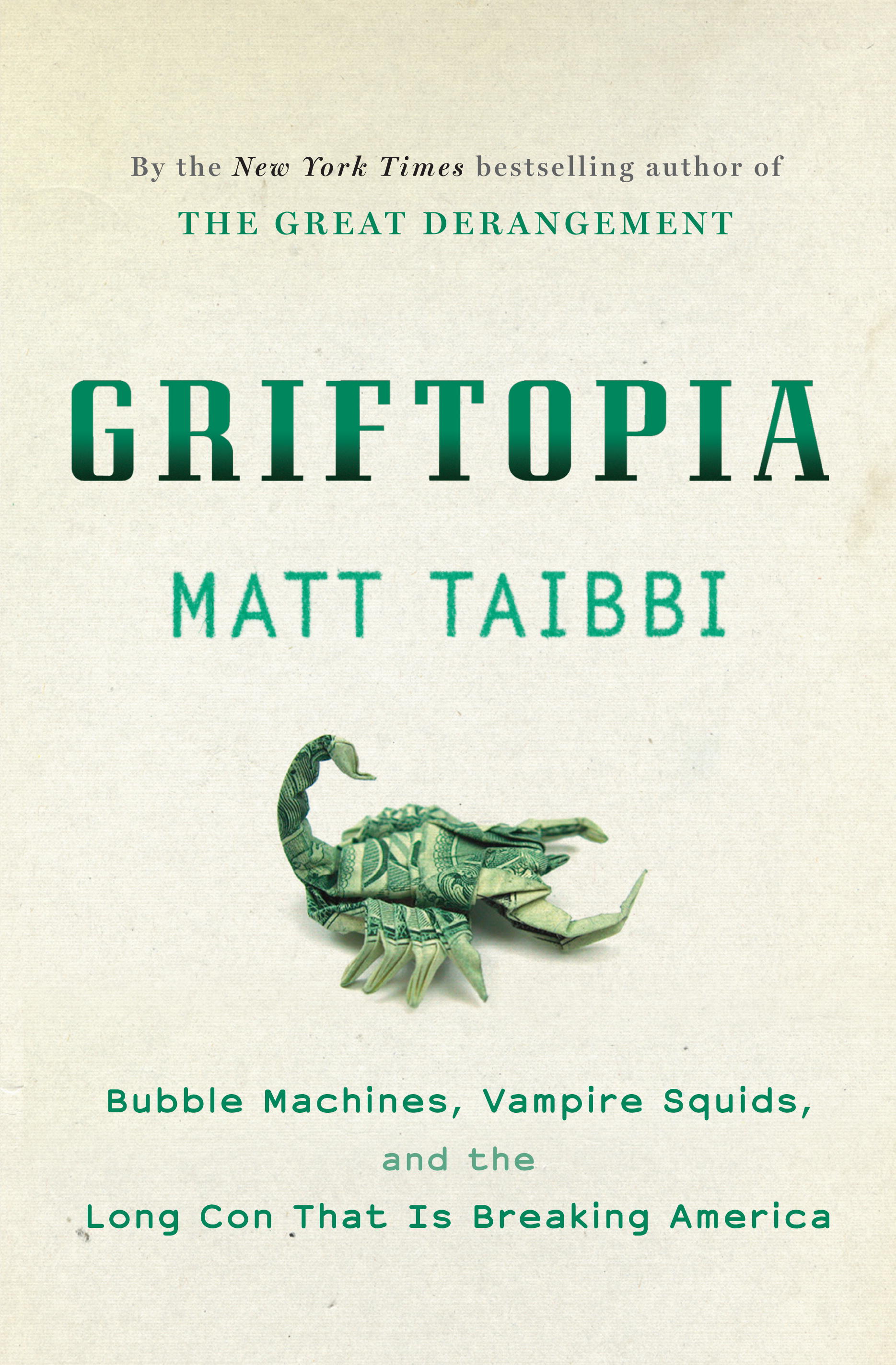
Me, I was riveted by the whole thing. Not only because Smith broke the first rule of Wall Street—you do not talk [honestly] about Wall Street—but because when the op-ed appeared I was smack in the middle of Matt Taibbi’s Griftopia, a book spawned in part by the Rolling Stone reporter’s now-famous article about Goldman (the source of the also-now-famous “vampire squid” moniker.) It was the nonfiction equivalent of reading Twilight and then having a sparkly vampire show up at your front door, bitching about immortality and the wet-dog smell of all those fucking werewolves. Continue reading “Goldman Suchs”
Spacious Studio, Doorman Building

I’ve been reading some fucked up books about kids lately. First there was Kevin, a mass murderer trapped in a teenager’s body, whose dubious childhood raised the question (or rather, made the assertion) that some people are just born off.

And now I’ve spent a week with Jack, the five-year-old protagonist of Emma Donoghue’s Room, whose entire universe consists of an eleven-by-eleven-foot soundproofed shed. Which brings up an entirely different question: If Kevin, raised with everything, can grow up to be a shit, can Jack, raised with nearly nothing, grow up to be normal?

I should clarify: Jack and his mother don’t live in a shed by choice. Rather, said mother (who remains nameless throughout the novel) was kidnapped some seven years before Room takes place, by a man who has over the years raped her repeatedly, resulting in one stillborn child and another—Jack. The novel is told from Jack’s perspective, as a disarmingly content child who sees nothing necessarily strange about his living situation, or his mother’s assertion that what’s inside the room is real, whereas everything on television—which she only lets him watch in short bursts—is fantasy. Jack is accustomed to routine, attached to rules and feels only occasionally stifled by his limited environment. In fact, until Jack’s mother latches onto the idea of staging an escape, the duo exist in something sickly akin to normalcy inside their furnished prison cell.  Continue reading “Spacious Studio, Doorman Building”

Talking about Kevin

I have never been much of a kid person. What was at one point a general disgust has tempered over the years into more of a dull annoyance, but for the most part, I wouldn’t consider myself a huge fan. Being around other people’s children is like watching an episode of Planet Earth: I can enjoy a lion for 45 minutes without wanting one as a pet.

I have, like all 20-something women who openly espouse the anti-kid viewpoint, been tutted at by my slightly older peers (and mother), who assure me that I will at some point in life—a point most likely decided upon by my uterus—execute an about-face and forget the part of myself that shudders when a boisterous youngster boards my subway car. And in the interest of realism, I suppose that may very well be true. Despite having never been the type to coo over newborns or feel any particular affinity toward onesies, I can still understand that—objectively speaking—my indifference when it comes to the young is nothing to be self-righteous about, and could very well be impermanent.

But even if I allow that my now 26-year-old emotional geography will change over the next decade, I still wonder why it is that I’m averse to the idea of creating another person. Some of the reasons are obvious: By measures of current-me happiness—financial comfort, peace and quiet, lack of obligation to touch human feces—having a child is clearly bullshit. But these are things that people get past, by which I don’t simply mean that new parents are willing to make such sacrifices for their progeny, but rather that the very state of being a parent somehow dulls those needs. Touching poop isn’t something you can resent when the poop comes out of the wholly helpless human being that you made exist.

Continue reading “Talking about Kevin”