Book bonanza: Part I

In the last four days, I bought 17 books.

Whew. Okay. It’s out. Now you all know that when I say I have a problem with buying books, I don’t mean a small one. I mean that I had to relocate at least 30 books to floor piles (pictured) so that I might reduce the risk of one of my overburdened bookshelves collapsing during the night, thereby giving me a fatal heart attack and forcing some hapless relative to sort through my massive paperback collection while distributing my possessions post-mortem. Now you know that when I say I have a book-buying problem, I mean that I actively facilitate the makings of a serious physical hazard.

In fact, so unchecked is my penchant for bookstores that this weekend marked the first time I actually purchased a book I already ownedโ€”Michael Lewis’s The Big Short, which I am (perhaps out of guilt) now reading. In the interest of making lemonade out of lemons, I will award (and mail) the extra copy to a lucky reader, to be determined after the writing of that review. …Similarly, I think it would be in everyone’s best interest if I started finding a way to give away other books, so keep your eyes peeled for more details on that in coming weeks.

Anyway! Book-buying guilt also propelled me into a frenzy of reading this weekend (under the logic that finishing 3 books would somehow justify buying 17) and so I have a wealth of reviews to write. On Friday I finished Don Winslow’s Savages, on Saturday John Green’s Looking for Alaska, on Sunday Nora Ephron’s Wallflower at the Orgy and yesterday Bret Easton Ellis’ The Rules of Attraction. I haven’t read this quickly and productively since that time I had chicken pox and my mom brought me an entire stack of Tiger Beat.

Continue reading “Book bonanza: Part I”
My weekend with Charles Manson

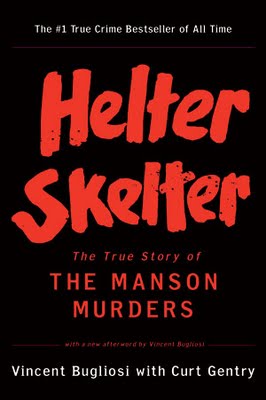
Guys, there are a lot of things I recommend you do in this lifetimeโ€”go on a road trip, skydive, eat more than 1,500 calories in a single sittingโ€”but reading the 675-page Helter Skelter in a mere four days is not one of them. That shit will fuck with your head.

I first decided to read Helter Skelter years ago, but for whatever reasonโ€”I suppose in part due to its intimidating lengthโ€”never got around to it.  (Editor’s note: Nick, I apologize for “borrowing” your copy of the book for six years.) Then I stumbled across this well-timed Gawker post last week, which itself came on the heels of my having read Jon Ronson’s The Psychopath Test, and the irony of finishing up a book on the mental state of mass murderers on the 43rd anniversary of one of the most infamous mass murders of all time was too much to overlook: It was Helter Skelter time.

For the unfamiliar, Helter Skelter is the definitive retelling of the events surrounding the 1969 Tate-LaBianca murders, a two-night spree in which seven people were killedโ€”18-year-old student Steven Parent, screenwriter Wojciech Frykowski, coffee heiress Abigail Folger, hairstylist Jay Sebring, actress (and Roman Polanski’s then-wife) Sharon Tate (who was eight months pregnant), supermarket executive Leno LaBianca, and his wife Rosemary LaBianca. All seven murders were exceedingly brutal, with some victims being stabbed upwards of 40 times. After a historic trial, a jury found Charles Manson guilty of the crimes, along with several other members of The Family, a cult-like commune founded by Manson. The murders were intended to set off “Helter Skelter,” the name Manson had given to what he perceived as an imminent race war between blacks and whites. Why Helter Skelter? Manson took the title from a Beatles song he felt was intended (by the Beatles) to warn listeners of this impending revolution. Because obvi.

Continue reading “My weekend with Charles Manson”

The crazies

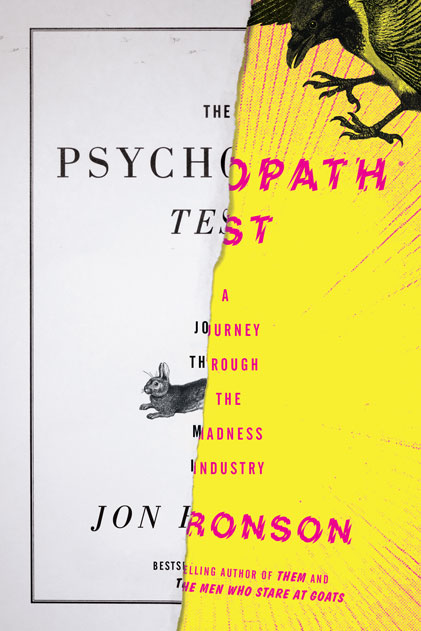
Call it coincidence, but ever since starting Jon Ronson’s The Psychopath Test, a journalistic exploration of the sociopathic, I’m seeing psychos everywhere.

By psychos I don’t mean the creepy guy on the train who stared at me for literally 28 minutes this morning (I counted), or even the recent string of clearly mentally ill Batman/Muslim-hating shooters. I mean the run-of-the-mill everyday people whose lives involve, or are in some scenarios contingent upon, a complete lack of empathy for the problems, stresses, fears and tragedies of others. And also everyone not on Facebook.

In The Psychopath Test, Ronson investigates historical and current definitions of psychopathy, including the famous Hare Checklist, a 20-point diagnostic tool used to identify psychos. He speaks with Bob Hare, and other psychologists, as well as criminals and other persons who have either been openly accused of psychopathy, or whose personal history indicates some susceptibility to it. Throughout the book, Ronson inserts his own ruminations on the subject, and triesโ€”however casuallyโ€”to ascertain whether a) current definitions or diagnoses of psychopathy are fair or true and b) psychopathy is as prevalent as some of those definitions might suggest.

Continue reading “The crazies”

The old ball game

As I doubt many of you are aware, except those privileged few who knew me in my formative teen years (I had really awesome hair), I was for a time the player manager of my high school’s baseball team. I’d like to say that this was because of some great love of the game, but it was really motivated by a) my desire to leave class early b) my desire to flirt with baseball players and c) my desperate need to convince the coachโ€”who was also my physics teacherโ€”that despite all grade-related evidence to the contrary, I actually did have a vague understanding of things like “force” and “gravity.” (Or, is gravity a type of force? I seriously almost failed physics, guys.)

Anyway, in spite of my ulterior motives, over the course of my managership I acquired two things: 1) the Richard Montgomery High School Baseball sweatshirt that I now honor daily by wearing it to watch TV, and 2) a solid appreciation for the sport (which is fortunate, since I ultimately moved to a city with a borderline maniacal love of it.)

To the unaccustomed eye, baseball is, let’s be honest, slow, and full of the kind of nuance that sports like hockey and basketball eschew. It’s a game that seems equally focused on the team and the individualโ€”how do concepts like sacrifice and error exist in the same game?โ€”and, perhaps most importantly, it involves men wearing hilarious pants. But there’s something elegant in baseball that you don’t really get out of watching 300-pound dudes run directly into each other. Baseball’s got mad panache.

I also love professional baseball because it’s splendidly American, and not just in the pastime sort of way. The salaries are exorbitant, the beers are overpriced, and literally everything in the gameโ€”from the first home run to the seventh-inning stretchโ€”is sponsored to within an inch of its life. It’s kind of amazing to sit in the stands of a modern ballpark: The same old teams wearing the same old uniforms playing the same old game, only now surrounded by noise-o-meters, jumbotrons and $10 hot dogs. It’s like baseball is simultaneously American and ‘Merican.

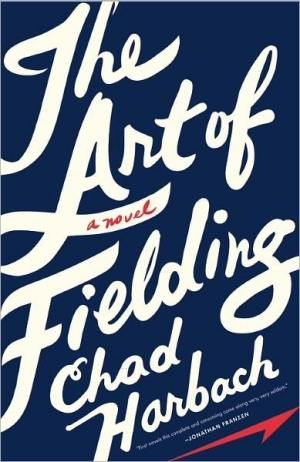
Anyway, given all of the above, it should come as little surprise to you all that I truly enjoyed The Art of Fielding, Chad Harbach’s debut novel about, duh, baseball. Kind of. The Art of Fielding is about baseball like Lord of the Flies is about islands, or Animal Farm is about animals. Which isn’t to say that the sport is an allegoryโ€”though it may very well be; I’m as good with allegories as I am with physicsโ€”just that baseball is the backdrop to an ensemble cast of characters with a wealth of non-baseball-related problems.

The novel hinges on Henry Skrimshander, an unassuming shortstop who gets recruited to Westish College by the captain of the university’s baseball team, Mike Schwartz. Henry is one of the best players the school has ever seen, until one false throw shakes his confidence and throws multiple other characters into turmoil.

Continue reading “The old ball game”

Time travel travel speed

Guys, I am writing to you from space!

I mean, not actually. I’m actually writing to you from a plane, where apparently you can buy Wi-Fi access now (it seems “Internet isn’t safe on planes” only meant free Internet.) I’m on my way to Chicago, during which time I will hopefully be able to catch up on some book reviews that are long overdue. I’m a reading machine lately, and my writing machine (read: combination of brain, hands and laptop) is struggling to keep up.

It’s kind of appropriate to be writing this review from THE SKY (sorry, I’m still excited about it.) I fly very infrequently, and every time I do find myself on a plane I’m somewhat amazed at how jaded people are by the whole process. My fellow flyers are casually reading newspapers while a giant metal machine lifts off of the ground; they’re closing their little window shades and flipping through celebrity magazines instead of appreciating how crazy the earth looks from even 10,000 feet up. I’m not saying I expect everyone to still be drooling all over themselves a zillion years after the advent of commercial flying (I didn’t feel like looking it up) but a little reverence would be acceptable, no?

Continue reading “Time travel travel speed”