A Sober Addendum

This is what I did BEFORE I wrote my book review for Gilead.

So it would appear that beer has quite an influence on my a) perception of spirituality and b) choice in vocabulary. In particular, after tossing back six drinks at a happy hour with friends last night, I proceeded to come home and write a rather angry review of Gilead that features no fewer than four instances of the word “beautiful” and a sentence that includes both “bequeath” and “kin.” I am a rather verbose drunk.

I feel in retrospect that I was a little harsh on Gilead (or maybe I’m feeling residual guilt about having panned a Pulitzer Prize winner). So to make amends, and reiterate how impressed I was by the book’s language, if not its subject matter, here are my favorite quotes from Gilead. (Full disclosure: I have a rather neurotic habit of dog-earing the bottom of pages when a particular quote resonates with me, so perhaps sharing these lines would be a way of turning what is otherwise a literary quirk into useful blog fodder).

Enjoy!

“A little too much anger, too often or at the wrong time, can destroy more than you would ever imagine.”

“I’ve developed a great reputation for wisdom by ordering more books than I ever had time to read, and reading more books, by far, than I learned anything useful from, except, of course, that some very tedious gentlemen have written books.”

“Sometimes the visionary aspect of any particular day comes to you in the memory of it, or it opens to you over time.”

“These people who can see right through you never quite do you justice, because they never give you credit for the effort you’re making to be better than you actually are, which is difficult and well meant and deserving of some little notice.”

“There are a thousand thousand reasons to live this life, every one of them sufficient.”

Oh, God…

Confession time: I didn’t care for Gilead.

Now I know what you’re thinking: The book won a Pulitzer, how bad can it be? Well I’m glad you asked. Gilead isn’t bad, not at all. Rather, it’s one of the more beautiful things I’ve ever read, filled with lines that address spirituality in a way uncommon among modern literature, in a way meant to resonate with people who have themselves considered the implications of being religious in the modern era. In fact, I can’t emphasize enough how truly beautiful and poignant the language in Gilead is.

Unfortunately, no amount of beautiful language could have saved this book for me. Rather, my objection lies with the subject matter. Gilead is told from the point of view of a priest, spending his dying days writing a letter to his rather young son, a letter intended to bequeath upon his kin all the various thoughts and suggestions he might have otherwise shared in fatherhood. Alone, this sounds charming. In practice, Gilead is an exercise in religion, and more specifically in what it might mean for a religious man in the 20th century to decide which parts of his life and thoughts are worth sharing with his child. Lest this still sound appealing, for me personally it read a lot like a father describing to his son his impression of unicorns, and how their supposed presence had affected his outlook on life. Which is to say I found it almost entirely irrelevant. Continue reading “Oh, God…”

Son of a Preacher Man

So I kind of took a week off last week. I know! I know, it’s bad. But you guys, there’s just so. much. television. And work. And dinners to attend, bars to frequent, friends to visit. And iPhone Tetris. Oh sweet Lord, the iPhone Tetris. Truth be told, my 2011 hasn’t gone well so far in terms of distractions from the printed word. On the upside, I haven’t bought any books either (hey, every cloud has a silver lining).

But I’m determined to get back on the wagon after a series of defeats (though I maintain that Too Big To Fail was, well, too big). This week’s read comes highly recommended from a friend/coworker, whose suggestions always stand out to me since she tolerates more or less nonstop book and TV chatter from my side of the cube farm. (Think about it–can you imagine sitting next to me all day?) Gilead, by Marilynne Robinson, is something of a reflection on life, written in the voice of an aging rural preacher who is hoping to bequeath his knowledge of this world and the next to his son before he dies (the father, not the son).

I have anticipatory angst over this book, since it won both the Pulitzer and the National Book Award in 2005. Which is to say that if I don’t like it, I’m probably an uncultured idiot (something I’ve refused to accept despite bountiful evidence). So, wish me luck–at the very least with avoiding the remote control this week.

Kurt Cobain, The Afterlife

51K7hqIHV7LEtgar Keret is an odd duck.

I could debate whether the quirkiness of his stories is best attributed to a “lost in translation” type of effect, but even that kind of discrepancy wouldn’t be enough to account for how unique they are, and how downright weird. In reading up on the author (thank you Wikipedia) I found that his stories are widely popular among Israeli youth, who see them as something of a reflection on their national ethos. What does this mean? While American 20-somethings are texting and playing video games, young adults in Israel are poignantly preoccupied with thoughts of life and death, heaven and hell, good and evil.

Indeed, many of the stories in The Bus Driver who Wanted to be God touch on some of those central themes: the meaning of life, what happens after we die, the fairness of God. Some reference Israeli youths’ (mandatory) time in the military, while others touch on Holocaust Remembrance Day, for obvious reasons a rather heavy subject there.

Yet despite its dark themes, I would be remiss if I didn’t mention that Bus Driver in particular, and Keret in general, is funny. Not laugh out loud funny, often not even chuckle to oneself funny, but humorous in a darker way, in a way that suggests lamenting the injustices of life is pointless, so laughing about them seems like a good second choice. Continue reading “Kurt Cobain, The Afterlife”

I’m a young adult, too

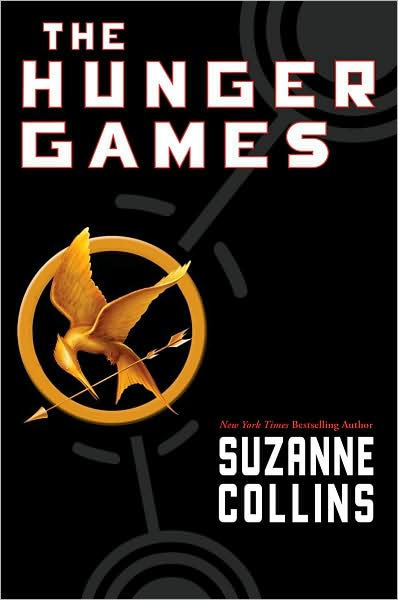
Well as I suspected, Too Big to Fail was, appropriately, too big. Even after several days of dedicated reading, I’m still barely past page 200 and although I find myself riveted by the story–riveting financial news, who knew–today I made an executive decision and I’ve spent the better part of the last eight hours reading The Hunger Games, the first in Suzanne Collins’ much-acclaimed young-adult trilogy.

For those who don’t follow the incredibly important happenings in teen fiction, The Hunger Games is something like a modern-day 1984: The story is set in a post-apocalyptic North America, now known as Panem, where a Capitol city rules over 12 distinct districts. So as to remind the districts of their impotence, every year one boy and one girl from each is chosen at random (though, without going into too much detail, poverty plays a role in one’s chances of being picked) to participate in The Hunger Games, a fight to the death broadcast on live television throughout the country. Yeah, it’s pretty grim reading for the weekend before Christmas.

I’ll say off the bat that the book is incredible, even considering it’s geared at young adults. I haven’t devoured 350 pages in a sitting since the last Harry Potter, which I distinctly remember reading in full on a similarly lazy Sunday, sustaining myself on takeout Chinese since I couldn’t be bothered to leave the apartment. The comparison to 1984 is fair, and the writing itself is suspenseful and accessible without feeling dumbed-down. Unlike the Twilight saga, which I never quite liked reading on the train, no adult would or should feel silly for reading this book (and I assume the rest in the trilogy).

Continue reading “I’m a young adult, too”