Bossypants and mom jeans

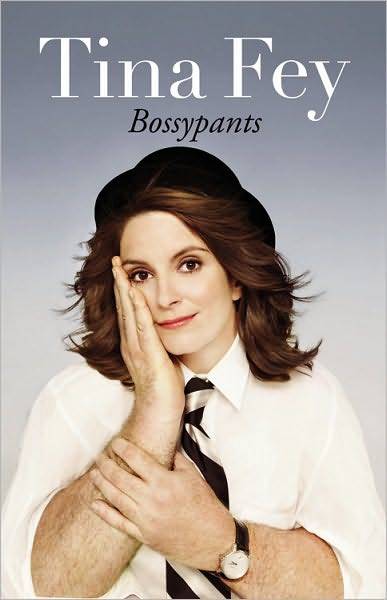
I mean, it’s not like I wasn’t going to like Bossypants. Chmon. I pre-ordered this book the minute I heard about its existence, as I’ve spent the better part of the last few years idolizing Tina Fey as both creator and star of 30 Rock. Friends of mine know I’ve long felt a kinship with Liz Lemon. Frumpy dresser? Check. Devoted fan of junk food, with an emphasis on items whose key ingredient is cheese or cheese-flavored? Check. Inability to translate motivated responsible work persona into personal life? Check. Unabashed fan of reality television? Double freaking check.

So I was a little surprised when about 50 pages into Bossypants, a subtle theme was emerging. This book was…kind of about being a woman. About being a woman in a traditionally male-dominated field (comedy, not television) a theme I’ve only recently read about in another enjoyable lady memoir: Kathy Griffin’s (who, ironically, is given a bit of a shout-out in Bossypants: “If you could turn gay from being around gay people, wouldn’t Kathy Griffin be Rosie O’Donnell by now?”) Yes, this book was just a little bit about how even the suggestion that Tina Fey being a successful boss is something worth highlighting inadvertently separates her from the legions of unhighlighted male bosses who have come before her, as though signing paychecks with a vagina is like a dog walking on its hind legs.

Continue reading “Bossypants and mom jeans”
A book not about dentistry

Now I know you’re not supposed to judge a book by its cover, but I’ve never really heard the policy on judging one by a randomly selected page, so for the sake of argument, let’s assume it’s an improvement.

One of many neurotic tendencies I have when it comes to booksβ€”other examples: always buying the second or third book back on the shelf, never lending books I haven’t read yet, dog-earing the tops of pages to mark my place and the bottom to mark favorite quotesβ€”is reading a random page from a book I’m considering buying, and basing my decision almost entirely on that page.

Now I realize this isn’t entirely fair; every author is entitled to a decent amount of exposition, and certainly to a fair shake at having their words consumed in the context of…all the other words. But given my extreme inability to not buy at least three books a month, cuts have to be made somewhere, and I’ve found that one can tell a lot about a book by picking it up in the middle, if only for a few paragraphs.

Which brings me to my point. In developing this bizarre little habit, I’ve found that some of the best booksβ€”certainly not all, but someβ€”are good on every single page. Some books are so beautifully written that even though it’s obviously advisable to start from the beginning and end with the end, any glimpse, however brief, into the title’s center, offers a preview of the greatness. Zadie Smith’s White Teeth, well, it’s that kind of book.

(Sidebar: Not to make it seem as though Smith is more of a writer than a creator, it’s worth noting that some of the best books are also very “book”ish, which is to say that even as you appreciate the depth of their characters and sincerity of their scenes, you’re hard-pressed to envision a movie or other visual adaptation that would even hold a candle to the hundreds of pages of text. White Teeth is that kind of book as well. …It’s a really fucking good book).

Continue reading “A book not about dentistry”

It’s the tweaking weekend

Whenever I’m feeling a bit frustrated with one of my own vices, I like to read about drugs. Now, before you get all high (pun intended) and mighty, I’m not saying it’s an ideal personality trait to be comforted by the struggles of others, but hey, the entire reality television genre is predicated on this kind of schadenfreude.

In a way, what appeals to me about the genre is that drug addiction is an equal-opportunity affliction. Certainly, upbringing and socioeconomic status all play a role in one’s predilection, or lack thereof, for addiction – but at the end of the day, anyone can be an addict. The problem transcends generations, geography and politics (to the extent that anything can).

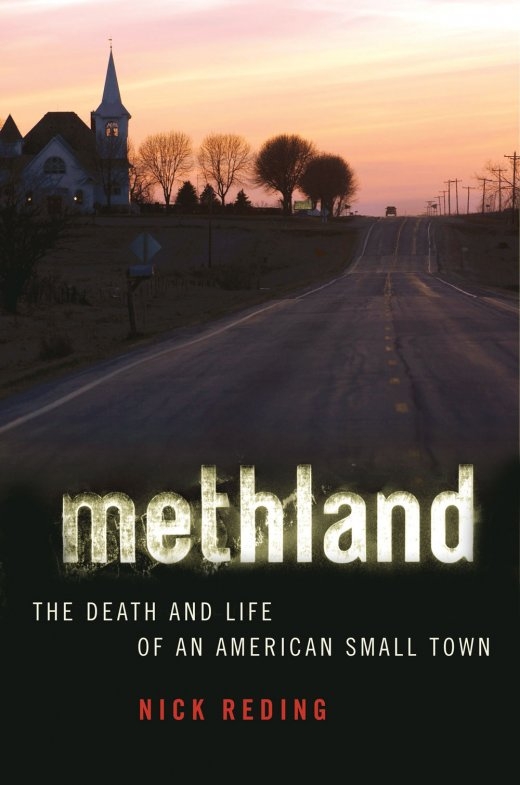
So I had been looking forward to Nick Reding’s Methland, which I bought after reading Beautiful Boy, a father’s memoir about his son’s addiction to methamphetamine. Here is a drug with which I have no personal experience but, for all intents and purposes, is one of the worst, one of the addictions from which few recover. While Beautiful Boy focused on one family’s experience, Methland promised a broader overview: How it’s produced, where, by whom, and most importantly, the scale of the meth problem and the severity of its fallout.

Continue reading “It’s the tweaking weekend”

It’s no mystery (just kidding, it is)

Well, I’ve been out of pocket for the last few days and I have to say Internet, I missed you. Not only do I feel very behind on my witty web memes and cute cat photos, but I’ve had nary a moment to engage with all my various personal marketing tools. I’ve barely even tweeted!

Unfortunately I wasn’t holed up all weekend because of a good book, but along the way I did happen to read one. So it’s okay, exhale, there’s still a review this week.

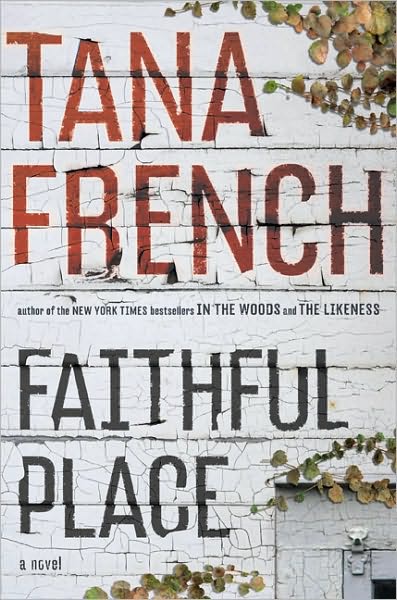
Faithful Place is the third in a series by author Tana French that centers on the undercover squad of a police department in Dublin (Ireland, guys). Although I would argue you should read the first two (mostly because Faithful Place was my least favorite), it isn’t necessary: The third book’s protagonist was but a periphery character in No. 2 The Likeness (though if you’re going to read The Likeness, you should read book No. 1, In the Woods, first. Those two are more closely related.)

Anywho, Faithful Place follows Frank Mackey, an undercover detective who hasn’t been to his hometown (ahem, Faithful Place) to see his family in upwards of 20 years, since he ran away from home at 18 or so. He’s drawn back to his old haunt when some locals find a suitcase that once belonged to his childhood sweetheart (with whom he had intended to run away, and who he’s always assumed blew him off at the last minute). What exactly happened to her, and their plans, is the rest of the story, none of which I intend to give away here.

Continue reading “It’s no mystery (just kidding, it is)”

The littlest gossip girl

Everyone has a Kathy Griffin. That friend, you know the type, who’s effortlessly hilarious, quick with the comebacks, perfect for parties (if you, like me, prefer to bring guests who amuse but also mildly offend the hosts); also the kind of friend who after a few days together starts to grate on you. It’s no fault of theirs, just some people work better in smaller doses. Non-consecutive-day-doses.

Kathy Griffin’s memoir is a lot like her, and like that friend. It’s hilarious, fast-paced and often insightful, but by the end I was ready for a break.

I went into this book not knowing what to expect. Comedians can go both ways when it comes to the written word–sometimes, as is the case with Michael Ian Black, their books are perfection, just slightly more bizarre extensions of their routines (I don’t care what people say about Russell Brand, I find his memoir(s) far more amusing than he is in person). Other times, it doesn’t quite work. You find yourself missing their inflections, or well-placed pauses for laughter. Reading is an isolated activity, and stand-up is a group one. The two don’t always mix.

Griffin’s Official Book Club Selection (which, by the by, awesome title) benefits from Griffin’s stand-up style, which is more long-form storytelling than a series of witty one-liners. Those familiar with her stand-up (or Bravo show) will hear her voice in the writing, but the stories don’t suffer for not being performed on a stage. In fact, the book lets her go further than she probably would to a crowded roomβ€”a chapter about her brother, who she suspected of pedophilia (no joke), miiight not have made the best material for a night at Radio City Music Hall. On the page it comes across as insightful and acerbic; one gets the impression humor isn’t so much Griffin’s defense mechanism as it is a lens through which she (and any self-respecting cynic) views the world. In other words, the book isn’t all celebrity gossip and plastic surgery stories; just mostly.

Continue reading “The littlest gossip girl”