$#*! my grandma says

If there were an alternate title for I Remember Nothing, it would be #whitepeopleproblems.

It’s funny that Nora Ephron’s latest book reminds me of a hashtag, since Twitter is one of several things Ephron swears in an introductory essay that she will never take the time to understand (also see: Jay-Z, the Kardashians, soccer). Funny since I’m sure Nora Ephron objects to Twitter for the same reasons so many people who’ve never used it do: it’s frivolous, indulgent, emblematic of a global case of  ADD, full of people tweeting about their breakfasts. Why is this funny? Because I Remember Nothing is basically 150 pages of Ephron’s brain farts, piled together in a hardcover and sold for $23. At least on Twitter it’s all short, sweet and free.

Now before I tear into this book, I should pause for a moment to respect my elders. Ephron’s essays here are very much about being old, and she’s 69 so that’s fair enough. I don’t know the point at which you’re allowed, as an adult, to throw up your hands and give in to the stodgy bitterness that comes with old age, but I am willing to grant that it’s probably somewhere around 70. In a way, I Remember Nothing feels a lot like a goodbye bookโ€”the last two “essays” are devoted to things Ephron will and won’t miss, ostensibly about life. So I sympathize. When you’ve had a 40-year career, maybe you reserve the right to fart out your last contribution to nonfiction. I just don’t think you should actually do it.  

Continue reading “$#*! my grandma says”
Nostalgia is a seductive liar

So I was perusing Tumblr this week and stumbled across a question from one person I follow to another: “Curious about something: I often have this attitude towards contemporary fiction. I’m reading Steinbeck now with great joy. Are there current writers that are worth it?”

Now, this isn’t the first time I’ve come across this attitude from fellow readers. I suppose there’s something natural to looking back on books written fifty or a hundred years agoโ€”let alone Shakespeareโ€”and seeing in them something you want to believe hasn’t been replicated or improved upon since. At the same time, really? Should it not strike all of us as ludicrous to suggest that the art of writing fiction somehow disappeared in the 21st century, or that people born after, say, 1975 are somehow inherently incapable of producing literature of the same quality as John Steinbeck?

I could also argue the other side hereโ€”that upon reflection, books like The Great Gatsby, or Catcher in the Rye, aren’t really that good. (Confession: I couldn’t even get through Catcher in the Rye. I know; I’m sorry!) But that’s not nearly as important as the fact that even without shitting on traditionally celebrated classical authors, the 21st century has still produced some bombass fiction, and some incredibly talented and prolific people upon whom I can only hope silver-clad space-dwelling humans of the 23rd century will look back and say, “Man, remember when people could write like that?”

Which brings me to Jonathan Franzen.

Continue reading “Nostalgia is a seductive liar”

Intergalactic, planetary

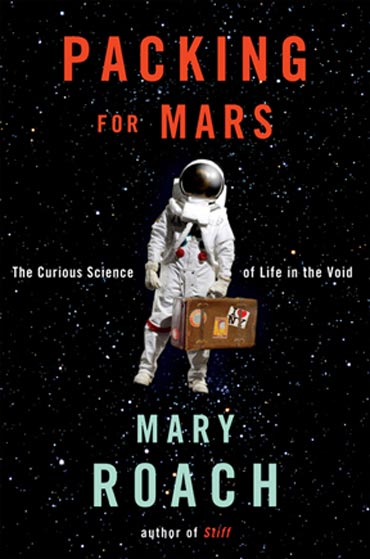
Imagine pooping in a plastic bag about six feet away from a good friend. Now imagine doing it in space. Now imagine imagining scenarios like this one while packed into a train crammed with commuters you hope won’t notice the frequency of the word “feces” in the book you’re holding, and you’ll get a sense of how truly awesome it is to read Mary Roach.

I first got into Roach in freshman year of college, when her debut book, Stiff: The Curious Lives of Human Cadavers, made me legitimately interested in what happens to our bodies after we die (no really, legitimately interested. I subsequently read Jessica Mitford’s The American Way of Death, which was just as fascinating, though far less hilarious). Since then, I’ve read each of Roach’s three subsequent books within a month of their release: Spook: Science Tackles the Afterlife, Bonk: The Curious Coupling of Science and Sex and most recently Packing for Mars: The Curious Science of Life in the Void. The last of these I finally finished over the weekend (after realizing that the chances of my polishing off 550-page The Corrections in time for this week’s review were slim to none).

Continue reading “Intergalactic, planetary”

The quick and the dead

I am alive!

I know you were worried; to be honest, so was I. A six-day bender with two friends/former Marines in town for Fleet Week meant not only was I not getting the enough reading doneโ€”about 12 collective pages last weekโ€”but there were moments when I thought not enough brain cells would survive for me to ever read again. At least not anything outside of Goosebumps.

To add insult to injury, said friends were staying in my apartment which, as I’ve mentioned, is fairly covered in unread books, many of which interested said friends and spawned conversations that made me stare longingly at my bookshelf and wish I were curled up with a novel instead of arguing with bouncers in the Meatpacking District over the merits of jorts as a fashion statement (I am decidedly in favor; they, not so much.) Long story short, my brief sojourn into the life of an actually sociable person was exciting, but I see myself at no point in the immediate future becoming the kind of girl who changes bars as often as I currently change positions on the couch.

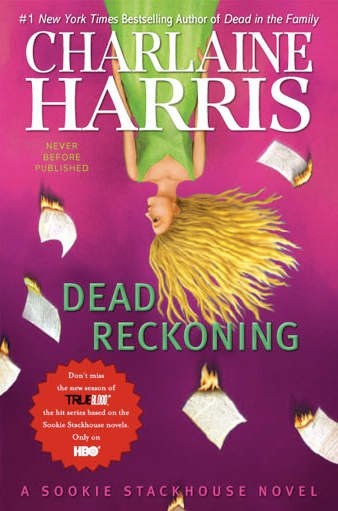
Fortunately for us all, this week’s book was…let us just say, not so much a challenge. I mean, what does one say about the Southern Vampire Mysteriesโ€”(they’re called the Southern Vampire Mysteries, for fuck’s sake)โ€”the 11-and-counting titles upon which HBO’s True Blood is based. They’re vapid and simplistic and, only a hop, skip and a jump away from erotica. They take the intellectual capacity of a 9-year-old to read, or dog of above-average intelligence. They’re repetitiveโ€”about 25% of each book is devoted to retelling the events of the book beforeโ€”and undeveloped. Oh, and they’re prettay prettay good.

Continue reading “The quick and the dead”

Sex and drugs and house

I suppose it’s appropriate that I would be reviewing Brave New World during a particularly stressful week at work. After all, in Aldous Huxley’s faux-utopian novel, there is no stress. Everyone’s happy with their station in life and during those brief moments when they aren’t, during the hours one might otherwise ruminate on daily obstacles, there’s government-approved and -distributed soma, as close an approximation to Xanax as one might have conceived in the early 1930s.

I don’t know how I managed not to read Brave New World up until this point, but just in case you haven’t either, here’s the basic idea: The novel is set in a future society where women no longer give birth biologically; couples aren’t married, “everyone belongs to everyone else.” On the social level, this means that everyone sleeps with everyone else, women and men are discouraged from forming relationships longer than a few months (and should never be exclusive). On the biological level, this means that birth has become a science. Embryos, created and brought to term in what are essentially human-producing factories, are split into different castesโ€”Alphas, Betas, Gammas, etc.โ€”and conditioned based on their predetermined station in life. Moreover, the lower the caste, the more humans are created from one egg, a scientific achievement knows as the “Bokanovsky Process.” So while an Alpha is a one of a kind, a human conditioned only to respect the values of this new society (togetherness, happiness, tranquility, consumption), an Epsilon may be one of 40+ identical “twins” created from the same egg, and created to be of lower intellect and expectation, the ideal humans to …man elevators, or work in factories, without even the ability to want something better for themselves.

Continue reading “Sex and drugs and house”